A meeting starts late because the display will not connect. Music is uneven between the dining room and patio. A front-desk employee has to juggle separate remotes, apps, and switches just to change a channel or adjust the volume. These are not minor annoyances. They affect how customers experience your business, how employees work, and how confidently your team can operate the space.
Commercial Audio Video Boca Raton solutions should make technology feel purposeful, intuitive, and dependable. The right system is not a collection of screens and speakers. It is an integrated environment designed around the way your business communicates, serves guests, protects its property, and grows over time.
What Commercial AV Should Accomplish for Your Business
A properly designed commercial AV system supports the work happening in the space rather than competing for attention. For a corporate office, that may mean presentation rooms where teams can begin meetings quickly and share content clearly. For a restaurant, private club, showroom, or hospitality property, it may mean consistent audio coverage, high-impact video, and simple source control across distinct zones.
The objective is different for every property, but the standards should remain high: clear sound, properly placed displays, dependable control, clean installation, and equipment chosen for the demands of commercial use. A system that looks impressive on opening day but becomes difficult to operate or service later is not a successful investment.
Commercial environments also have more stakeholders than a typical private space. Owners need confidence in the investment. Managers need straightforward daily operation. Employees need technology that does not interrupt service. Guests and clients need an experience that feels polished without having to think about the systems behind it.
The Difference a Custom Commercial Audio Video Boca Raton Design Makes
Commercial properties in Boca Raton often combine sophisticated architecture with high expectations for service and presentation. That makes planning essential. Equipment selection matters, but it should follow the design process, not lead it.
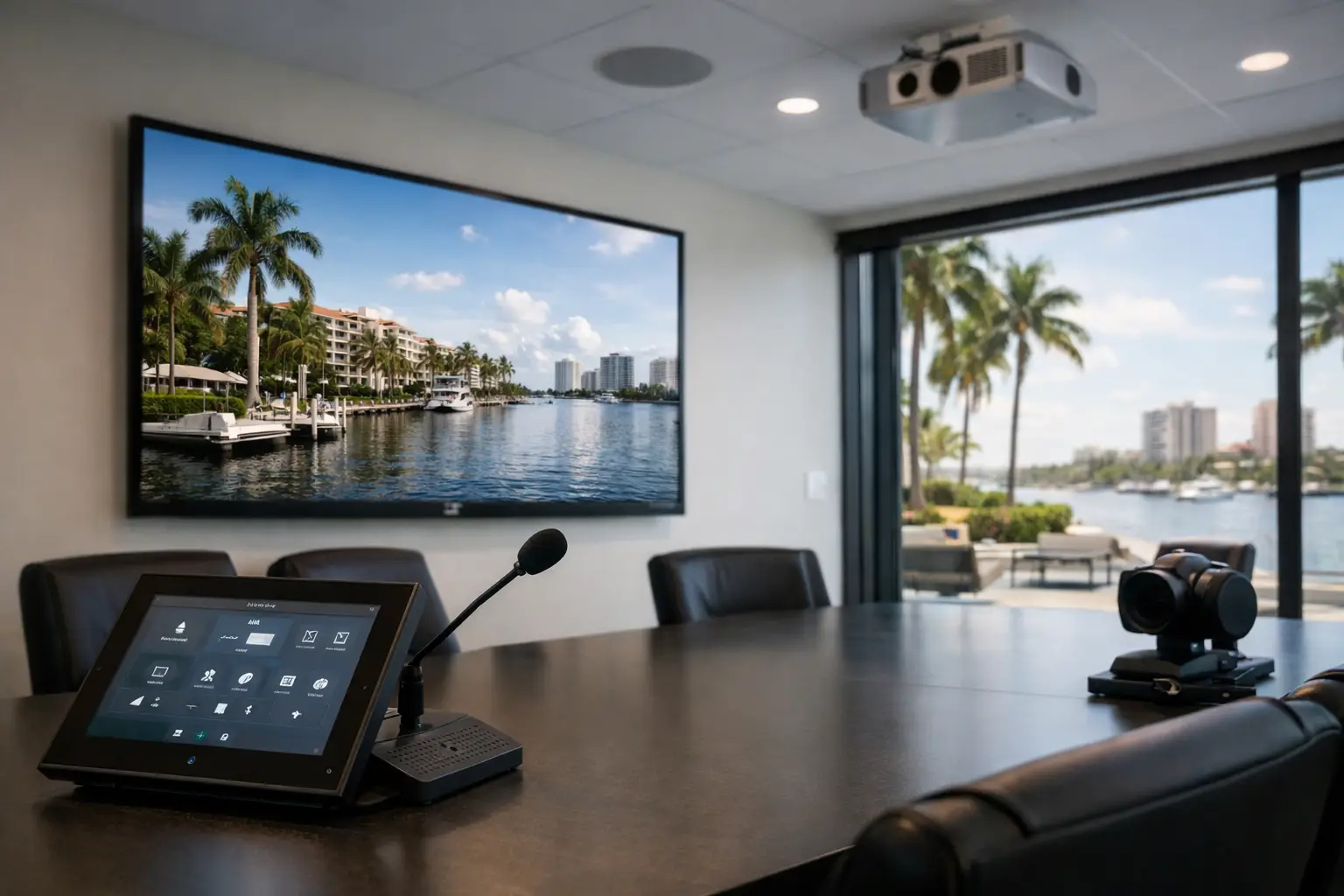
A custom plan starts with how each area will be used. A lobby may need low-profile background audio and messaging displays. A boardroom needs speech intelligibility, camera placement, presentation capability, and control that works without technical assistance. A restaurant may require independent audio zones for indoor dining, bar areas, private rooms, and outdoor seating. Each zone should have the right coverage and the right level of local control.
This approach also accounts for practical details that are easy to overlook. Ambient light can determine display type and placement. Ceiling height, wall materials, furnishings, and room shape influence speaker selection and tuning. Cable paths, equipment rack location, ventilation, and access for future service all affect long-term performance.
When these decisions are made early, especially during new construction or renovation, the finished space stays visually clean. Displays appear intentional, speakers blend with the environment, wiring remains concealed, and technology does not force disruptive changes after walls and finishes are complete.
Start With the Experience, Then Build the System
The strongest commercial AV projects are built around specific operational scenarios. Before specifying equipment, a professional integrator should ask what needs to happen at 8 a.m., during peak business hours, during a private event, and when an issue requires support.
For example, a medical or professional office may prioritize reliable conferencing, reception-area displays, paging, and secure communications. A luxury retail environment may focus on brand-forward digital signage and even sound distribution that supports the atmosphere without overpowering conversations. A multi-use venue may need flexible room combinations, microphones, video distribution, and preset controls for different events.
Those needs guide the system architecture. Rather than adding unrelated components over time, the system is designed as one coordinated platform. Audio, video, networking, control, surveillance, communications, and life-safety-related systems can be planned with clear responsibilities and organized infrastructure.
That coordination is particularly valuable for owners managing a larger property or multiple vendors. One experienced technology partner can reduce gaps between systems and provide a clearer path from design through installation, commissioning, and ongoing support.
Reliable Control Is a Business Requirement
Sophisticated technology does not need to be complicated to use. In fact, the more functions a system supports, the more important it becomes to simplify the daily user experience.
A well-programmed control interface can place commonly used functions where staff expects to find them. A manager might select a music source and adjust a zone from a dedicated touch panel. A meeting-room user may start a presentation mode that activates the display, selects the correct input, and sets the room for collaboration. Authorized personnel can receive a more advanced level of control without making everyday functions confusing for everyone else.
There is a balance to strike. Some businesses benefit from centralized control because consistency matters across the property. Others need local control in specific rooms so staff can respond to immediate needs. The right answer depends on the size of the operation, the number of zones, employee roles, and the level of access that makes sense for the business.
Training is part of this process. A dependable installation includes clear handoff, practical instruction for the people using the system, and support when staffing or operations change.
Plan the Infrastructure for What Comes Next
Commercial AV performance depends heavily on the infrastructure behind the visible equipment. Structured cabling, properly organized racks, network capacity, power planning, labeling, and equipment ventilation are not glamorous parts of a project, but they are where reliability is won or lost.
A thoughtful infrastructure plan makes future changes more manageable. Your business may add a new meeting space, expand into an adjacent suite, introduce more digital signage, or update communications requirements. Building sensible capacity into the design can avoid unnecessary disruption later.
Networked AV and control systems deserve special attention. When audio, video, surveillance, communications, and business IT share the same environment, coordination is essential. Performance, access permissions, monitoring, and device management should be planned with the full system in mind. This is not simply about adding more technology. It is about creating an organized foundation that supports it.
Where Commercial AV and Security Planning Meet
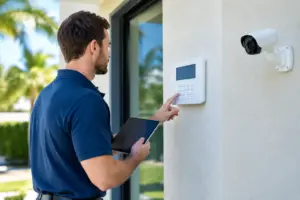
For many commercial properties, AV is part of a larger technology strategy. Surveillance, access-related systems, communications, fire alarm coordination, and network infrastructure all influence how a property operates and how quickly teams can respond when something needs attention.
Keeping these categories separate can create avoidable friction. A display installation may require cabling pathways that should also account for cameras or communications. A front desk may need convenient access to both guest-facing information and security functions. A facility manager benefits when equipment locations, labeling, and service records are organized across the property.
That does not mean every business needs every category in one project. A smaller office may only need an upgraded conference room and a few displays. A hospitality property or larger professional facility may need a broader plan. The key is choosing an integrator that can evaluate the complete environment and make recommendations that fit the actual scope.
Questions to Ask Before Choosing a Commercial AV Partner
The quality of the design and installation partner matters as much as the equipment itself. Before moving forward, ask how the provider documents the system, handles changes during construction, coordinates with other trades, and supports the property after installation.
You should also ask who is responsible for programming, commissioning, staff training, and troubleshooting. A proposal should clarify what is included, identify assumptions, and explain how the system will be operated. Vague scope often leads to confusion once the project is underway.
Look for an integrator that can discuss both the guest-facing result and the technical details behind it. That includes speaker coverage, display visibility, cable management, rack design, network requirements, control logic, and service access. Premium equipment has value, but proper engineering and execution are what make it perform as intended.
Sentry Audio Video approaches commercial projects as a complete technology responsibility, from consultation and system design through professional installation and continued support. That level of ownership helps business owners make decisions with confidence instead of managing disconnected solutions.
A Better Standard for Your Commercial Space
Whether you are planning a new office, refining a hospitality environment, renovating a retail space, or modernizing a client-facing property, the right AV system should reinforce the quality of your business. It should sound clear, look intentional, operate simply, and remain ready for the demands of daily use.
The most valuable first step is a professional site conversation before equipment decisions are finalized. With the right plan in place, your technology can support stronger presentations, better service, more consistent operations, and a commercial environment that reflects the standards your customers already expect.