
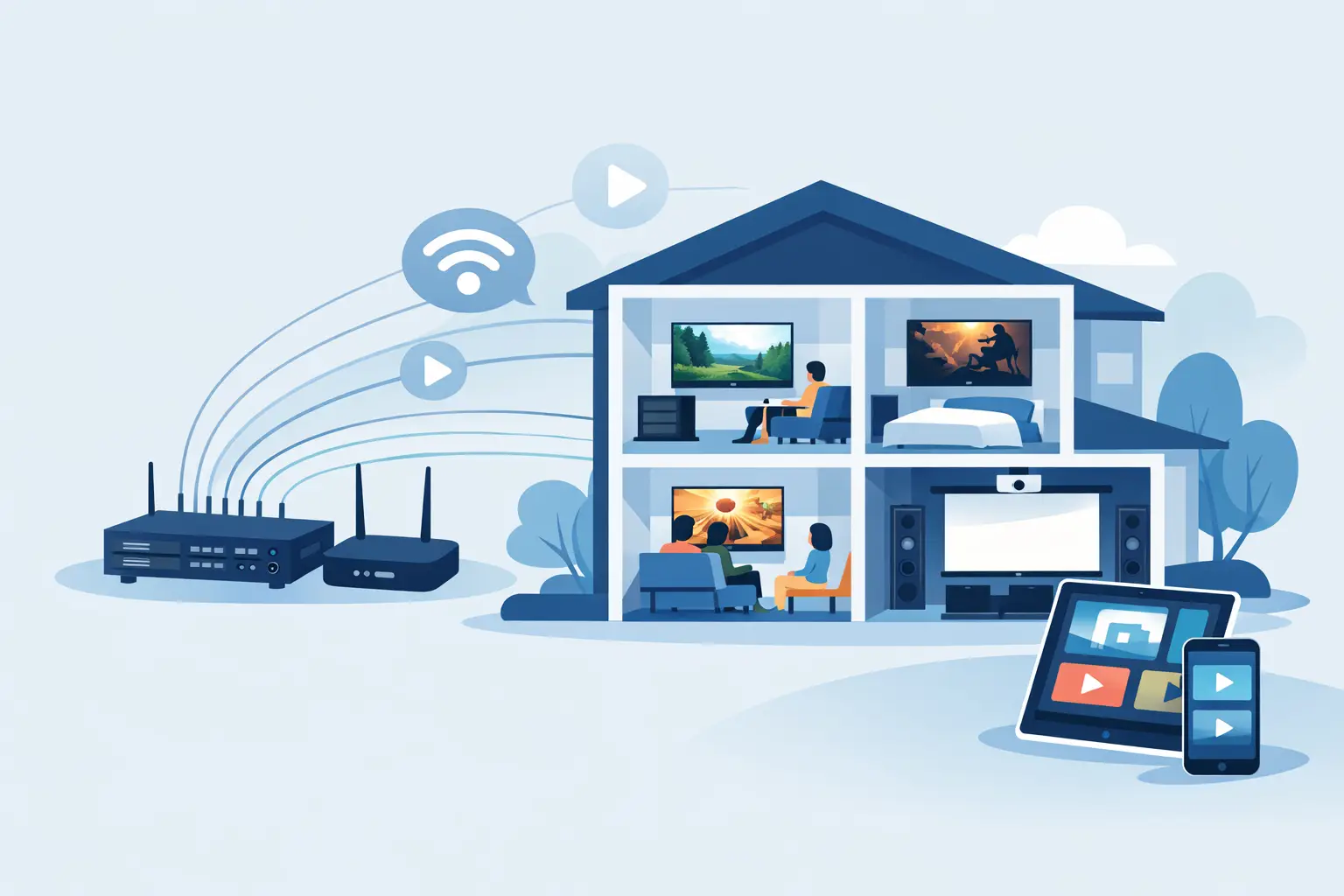
One TV on the wall is easy. Getting every screen in the house to access the right content, in the right resolution, with simple control and a clean installation is where a whole house video distribution system starts to matter. For homeowners building, renovating, or upgrading a luxury property, this is less about adding more displays and more about creating a system that performs the way the home is meant to live.
What a whole house video distribution system actually does
A whole house video distribution system sends video sources to multiple TVs and displays throughout a property from a centralized equipment location or a hybrid mix of centralized and local devices. Instead of placing a cable box, streaming device, or media player behind every screen, the system is designed so selected sources can be viewed where you want them, with control that feels straightforward to the user.
In practice, that could mean watching live television in the family room, pulling up a streaming service in the primary suite, and routing a dedicated source to an outdoor display by the pool. In some homes, every TV can access the same shared library of sources. In others, the design is more selective, with certain zones prioritized for sports viewing, entertaining, or private use.
That distinction matters because no two properties use video in exactly the same way. A waterfront home built for entertaining has different priorities than a full-time family residence, and both differ from a seasonal property where simplicity and remote support may matter more than source quantity.
Why homeowners choose centralized video distribution
The biggest advantage is not simply convenience. It is control over the entire experience.
When video equipment is centralized, the TVs remain cleaner, the rooms stay uncluttered, and the installation looks intentional. You avoid shelves full of boxes, exposed wiring, and the visual distraction that comes from trying to hide equipment in every room. For premium homes where design matters, this is often one of the first reasons owners move away from a piecemeal setup.
There is also a performance and service benefit. Centralized systems make it easier to manage sources, network requirements, firmware updates, and troubleshooting. If something needs adjustment, it can often be addressed without touching every display in the home. That saves time and helps keep the system consistent from one room to the next.
Then there is usability. A well-designed system should let the homeowner or guest press a simple command and get the content they want without guessing which remote controls which device. That sounds basic, but it is where many off-the-shelf setups fall apart. The technology is not the hard part. Making it intuitive is.
The parts behind a reliable whole house video distribution system
Most systems are built around a few core elements: source devices, a video matrix or distribution platform, displays, a structured cabling backbone, and a control system. Depending on the home, the design may also include AV racks, network switches, audio return paths, surveillance display integration, and outdoor-rated components.
The matrix switcher is the traffic controller. It determines which source appears on which screen and allows multiple viewing combinations across the property. In some systems, every TV can watch a different source at the same time. In others, source sharing is more limited by design. The right choice depends on how the home will be used, not just on square footage.
Cabling is just as important as the electronics. A high-performance video system depends on infrastructure that can support signal integrity, resolution requirements, control communication, and future expansion. If the cabling plan is weak, the user experience suffers no matter how impressive the displays look.
Control ties everything together. Whether the interface is a handheld remote, touch panel, or mobile device, the system should be organized in a way that feels natural. “Watch TV,” “Stream Movie,” or “Outdoor Display” are far more useful than expecting the homeowner to think in terms of input numbers or device chains.
Planning for 4K, outdoor displays, and future upgrades
One of the most common mistakes in video planning is designing only for what the house needs today. A proper whole house video distribution system should account for how content delivery, resolutions, and room usage may evolve over time.
4K has become the expected benchmark in premium residential AV, but resolution is only part of the equation. You also need to consider signal transport distance, HDR compatibility, refresh requirements, audio formats, and the way streaming platforms and cable providers fit into the source strategy. If the house includes large-format displays or a dedicated media room, those requirements may be even more demanding.
Outdoor viewing adds another layer. A covered patio or poolside display may seem like just another screen, but heat, humidity, glare, and distance from the equipment rack all affect system design. This is especially relevant in South Florida, where outdoor living is part of the home rather than an afterthought. A display that looks excellent indoors can perform very differently in a bright exterior environment.
Future readiness does not mean overbuilding for the sake of it. It means choosing the right infrastructure, rack capacity, and distribution platform so the system can adapt without major reconstruction later.
Centralized vs local sources – which approach works better?
This is where the answer is often “it depends.” Fully centralized video distribution offers a refined look and a highly managed system, but there are cases where local devices still make sense. A private office, guest suite, or specialty room may benefit from a dedicated source that does not need to be shared across the property.
Hybrid systems are common in larger homes. Shared sources may be routed throughout main living areas while select spaces keep independent devices for privacy or flexibility. That approach can balance convenience with customization, especially when different family members use the home in different ways.
The key is deciding this early. If the plan changes late in the project, control programming, rack design, and cabling requirements can shift quickly.
Why design and installation matter more than the equipment list
Premium components are important, but they are not the full story. The quality of the experience comes from the way the system is engineered, installed, labeled, programmed, and supported.
A poorly designed rack can make service more difficult. Weak documentation can turn a simple update into a disruptive visit. Inadequate ventilation can affect long-term reliability. Even the finish work matters. Wall plates, display mounting, trim alignment, and wire management all influence whether the project feels custom or compromised.
This is why professional integration matters so much in larger homes and renovations. Video distribution touches multiple disciplines – AV, networking, control, structured cabling, and often security or communications as well. When those systems are coordinated under one plan, the result is cleaner and more dependable.
For clients who expect polished execution, that coordination is often the difference between a system that impresses on day one and one that remains easy to live with for years.
Questions to ask before moving forward
Before selecting a system, it helps to answer a few practical questions. How many displays need access to shared content? Which rooms need independent viewing? Will outdoor entertainment be used regularly? Do you want hidden equipment, simplified control, and remote service support? Are there plans for whole-house audio, surveillance display integration, or a dedicated home theater later?
Those questions shape the design more than brand names do. They also help avoid the most common frustration in AV projects – a system that technically works, but does not fit the way the property is actually used.
An experienced integrator should be able to map those needs clearly, explain trade-offs, and recommend a system architecture that matches the home rather than forcing the home to fit a standard package.
What the right experience should feel like
The best whole house video distribution system is not the one with the longest equipment spec sheet. It is the one that disappears into the home and simply works. The screens respond quickly. The control is consistent. The hardware stays out of sight. The installation looks clean, and support is available when needed.
That level of performance comes from thoughtful design, proper infrastructure, and a team that takes ownership from planning through final programming. For homeowners investing in a premium property, that is where the value really shows up – not in having more technology, but in having technology that feels considered, reliable, and ready for the way you live.
If you are planning a new build, major renovation, or media upgrade, it is worth treating video distribution as part of the home’s infrastructure rather than a collection of screens. Done well, it becomes one of those systems you stop thinking about because it works exactly the way it should.