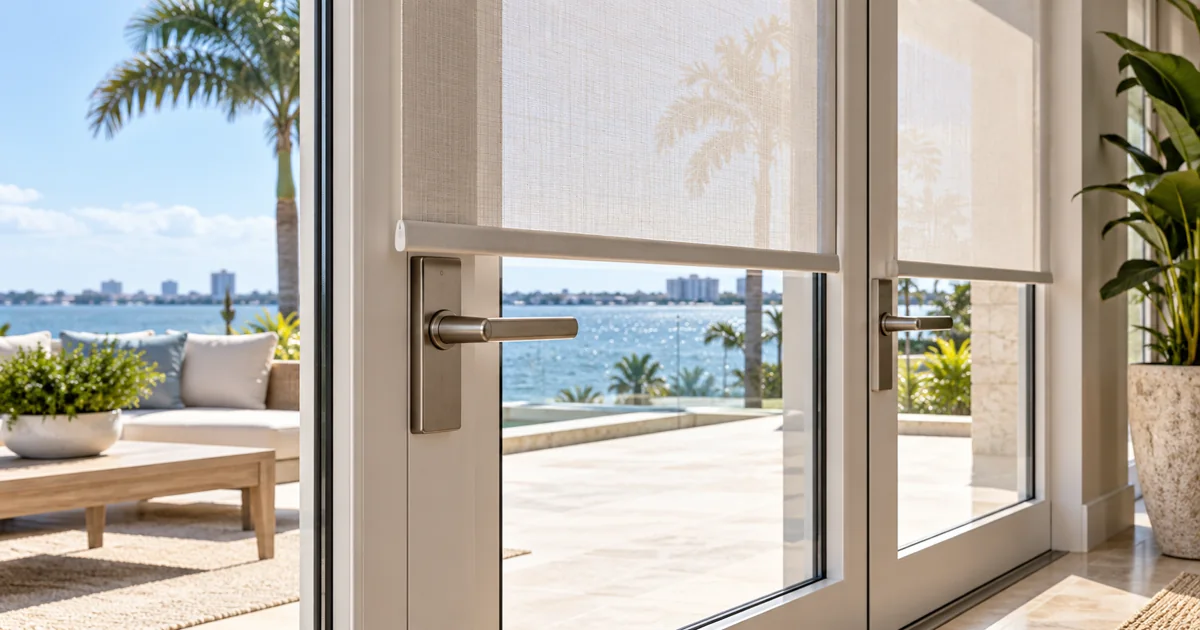
Before ordering a motorized shade above an operable glass door, confirm that the fabric and hembar will clear the handle and that the door can open as intended. The opening width alone does not answer those questions. Projecting hardware, trim, hinges, door swing and the selected shade mounting arrangement all affect the final installation.
Plan your Lutron shades project
Share opening photographs, door type, approximate shade count and renovation timing. We can coordinate field measuring, hardware clearance, fabric travel and the controls that suit everyday door use.
Request a Sentry Audio Video consultation Call (561) 717-3280
For a South Florida terrace, balcony or garden entry, this is a practical purchasing decision. The shade should provide the agreed daylight or privacy function while preserving normal use of the door. Resolve the geometry with the actual product details before custom fabrication.
Survey the door in its normal operating positions
Record the finished opening, wall or jamb depth, handle projection, surrounding trim and available mounting surfaces. Operate the door through its intended movement and note anything that enters the proposed shade path. Sliding, hinged and multi-panel assemblies create different conditions.
Photographs should show the door closed, partly open and fully open where safe. Include the handle and upper mounting area in the same view when possible. A close photograph of the glass alone can hide the very obstruction that needs to be resolved.
Check the finished condition rather than relying only on an early construction drawing. Replacement handles, added trim or changed millwork can alter the available space after the shade was first discussed. Final measurements should follow the applicable product and project requirements.
Choose the fabric travel plane deliberately
A roller shade’s mounting and roll arrangement determine where the fabric descends relative to the glass and hardware. Moving the fabric away from a handle may help clearance, but it can also change the appearance, light gaps and relationship to surrounding treatments.
Discuss regular or reverse roll where the selected product allows the proposed arrangement. Do not choose a roll direction as a universal fix without checking brackets, mounting depth, fabric appearance and manufacturer requirements for that specific shade.
Consider the hembar as well as the fabric. A slim fabric plane that appears to clear a lever may still leave a rigid bottom bar in conflict with it. Review the full range of travel and the door’s movement, not just a static sketch of the shade partly lowered.
Understand inside and outside mounting tradeoffs
An inside-mounted shade can create a clean appearance but may have insufficient depth behind a projecting handle. An outside-mounted arrangement can offer a different fabric position, although it changes visible hardware, coverage and the relationship to adjacent openings.
The decision should include secure attachment and the approved mounting substrate. Do not assume a shade can be fixed into a glazed door frame or impact-rated assembly without confirming the appropriate requirements. The project team should identify permitted attachment locations and any necessary coordination with the door supplier or builder.
Where the preferred design cannot fit, compare alternatives before ordering: a different mounting detail, a revised treatment layout or another suitable window-treatment type. The useful answer is a workable assembly, not an instruction to tolerate fabric rubbing the handle.
Review everyday access and privacy together
Ask how the household uses the opening. A primary terrace door may be used repeatedly while nearby fixed glass remains covered. A bedroom balcony door may need nighttime privacy but must still remain practical to operate.
Decide whether that opening should be controlled separately from adjacent fixed windows. A scene that lowers every shade together can be inconvenient if someone is still moving through the door. Grouping and local control should reflect those patterns without being presented as a substitute for physical clearance.
Motorized shades are window treatments, not safety devices. Keep required exits and normal door operation unobstructed, and coordinate any applicable project requirements with the responsible professionals. Do not rely on an automation routine to resolve an unsuitable mounting arrangement.
Coordinate layered treatments and nearby furniture
Drapery, sheer panels and decorative hardware can occupy the same area as the roller shade. Check stacking space, track positions, fabric movement and the ability to reach the door handle comfortably. Each component may fit by itself while the combined assembly does not.
Furniture placement also matters. A console or seating arrangement can make an otherwise operable door difficult to approach or can interfere with a shade’s travel. Review the actual planned use of the opening with the interior designer rather than evaluating the window treatment in isolation.
For recessed work, use the broader shade pocket and power planning guide to coordinate construction. The door-clearance review should remain a separate item on the opening schedule so it is not lost inside a general pocket dimension.
Approve a dimensioned detail and test the installed result
The order review should identify the selected shade, mounting arrangement, roll direction where applicable, fabric plane, hembar, handle projection and any clearance constraints. Confirm which party is responsible for field measurements and approving the final detail.
After installation, run the shade through its intended travel and operate the door. Check for contact, rubbing, snagging and conflicts with adjacent treatments. Verify the agreed independent or grouped controls and show the owner the normal operating sequence.
Retain the opening schedule and product information with the project records. If the door hardware is changed later, revisit the clearance before assuming that the existing shade arrangement remains suitable.
Plan Lutron shades around the actual openings
Sentry Audio Video is an authorized Lutron dealer providing shade measuring, equipment sales, installation and programming. For Boca Raton and Palm Beach, call (561) 717-3280; for Fort Lauderdale, call (954) 859-6475, or request a shade consultation. Final selection and ordering follow a review of the actual opening and current manufacturer requirements.