A wall of glass can be one of a home’s defining features – until afternoon sun turns a bright living room into a space no one wants to use. Lutron shade integration gives homeowners a refined way to manage daylight, privacy, heat, and atmosphere without adding visual clutter or another isolated control system.
For luxury residences, motorized shades are not simply window treatments with a motor. When they are thoughtfully designed and integrated, they become part of how the home performs throughout the day. A single command can prepare the house for a movie, protect interiors from intense sun, provide privacy after dark, or adjust several rooms according to a family’s routine.
What Lutron Shade Integration Actually Means
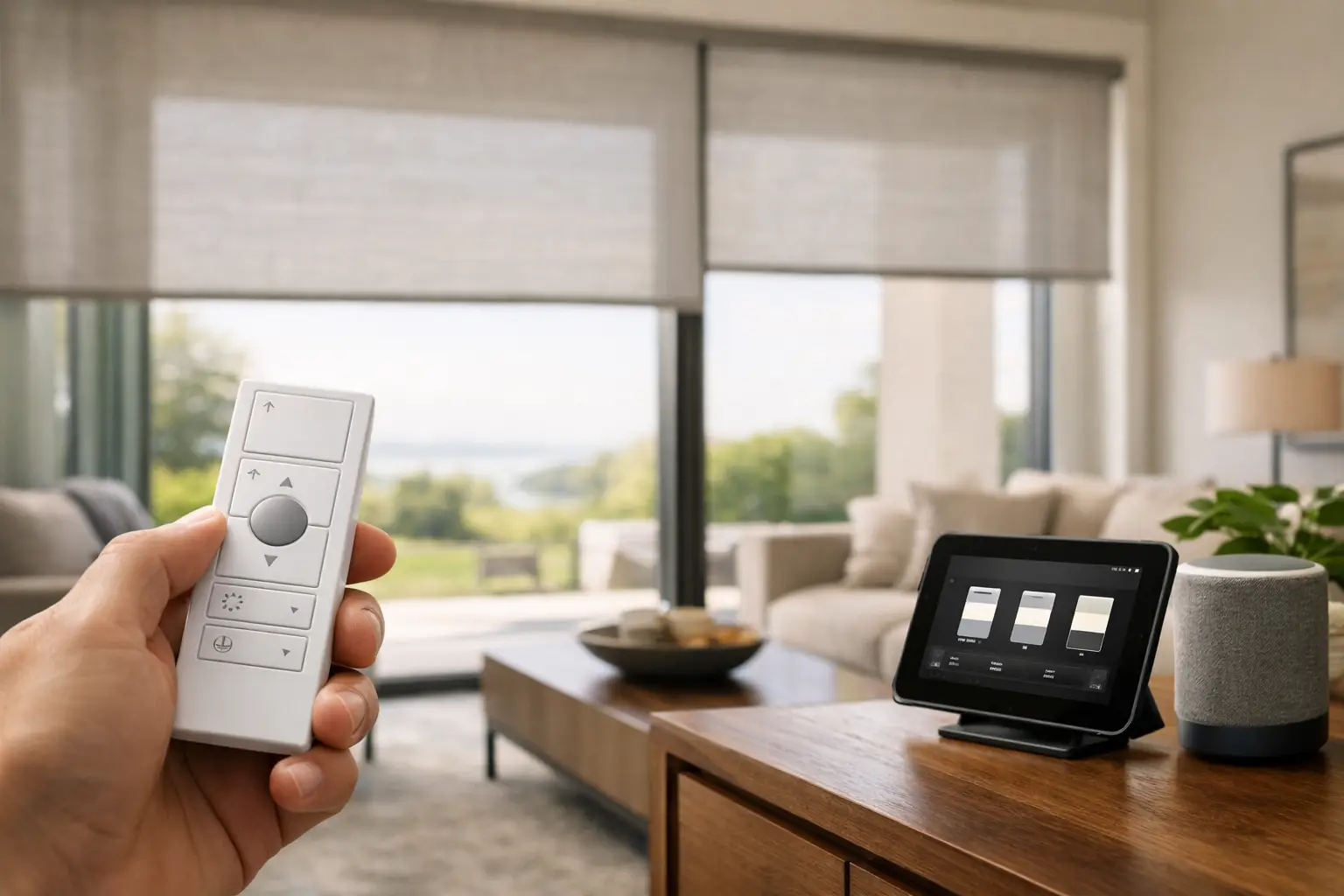
Lutron shade integration connects automated window treatments to the wider control environment of a property. Depending on the system design, shades can operate from elegant keypads, handheld remotes, touchscreens, mobile devices, scheduled events, occupancy sensors, and whole-home automation scenes.
The distinction matters. A shade that moves from its own app may be convenient, but it does not necessarily work in coordination with lighting, entertainment, security, and climate control. An integrated system is designed around what happens in the room and what the homeowner wants to accomplish.
For example, a “Goodnight” command can lower bedroom and perimeter shades, turn off selected lights, arm appropriate security functions, and leave pathway lighting at a comfortable level. A “Movie” scene can lower blackout shades, close drapery tracks, dim lighting, and prepare the theater or media room without requiring a sequence of separate actions.
This level of coordination is particularly valuable in larger homes, waterfront properties, and residences with expansive windows. It reduces friction while keeping the control experience clear for family members, guests, and household staff.
Why Window Treatment Design Should Start Early
The highest-performing shade systems are planned during construction or renovation, before finishes are finalized. Early design creates opportunities for recessed pockets, concealed wiring, properly located power, clean trim details, and coordinated placement with lighting, speakers, security devices, and architectural features.
When shades are added after the room is complete, the project can still be successful. Battery-powered options and carefully planned surface-mounted solutions may be appropriate for finished spaces. The trade-off is that certain concealment options, fabric choices, and control approaches may be more limited than they would be in a prewire phase.
A professional design process starts with the windows themselves. Window size, shape, orientation, mullion layout, ceiling height, and proximity to doors all influence the right solution. So do practical questions: Is the priority glare reduction, privacy, room darkening, UV protection, or a combination of these needs?
In South Florida, solar exposure deserves particular attention. Strong morning or afternoon light can create glare on displays, increase heat gain near glass, and fade furnishings over time. The right fabric openness and shade style can preserve outdoor views while reducing the impact of direct sun. In bedrooms, media rooms, and spaces requiring more complete privacy, room-darkening treatments may be a better fit.
Choosing the Right Shade Type for Each Room
There is no single motorized shade style that belongs everywhere. The most polished installations use the right treatment for the architecture and the room’s purpose.
Roller shades are a popular choice for clean-lined interiors and large expanses of glass. They can provide solar control, privacy, or room darkening depending on the fabric selected. Dual-shade solutions can pair a lighter solar fabric for daytime use with an opaque shade for evening privacy.
Roman shades bring a softer, more decorative look to bedrooms, formal living spaces, and interiors where texture is central to the design. Drapery tracks offer another layer of visual impact and can be especially effective at large openings or sliding glass doors. Honeycomb shades may suit applications where insulation and light control are key priorities.
The fabric selection is just as important as the hardware. Openness factors affect visibility through the fabric and the amount of glare control it provides. Color influences how a shade appears against the window and how it complements the room. A fabric sample viewed under showroom lighting can look very different once installed against bright coastal daylight, which is why experienced guidance at the window is valuable.
Control That Feels Natural, Not Complicated
The success of Lutron shade integration depends on control design. Homeowners should not need to remember which app controls which room or explain a complicated routine to visitors. The controls should be intuitive, consistent, and placed where they are useful.
A bedside keypad might offer open, close, and a favorite setting. A kitchen keypad may include an “Entertain” scene that adjusts nearby lighting and shades together. In a great room, the system can be designed to respond to time of day, sun exposure, or a button press from the same interface used for music and video.
Automation should support the household rather than create surprises. Scheduled shade movement can be useful for morning routines, evening privacy, and protection from intense sunlight. Yet many homeowners prefer schedules that are modest and easy to override. A good programmer builds in manual control and explains how the system will behave before it is finalized.
It also pays to consider the people who use the home differently. A primary resident may want detailed control from a touchscreen, while a guest bedroom needs only a few clearly labeled buttons. The right system makes both experiences feel considered.
Integration With Lighting, Entertainment, and Security
Shades become more valuable when they work with other systems that shape the room. Coordinating shades with lighting creates a more consistent visual environment, especially in rooms with artwork, architectural lighting, and large windows. At sunset, shades can lower while interior lights transition to an appropriate level, maintaining privacy without making the home feel closed off.
In a theater or media room, blackout shades protect image quality and make daytime viewing far more comfortable. In a living room, solar shades can reduce reflections on displays without eliminating the view. Outdoor-facing rooms can also benefit from scenes that prepare the interior for entertaining as daylight changes.
Security integration can add a thoughtful layer of confidence. When a residence is placed into an away mode, shades may follow a planned setting that supports privacy and gives the property a lived-in appearance. The exact programming should reflect the homeowner’s preferences and security strategy, rather than relying on one generic behavior.
For commercial environments, the same principles can improve guest comfort and operational consistency. Conference rooms benefit from preset presentation scenes, while hospitality spaces can manage glare and ambiance across changing daylight conditions. Reliability and simple staff operation should remain the priority.
The Details That Determine Long-Term Performance
A premium shade system is only as good as its installation, programming, and support. Precise measurements are essential, particularly with oversized windows, angled openings, and decorative trim. Alignment, mounting height, fabric clearances, and concealment details all affect the finished appearance.
Power planning is another important consideration. Wired shades are often preferred for new construction and major renovations because they eliminate ongoing battery management and support a clean architectural result. Battery-powered shades can be an excellent option in completed homes, provided access for future maintenance is considered and the system is designed appropriately.
Wireless communication also needs professional attention. Dense construction materials, large properties, and competing wireless devices can influence system reliability. A properly designed installation accounts for coverage, equipment placement, and the way individual rooms relate to the broader control system.
After installation, programming should be tested in real conditions. That means checking room scenes at different times of day, confirming that shade limits are accurate, reviewing keypad labels, and making sure the homeowner understands everyday operation. These final details are where a professionally executed system earns its value.
A Better Starting Point for Your Project
The right time to discuss shades is before window treatments are selected, not after every finish decision is already locked in. Bringing the shade design into the technology and interior planning conversation early helps protect the architecture while ensuring the system supports how the property will actually be used.
Sentry Audio Video designs integrated shade, lighting, entertainment, security, and control systems with one accountable team overseeing the technical details. For homeowners planning a new residence, a renovation, or a targeted upgrade, the most rewarding result is not a home filled with technology. It is a home that responds gracefully when the sun changes, guests arrive, or the day finally winds down.
Planning motorized shades or architectural lighting? Explore our Lutron lighting and shade design services and HomeWorks system planning.