A gate should do more than open when someone presses a remote. It should verify who is arriving, give authorized people dependable access, create a clear record of activity, and operate safely every day. Professional Gate Control Boca Raton solutions bring those functions together for residences, communities, and businesses where security, convenience, and presentation all matter.
For a waterfront home, estate driveway, office property, or multifamily entrance, the right system starts with how people actually use the property. A gate that works well for a family with regular service providers has different requirements than a commercial entrance with employees, deliveries, visitors, and after-hours access. The goal is not more equipment. It is a properly designed entry system that feels simple to use and performs when it counts.
What Professional Gate Control Should Accomplish
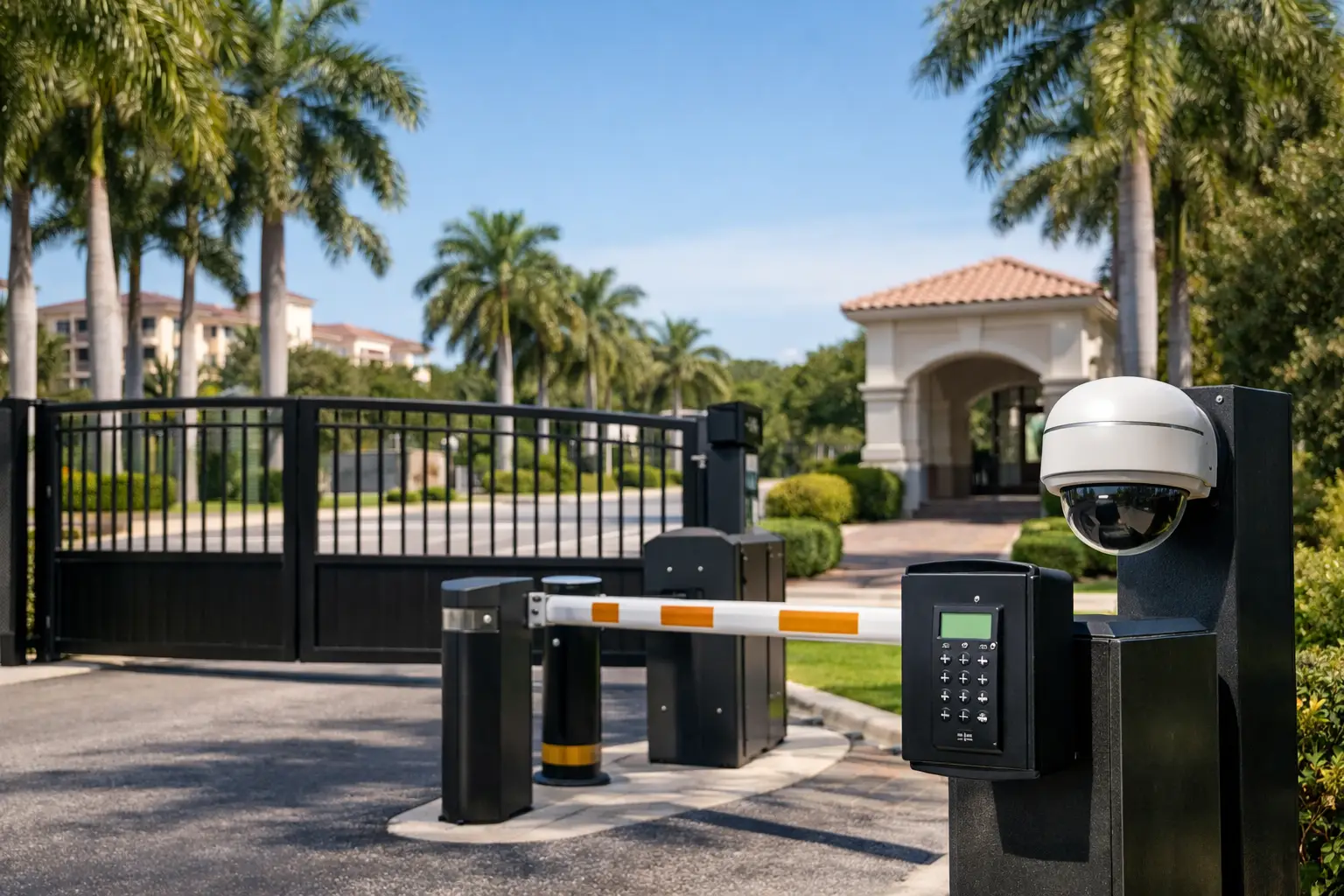
Gate control is the coordinated system behind an automated entrance. It can include the gate operator, access keypad, remote controls, mobile credentials, vehicle detection, cameras, intercoms, safety devices, and network connection. When these components are selected and programmed as one system, property owners gain meaningful control without turning entry into a daily inconvenience.
At a residence, that may mean answering a visitor call from an in-wall touchscreen or mobile app, viewing the caller on a camera, and opening the gate remotely. At a business, it may mean issuing credentials to staff, setting schedules for vendors, reviewing access events, and allowing delivery personnel through only during approved windows.
A professionally integrated system also supports the larger security plan. Gate activity can trigger a camera view, record an event, activate exterior lighting where applicable, or send a notification to the right person. The result is a more informed response to arrivals and access attempts, rather than a gate operating as an isolated piece of equipment.
Gate Control Boca Raton Design Starts at the Entrance
The most common mistake in gate projects is treating the access device as the entire solution. The entrance itself determines what the system needs. Gate type, driveway layout, traffic volume, visitor behavior, landscaping, visibility, and available infrastructure all affect the design.
Sliding gates and swing gates, for example, have different operating characteristics and safety considerations. A long, heavy sliding gate may need a different operator configuration than a pair of decorative swing gates at a narrow approach. Properties with multiple entry points may benefit from consistent credentials and controls across each location, while preserving different permissions for residents, employees, guests, or maintenance teams.
In Boca Raton and surrounding coastal communities, environmental exposure also deserves attention. Humidity, wind-driven rain, salt air, heat, and landscaping irrigation can affect outdoor hardware over time. Equipment placement, weather-rated enclosures, clean wiring practices, and dependable network coverage are not finishing details. They are central to long-term performance.
A site assessment should also account for how vehicles approach and exit the gate. Detection devices and safety sensors must be positioned to support proper operation. The system should not rely on drivers guessing where to stop or attempting to follow another vehicle through the entrance. A well-designed entry point is intuitive for authorized users and deliberate about security.
Access Options Should Match the People Using the Property
There is no single access method that suits every property. The strongest designs often use more than one method so residents, staff, visitors, and vendors each have an appropriate way to enter.
For homeowners, remotes and mobile access offer everyday convenience, while a video intercom gives visitors a direct line to the home. Temporary access can be useful for recurring services, house guests, and property managers, particularly when it can be adjusted or removed without collecting physical keys or remotes.
For commercial and multifamily properties, credentialed access is often the better foundation. Keypads, key fobs, cards, mobile credentials, and directory-based visitor calling can all be part of the system. The right choice depends on the number of users, turnover rate, security expectations, and whether access activity needs to be reviewed later.
Keypads are familiar and effective, but shared codes require management. If a code is passed along or a vendor relationship changes, it should be replaced promptly. Individual credentials generally provide stronger accountability because access can be granted or removed for a specific person without changing entry for everyone else.
Mobile access can be especially valuable for properties that need control from off-site. Still, it depends on reliable connectivity and thoughtful user administration. It is not a replacement for proper system design, safety devices, or a dependable physical operator.
Video and Intercom Turn a Gate Into an Informed Decision
An intercom without video leaves the person inside making a decision based on a voice. A camera without two-way communication may show a visitor but not provide a convenient way to respond. Combining high-quality video surveillance with a door station or gate intercom creates a far more useful experience.
When someone arrives, the property owner or designated staff member can see who is there, speak with them, and decide whether to allow access. Depending on the system design, this can happen from a dedicated control interface, a smartphone, or an office workstation. Camera coverage can also document the approach, gate opening, and departure.
Placement matters as much as camera resolution. A camera should capture a useful face view and the relevant vehicle approach, not merely a broad shot of the driveway. At commercial sites, coverage may also need to distinguish between a pedestrian entrance, visitor lane, employee lane, and delivery area.
The intercom station should be positioned at a practical height, protected from weather, and easy to find. If visitors repeatedly struggle to reach the call button or understand where to stop, the system has not been designed around real-world use.
Safety and Reliability Are Non-Negotiable
Automated gates involve moving equipment, vehicles, pedestrians, and often children or pets. Safety devices are essential components of a professional installation, not optional additions. Depending on the gate and site conditions, these can include photo eyes, monitored edge sensors, vehicle detection, emergency release provisions, and properly configured control logic.
The gate operator must also be correctly matched to the size, weight, and use cycle of the gate. An operator that is undersized for a heavy or frequently used entrance may experience avoidable wear and inconsistent performance. A property with only occasional residential traffic has different demands than a busy business entrance or shared residential community.
Power interruptions are another consideration. For properties where access must remain available during an outage, backup power planning can be part of the design. The correct approach depends on the property’s needs, local requirements, the operator, and how the gate should behave when normal power is unavailable.
Commercial properties may have additional requirements involving emergency access, life-safety systems, fire department procedures, and local codes. These details should be reviewed early, before equipment is selected or installation begins. Correct coordination protects the property and helps avoid costly changes later in the project.
Why Integration Matters Beyond the Gate
A gate becomes more valuable when it works with the systems already protecting and managing the property. Instead of separate apps, unrelated remotes, and disconnected camera recordings, a centralized control strategy can make daily operation clearer for everyone involved.
For a residence, gate access can be part of a larger smart home experience that includes surveillance, exterior entertainment areas, climate, motorized shades, and whole-home control. For a business, gate control can align with surveillance, communications, alarm monitoring, and the technology infrastructure used by staff.
Integration should be purposeful. Not every gate needs every available feature, and adding complexity without a clear operational benefit can create frustration. The right system focuses on the functions that improve security, simplify access, and give the owner confidence that the entrance is being managed properly.
A Better Process for Gate Control Projects
A quality gate control project begins with a conversation about the property and its daily routines. Who enters? When do they arrive? Which entrances are used? Is there a need for remote management, visitor verification, audit history, or connections to existing cameras and automation?
From there, the installation team can evaluate the site, recommend equipment suited to the application, and create a clear plan for access devices, wiring, network coverage, camera placement, and safety components. Clean installation practices are particularly important outdoors, where exposed or poorly organized connections can become a source of service issues.
After installation, configuration and user training complete the experience. Homeowners and staff should know how to manage credentials, respond to visitors, review relevant events, and request service when needs change. Ongoing support matters because gates are used repeatedly, often at the most inconvenient times to experience a problem.
Sentry Audio Video designs gate control systems as part of a complete security and automation strategy, with professional planning, polished installation, and accountable support. Whether your property needs a refined residential entry experience or a controlled commercial access point, the right design begins with an on-site evaluation of how the entrance needs to perform.