A beautiful home can still feel unfinished when its lighting is controlled one switch at a time. The Top 10 Benefits of Lutron Smart Lighting go far beyond turning lights on from an app. A professionally designed Lutron system brings lighting, motorized shades, keypads, sensors, and automation into one dependable experience that supports how a property looks, feels, and functions.
For South Florida residences with expansive glass, outdoor living areas, and multiple entertainment zones, lighting control is not an afterthought. It is a foundational part of the environment. Lutron is widely respected because its systems are engineered for performance, elegant control, and integration with the other technologies that make a premium home easier to enjoy.
Why Lutron Smart Lighting Is Different
Lutron offers solutions ranging from room-based lighting control to fully customized whole-home systems. The right platform depends on the size of the property, the construction stage, the desired level of personalization, and the technologies being integrated. A single-room upgrade and a large waterfront renovation should not be approached the same way.
What remains consistent is the value of thoughtful design. Fixtures, dimming modules, keypads, shade fabrics, scenes, and control locations must work together. When the system is planned by an experienced integrator, the technology stays out of the way while the experience feels intentional.
Top 10 Benefits of Lutron Smart Lighting
1. Create the Right Atmosphere for Every Moment
Lighting changes how a room is perceived. Bright, even illumination may be right for a kitchen during the day, while a warmer, lower level is more appropriate for dinner or entertaining. Lutron scenes allow multiple lights to move to preselected levels with a single keypad press or command.
Instead of adjusting pendants, recessed lights, art lights, and under-cabinet lighting individually, a scene can set the entire room at once. Common scenes may include Entertain, Dining, Relax, Goodnight, or Cleaning. The names are yours, and the levels are tailored to the space rather than pulled from a generic template.
2. Replace Wall Clutter With Elegant, Intuitive Control
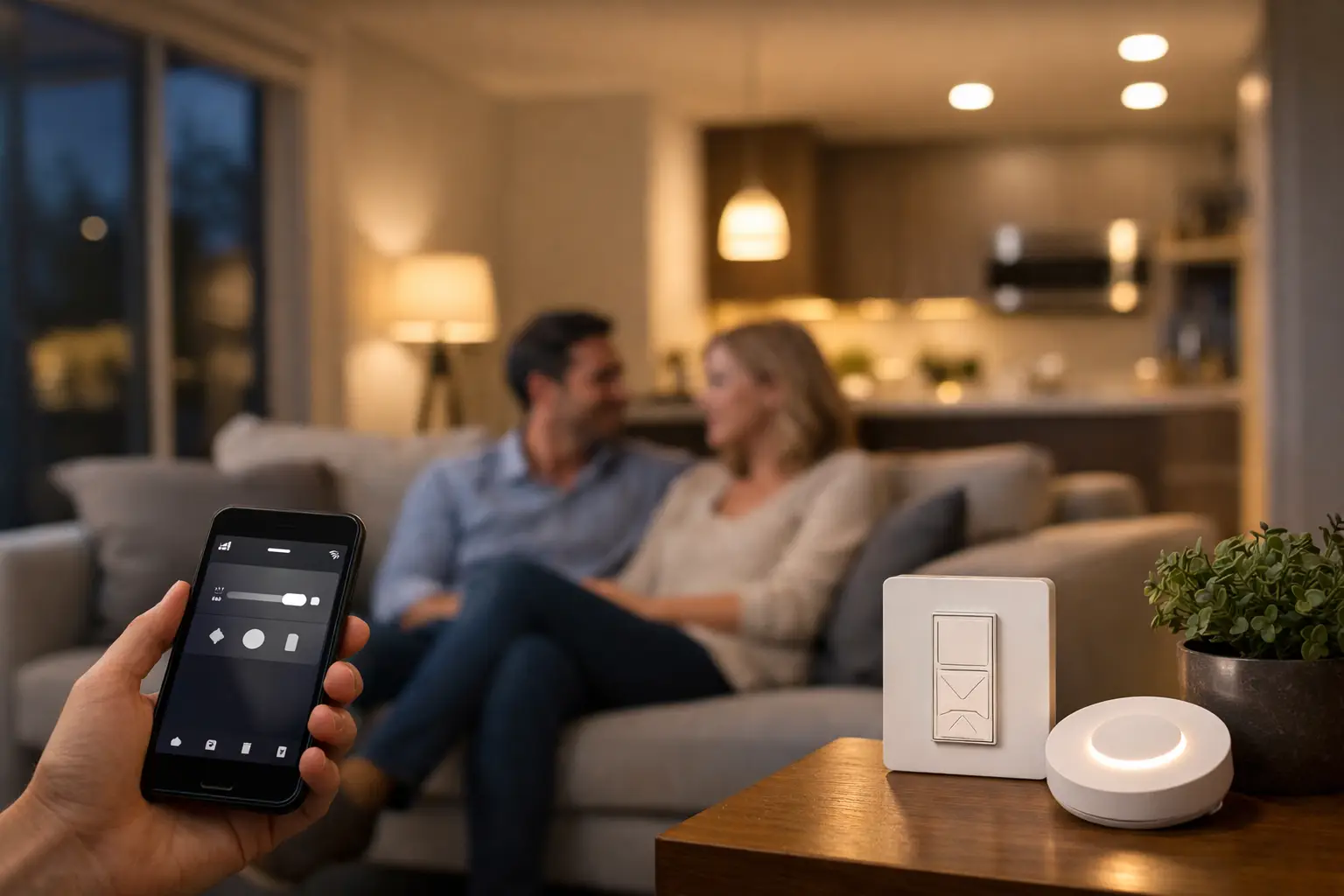
Premium properties often have several lighting loads in one area. Without a control strategy, that can create rows of switches that are difficult for family members, guests, and staff to understand. Lutron keypads consolidate those functions into a clean, labeled interface.
A keypad can control a complete room, an adjacent hallway, shades, or a whole-floor scene without overwhelming the wall. Engraved buttons make the system easy to use even when a phone is not nearby. This is a meaningful advantage for homeowners who want advanced control without asking every guest to learn an app.
3. Make Daily Routines More Comfortable
The most useful automation often happens at predictable times. Morning scenes can gradually raise lighting in bedrooms, kitchens, and main circulation areas. At night, a Goodnight command can turn off selected lights, lower shades, and leave only the necessary path lighting active.
Occupancy and vacancy sensors can also support routine use in closets, pantries, hallways, garages, and bathrooms. The goal is not to automate every light for its own sake. It is to remove repetitive tasks in areas where automatic response is genuinely helpful.
4. Improve Energy Management Without Sacrificing Comfort
Dimming is one of the simplest ways to reduce lighting energy use, but it is most effective when it is easy to live with. Lutron systems make it practical to use only the light required for the activity at hand. Daytime scenes can take advantage of natural light, while timeclock schedules can ensure selected areas are not left fully illuminated overnight.
Motorized shades add another layer of control. During intense afternoon sun, shades can reduce glare and help manage heat gain before a room becomes uncomfortable. The actual results depend on glass exposure, shade fabric, fixture selection, and how the property is used, but coordinated lighting and shading give owners far more control over the environment.
5. Protect Fine Finishes, Furnishings, and Artwork
Sunlight can be harsh on hardwood floors, textiles, wallcoverings, and artwork. In homes with broad windows and coastal exposure, automated shades can respond on a schedule or as part of a programmed scene to manage direct sun.
This benefit is particularly valuable in rooms that are not occupied all day. Shades do not need to remain closed constantly. They can preserve views when desired and provide protection during the hours when light is most damaging. That balance is one reason motorized shading is often planned alongside lighting control rather than as a separate addition.
6. Add a Practical Layer of Security When Away
A vacant home with the same lights on at the same time every night can be easy to recognize. Lutron vacation settings can vary lighting activity to create a more lived-in appearance while the property is unoccupied.
Lighting can also work with a broader security plan. A driveway, entry, or perimeter event may trigger exterior and selected interior lights, improving visibility for cameras and occupants. Lighting is not a replacement for a properly designed surveillance or access-control system, but it can make the overall response more effective.
7. Control Lighting and Shades From One Place
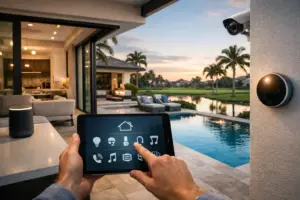
Wall keypads remain essential, but they are not the only control option. Depending on the system design, homeowners can manage lighting and shades from dedicated touchscreens, mobile devices, tabletop controls, and integrated smart home interfaces.
Centralized control is especially valuable in larger homes. It allows an owner to check the status of key areas, prepare the house before arrival, or close shades in a room that was overlooked. The strongest systems still make the primary actions available locally, so the home remains simple to operate even when a device is charging or misplaced.
8. Support Better Entertainment Experiences
Lighting has a direct effect on how a media room, home theater, or outdoor entertainment space performs. A properly programmed Watch scene can bring lights down to comfortable viewing levels, eliminate reflections near the display, and maintain safe pathway illumination. When the program ends, the room can return to its previous setting.
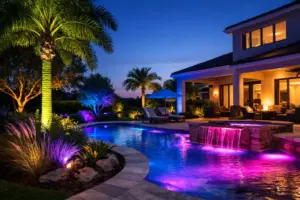
This coordination matters just as much outdoors. Landscape lighting, dining-area fixtures, poolside illumination, and architectural lighting can be grouped for an evening event without requiring separate controls for every zone. The result is a polished setting that feels prepared before the first guest arrives.
9. Scale With a Renovation or New Construction Project
A quality lighting control system should be designed with the property’s long-term plan in mind. A renovation may start with main living spaces, shades in high-exposure rooms, and exterior lighting, then expand later to bedrooms, guest spaces, or a new outdoor area.
The trade-off is that planning early provides the greatest flexibility. During new construction or major remodeling, an integrator can coordinate keypads, control panels, low-voltage infrastructure, fixture loads, shading pockets, and other details before finishes are complete. Retrofitting remains possible in many situations, but early planning usually produces the cleanest result and the broadest design options.
10. Gain Reliability From Professional System Design
The final benefit is the one that determines whether every other benefit feels worthwhile: reliability. Lighting control is used constantly, often by people who should not need technical knowledge to operate it. That makes system design, commissioning, and support critical.
A professional installation accounts for the actual electrical loads, fixture compatibility, wireless coverage where applicable, keypad placement, programmed scenes, and integration requirements. It also gives homeowners one accountable partner when lighting, shades, audio/video, security, and automation need to work together. The lowest upfront scope is not always the right scope if it leaves the system fragmented or difficult to support later.
What to Consider Before Selecting a Lutron System
Begin with how the home or business will be used, not with a list of products. Identify rooms where lighting has the greatest impact, times of day when glare is a concern, entertaining patterns, security priorities, and the other systems that should coordinate with lighting. A family’s main living areas may require simple, immediate controls, while a gallery hallway or theater may call for more precise scene programming.
It is also wise to involve the lighting designer, interior designer, architect, builder, and technology integrator early. Decorative fixtures and recessed lighting need to be selected with dimming performance in mind. Shade pocket dimensions, fabric choices, window treatments, and keypad finishes should be resolved before they become costly changes.
Sentry Audio Video designs Lutron lighting and shading systems as part of a complete property experience, with clean installation standards and ongoing support after the project is complete. The right first step is a conversation about the rooms that matter most, the lifestyle you want the home to support, and the level of control that will feel natural every day.