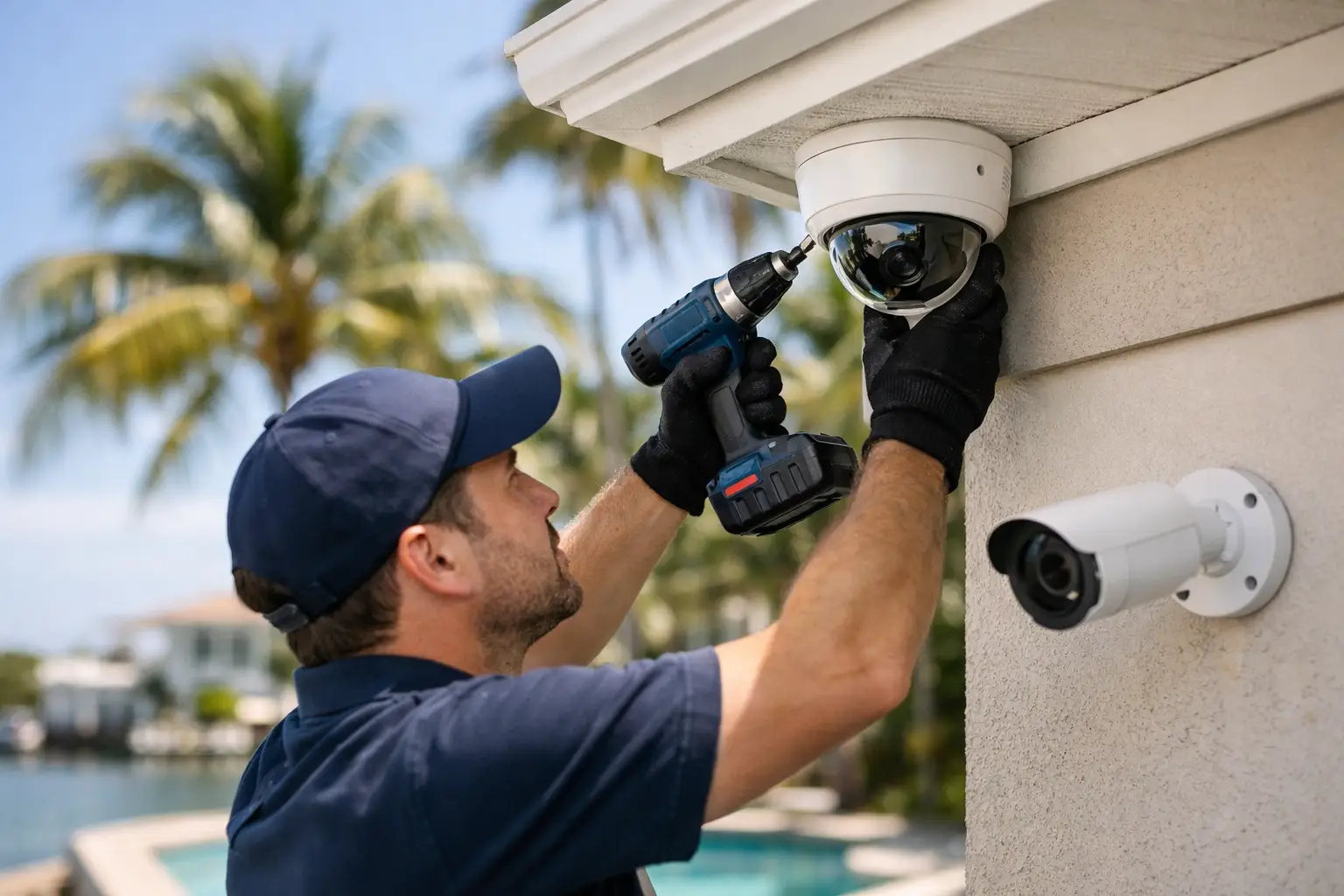
A security camera system is only as valuable as the moment it captures clearly. A camera mounted too high may miss faces. One aimed toward direct sunlight may produce washed-out footage. A system with weak network planning can become difficult to view when you need it most. Professional Security Camera Installation Delray Beach property owners can rely on starts with coverage planning, not a box of cameras.
For homes, cameras should protect the people and spaces that matter without making the property feel over-monitored. For businesses, the priorities often include entrances, employee-only areas, inventory, parking, cash-handling locations, and after-hours activity. The right design reflects how a property is actually used.
Start With a Coverage Plan, Not a Camera Count
The question is not simply how many cameras a property needs. It is what each camera needs to prove. Identifying a visitor at the front door requires a different camera angle than monitoring a long driveway or documenting movement at a commercial loading area.
A professional walkthrough helps establish sightlines, lighting conditions, access points, and areas where camera placement may be restricted by architecture or landscaping. It also identifies blind spots created by gates, columns, rooflines, mature trees, and parked vehicles. This planning stage is especially valuable on larger Delray Beach homes, waterfront properties, offices, and retail locations where an incomplete view can leave a meaningful gap in protection.
Camera placement should also respect privacy. Exterior cameras may cover entrances, walkways, perimeter areas, and outdoor amenities, while interior coverage should be purposeful and appropriate for the setting. A knowledgeable integrator can help create a system that supports security goals without recording more than necessary.
What Professional Security Camera Installation in Delray Beach Includes
A properly designed surveillance system is more than visible cameras. It includes the infrastructure, recording equipment, network configuration, and user experience behind them. Each component affects reliability.
High-resolution cameras can provide useful detail, but resolution alone does not guarantee usable footage. Lens selection, mounting height, field of view, night performance, and lighting must work together. A wide-angle camera can observe a large area, for example, but may not provide the facial detail needed at a distant gate. In some cases, two cameras positioned for specific purposes are more effective than one camera attempting to cover everything.
Clean wiring matters as much as camera selection. Professionally routed cabling protects the appearance of a finished home or business while helping provide stable connectivity and power. When a project is part of a renovation or new construction plan, structured cabling can be installed before walls are closed, creating a cleaner and more flexible foundation for surveillance, Wi-Fi, access control, audio/video, and future system upgrades.
Recording deserves equal attention. Retention time depends on the number of cameras, video quality, recording schedule, and storage capacity. Continuous recording may be appropriate for high-activity commercial areas, while event-based recording can be practical in selected residential locations. The right choice depends on risk, traffic patterns, and how long footage may need to remain available.
Remote Viewing Should Be Simple and Secure
Property owners want to check live video, review events, and receive alerts from wherever they are. That convenience needs thoughtful setup. Remote access should be configured through secure credentials, controlled user permissions, and a network designed to support video traffic without disrupting other connected systems.
For a residence, this may mean a homeowner can verify a delivery, check a pool area, or review a gate alert while away. For a business, authorized managers may need access to multiple locations or the ability to review an incident quickly. Permissions can be tailored so the right people have access without sharing a single login across an entire team.
Integration can make the experience more useful. Cameras can work alongside smart home control, video intercoms, motorized gates, exterior lighting, and monitored security systems. In a commercial setting, surveillance may coordinate with communications, access control, and network infrastructure. The goal is clear operation from a system that fits the property, rather than a collection of disconnected apps and devices.
Choose an Installer Who Owns the Details
Security surveillance is a long-term system, not a one-time installation. Equipment may need adjustment after landscaping changes, a network may require updates, and a growing business may add new coverage areas. Working with one experienced integration partner creates accountability from system design through installation and ongoing support.
Sentry Audio Video designs camera systems around the property, the people using it, and the level of visibility required. The result is a polished installation with purposeful coverage, reliable recording, and controls that feel straightforward every day. A site consultation is the right first step for identifying the areas that deserve a clear view.
Need to replace Hikvision cameras or an NVR? Sentry evaluates the existing cabling, coverage and recorder before designing a practical Hikvision-to-NDAA-aligned upgrade in South Florida.