A beautiful home can still feel flat when every light operates from a wall switch and every room receives the same harsh overhead glow. Luxury Lighting in Woodfield Country Club is about far more than adding decorative fixtures. It is the thoughtful coordination of light levels, color temperature, fixture placement, motorized shades, and intuitive control that makes a residence feel composed from morning through late evening.
For homeowners who have invested in architecture, interiors, art, and outdoor living, lighting should support each of those investments. The right system brings warmth to a formal dining room, gives a kitchen the task light it needs without making it feel clinical, highlights a gallery wall without damaging artwork, and makes arriving home after dark feel safe and welcoming.
What Defines Luxury Lighting in Woodfield Country Club?
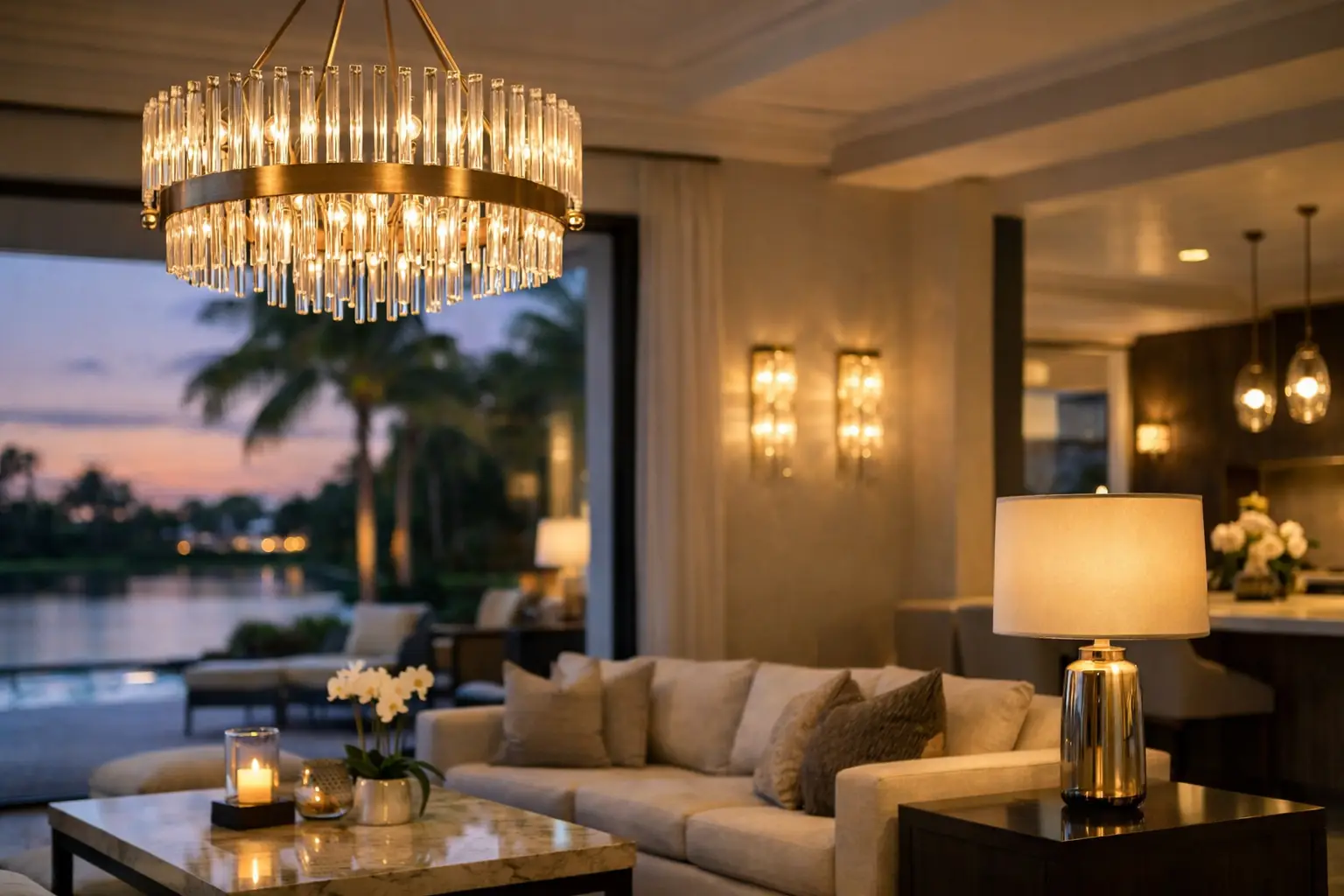
Luxury lighting begins with layers. A single recessed fixture cannot carry a room on its own, particularly in homes with detailed millwork, stone surfaces, high ceilings, or open-concept floor plans. A professionally designed plan combines ambient lighting for general visibility, task lighting for specific activities, accent lighting for visual depth, and decorative lighting that acts as part of the interior design.
The difference is noticeable even when the fixtures themselves are discreet. Cove lighting can soften the perimeter of a ceiling. Cabinet and toe-kick lighting can give a kitchen or dressing area dimension after sunset. Adjustable architectural fixtures can direct attention to artwork, texture, or a feature wall rather than washing the entire space in light. In a well-executed design, the home feels intentional without feeling over-lit.
Control is the other defining element. Rather than walking room to room to adjust dimmers, residents can call up tailored scenes from elegant keypads, a touchscreen, or a mobile device. A “Welcome Home” scene might illuminate the entry, kitchen, and main living areas while lowering shades for privacy. A dinner setting can dim ambient lighting, emphasize the dining table, and shift adjacent areas into a softer background level.
Start With How Each Room Is Actually Used
The most successful lighting plans are built around lifestyle, not a fixture schedule. A kitchen may host family breakfasts, catered gatherings, homework, and late-night snacking. It needs bright, clean task illumination at work surfaces, but it also benefits from lower-level lighting that allows the room to remain comfortable when the workday is over.
Great rooms require similar flexibility. During the day, natural light may be the priority, with shades managing glare and heat at expansive windows. In the evening, layered lighting should support conversation, reading, television viewing, and entertaining without reflections on the screen or an overly dark perimeter. Integrating lighting with shades and audio/video control prevents each system from operating as a separate experience.
Primary suites deserve a different approach. Soft pathway lighting helps occupants move safely at night without waking a partner. Dressing areas need accurate, balanced illumination that presents colors honestly. In bathrooms, lighting should be practical at mirrors while remaining flattering and calm throughout the space. These details are small individually, but they shape how a home feels every day.
Create Scenes Instead of Managing Individual Lights
A luxury residence should not require a lesson before guests can make the room comfortable. Scene-based control replaces a long row of dimmers with clear, purposeful settings. The system manages multiple loads at once, always returning the room to a consistent result.
Common scenes may include Entertain, Dining, Relax, Movie, Goodnight, and Away. The names and functions should reflect the household, not a prepackaged template. For example, a family that frequently hosts outdoors may want an Evening Patio setting that coordinates landscape lighting, pool-area illumination, motorized shades, and distributed music. Another household may prioritize a Quiet Morning setting that raises bedroom shades gradually and activates only the lighting needed for an early start.
A Goodnight command is especially valuable in a larger property. From a bedside keypad, it can turn off selected interior lights, set exterior lighting to its evening schedule, lower shades where desired, and confirm that the property has shifted into its nighttime routine. When lighting control is designed alongside security and surveillance, the experience can be both more convenient and more reassuring.
Choose Color Temperature and Dimming With Care
Color temperature has a major effect on how finishes, furnishings, and skin tones appear. Light that is too cool can make warm wood, stone, and fabric feel sterile. Light that is excessively warm may distort colors or leave task areas feeling dim. Many luxury homes benefit from a consistent warm-white baseline, with the final specification tailored to the room, materials, and amount of daylight.
Dimming quality matters just as much. Not every LED fixture, lamp, and dimmer combination performs well together. Poor compatibility can lead to flicker, limited dimming range, audible noise, or lights that do not turn on consistently at low levels. These are the details that separate a polished lighting experience from a collection of products that technically work but never feel refined.
A qualified integrator coordinates the control platform, dimming modules, fixture specifications, drivers, and keypads before installation. That planning is particularly important during a remodel or new construction project, when wiring pathways, fixture locations, and shade pockets can be addressed cleanly rather than treated as afterthoughts.
Bring the Outdoors Into the Lighting Plan
In South Florida, outdoor living is part of the home rather than a seasonal extra. Landscape and architectural lighting can extend the use of patios, covered lounges, kitchens, pools, and waterfront views well into the evening. The goal is not to flood the property with brightness. It is to create definition, comfortable circulation, and an inviting atmosphere while respecting neighboring homes and preserving the character of the landscape.
Lighting at steps, pathways, gates, and entry points supports safe movement. Carefully aimed fixtures can reveal palms, specimen trees, stonework, and water features without producing glare. Around a pool, the lighting plan should complement the water and entertaining areas while keeping controls simple for the homeowner.
Outdoor zones should be included in the same system as the interior. That allows the homeowner to set an outdoor entertaining scene, schedule landscape lighting, or turn off multiple areas from one location at the end of the night. For residences with backyard entertainment and whole-house audio, this level of coordination creates a more cohesive experience.
Why Integration Matters More Than Adding More Fixtures
Adding fixtures alone does not guarantee a better result. In fact, too many poorly placed recessed lights can flatten architectural details and create uncomfortable glare. The stronger approach is to coordinate lighting with the home’s architecture, interior design, window treatments, entertainment systems, and security needs from the start.
Motorized shades are a prime example. Daylight is one of a home’s most valuable assets, but unmanaged sunlight can create glare, fade furnishings, and interfere with viewing areas. Automated shades can respond to schedules, room use, or a single selected scene, allowing homeowners to enjoy natural light while maintaining comfort and privacy. When the shades lower for a movie, the room lighting can adjust at the same time. When morning shades rise, the lighting can remain at a gentle level rather than switching abruptly to full brightness.
This integration also reduces visual clutter. Instead of covering walls with unrelated switches and controls, a carefully planned system uses consistent keypad locations and intuitive labels. The result is cleaner walls, easier operation, and a home that feels finished.
Plan Early, Then Commission Thoroughly
The ideal time to plan luxury lighting is before walls are closed and finishes are finalized. Early collaboration allows the design team to establish lighting zones, conceal drivers and equipment appropriately, coordinate decorative fixture locations, and prepare for future needs. It also helps avoid conflicts with ceiling details, cabinetry, HVAC grilles, artwork, and motorized shade pockets.
However, existing homes can also be upgraded thoughtfully. The scope depends on the current wiring, available panel capacity, desired control level, and whether the homeowner is renovating specific spaces or improving the entire property. A site evaluation should identify what can be integrated cleanly and where targeted improvements will deliver the most meaningful impact.
Commissioning is the final step that should never be rushed. Each scene must be adjusted in the actual space, at the times of day when it will be used. Keypads need labels that make sense to the household. Dimming levels should be tested, and homeowners should receive clear guidance on daily operation. Sentry Audio Video approaches this process as a complete system responsibility, from design and installation through ongoing support.
The right lighting does not call attention to its technology. It simply makes every room more usable, every gathering more polished, and every return home feel exactly as it should.