A large estate can have a front gate, a guest entrance, a service drive, a detached garage, a pool terrace, and multiple exterior doors – all before accounting for the main residence. So, How Many Security Cameras Does a Large Palm Beach Estate Need? For many properties, the answer is not a simple number. It is a coverage plan built around the estate’s access points, sightlines, daily routines, and the level of detail needed when an event occurs.
A well-designed system for a substantial Palm Beach property often includes 12 to 24 cameras, while larger waterfront or multi-structure estates may require 30 or more. The final count should never be based on acreage alone. A compact property with several points of entry may need more protection than a larger, open property with a controlled gate and limited access.
Start With What Must Be Seen and Verified
The purpose of a surveillance system is not to record every square foot of landscaping. It is to provide useful video when it matters: a clear view of who entered, where they came from, what vehicle was involved, and where they went next.
That distinction changes the design. One wide-angle camera may show activity across a driveway, but it may not capture a face or license plate with the detail needed for identification. A professional plan combines overview cameras with purpose-built views at critical locations.
For an estate, the first question is usually not, “How many cameras?” It is, “What must the system verify?” That could include visitor access at the gate, deliveries at the service entrance, activity around a boat dock, or movement near a family’s outdoor living area.
A Typical Camera Layout for a Palm Beach Estate
Every property is different, but an initial design commonly accounts for the areas below. The goal is to create overlapping coverage without filling the home with unnecessary hardware.
Gate, Driveway, and Vehicle Access
The front gate is often the most important surveillance point on the property. A complete gate arrangement may include an overview camera, a dedicated vehicle camera, and a camera positioned to capture drivers and passengers as they approach the call box or entry control.
For estates with a separate service drive, that entrance needs its own coverage. Deliveries, vendors, landscape crews, and household staff frequently use a different route than residents and guests. Recording both approaches gives the homeowner a more complete account of activity on-site.
Driveways also deserve more than one view when they curve, branch, or pass beneath dense landscaping. One camera can document a vehicle entering, while another captures it arriving at the residence, garage, or motor court.
Main Entry, Side Doors, and Secondary Entrances
The front door should have a close, face-level view as well as a broader view of the approach. A video door station can add convenient two-way communication, but it should be integrated into a larger camera design rather than treated as the only protection for the entry.
Side doors, pool-access doors, mudrooms, garage entry doors, and staff entrances often receive less attention during construction. Yet these are the places where camera coverage can be most valuable. On a large residence, six to 10 exterior entry points are not unusual. Depending on the architecture and camera field of view, some may share coverage, while others require individual cameras.
Perimeter, Grounds, and Outdoor Living Areas
Palm Beach estates frequently have extensive exterior amenities: pools, guest houses, cabanas, tennis courts, outdoor kitchens, gardens, docks, and detached structures. These spaces add value to the property, but they also create blind spots if they are not considered as part of the security plan.
Perimeter coverage should focus on likely routes of approach rather than attempting to create a continuous wall of cameras along every property line. Cameras at strategic corners, gates, pathways, and transitions between the street, grounds, and residence are generally more effective than indiscriminate placement.
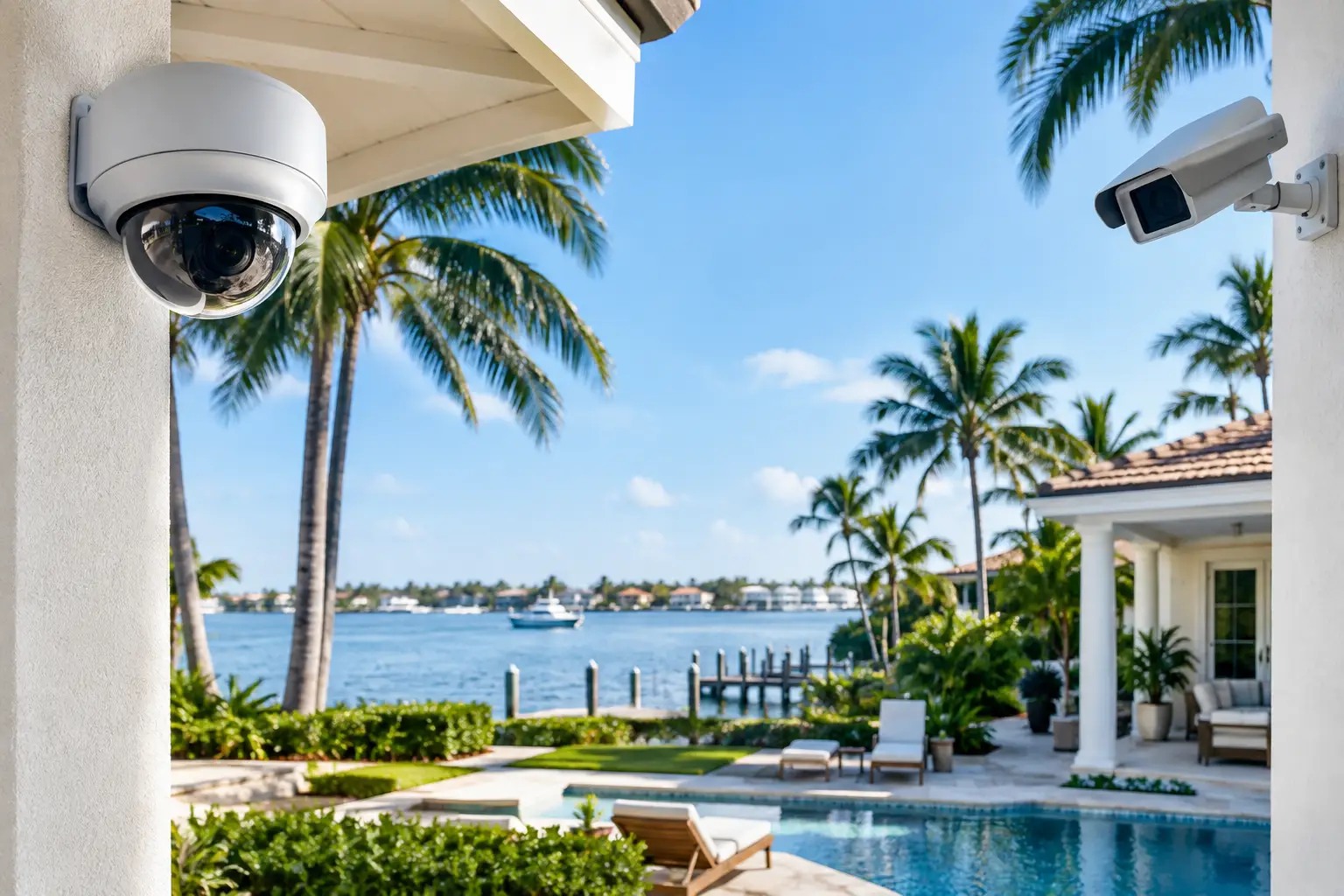
For a waterfront property, dock access, seawall gates, and waterside approaches may be relevant. The right number depends on the dock layout, neighboring sightlines, lighting conditions, and whether the area is used regularly by family, guests, or service personnel.
Detached Buildings and Service Areas
A guest house, garage, storage building, gatehouse, or staff quarters should be included in the initial system design. These structures often have their own entrances and may sit beyond the practical field of view of cameras mounted on the main home.
Service areas also require thoughtful placement. A camera covering package deliveries, refuse collection, mechanical access, or vendor arrival can resolve questions quickly without intruding on the more private areas of the property.
Why Camera Count Is Only One Part of the Decision
A 16-camera system can be excellent or inadequate depending on how it is engineered. Resolution, lens selection, mounting height, lighting, recording capacity, network design, and remote access all affect real-world performance.
For example, mounting a camera too high may provide a broad property view but make facial identification difficult. Selecting an overly wide lens can have the same effect. Conversely, a tightly focused camera can deliver strong identification detail but may miss activity approaching from the side. The most reliable designs use each type of view intentionally.
Nighttime performance matters in South Florida as well. Exterior lighting, reflective surfaces, tropical landscaping, and changing weather can influence image quality. Cameras should be selected and positioned with day and night conditions in mind, not simply mounted wherever there is an easy cable path.
Recording design deserves equal attention. A large estate may generate significant video data, particularly with high-resolution cameras operating around the clock. Homeowners should decide how long footage needs to be retained and whether selected cameras should record continuously, by analytics-based event, or both. The answer affects storage requirements and ongoing system performance.
Privacy and Discreet Installation Matter
A security system should support peace of mind without making a residence feel institutional. Premium estates call for clean installation, considered camera placement, and equipment that complements the architecture.
Cameras should protect the property while respecting private spaces. Interior surveillance is often limited to specific areas such as an entry foyer, art collection corridor, wine room, or unoccupied secondary residence. Bedrooms, bathrooms, and other highly private areas should remain outside the scope of the system. Exterior cameras must also be positioned carefully to avoid recording into neighboring private spaces.
This is another reason a site assessment matters. Architectural finishes, mature palms, hedges, columns, soffits, and landscape lighting all affect where equipment can be placed discreetly and effectively.
How Many Security Cameras Does a Large Palm Beach Estate Need in Practice?
A practical starting point for a large primary residence is 12 to 18 cameras. This may cover the front gate, service entry, driveways, principal exterior doors, garage, pool area, and key sections of the grounds.
A more complex estate with a guest house, long drive, multiple gates, waterfront access, detached amenities, or broad perimeter may require 20 to 30 cameras. Properties with several structures or heightened security requirements may go beyond that range.
The key is not reaching a predetermined number. It is eliminating meaningful blind spots while ensuring each camera delivers a useful, well-lit image. Adding cameras without a placement strategy can increase complexity without improving protection.
Work From a Property-Specific Design
The strongest surveillance systems are designed alongside the home’s network, access control, lighting, and smart home controls. When those systems work together, a homeowner can receive a verified alert, view the relevant camera, communicate with a visitor, and manage access from one organized interface.
Sentry Audio Video approaches estate surveillance as part of the property’s larger technology infrastructure. That means assessing camera locations, cable pathways, recording needs, network reliability, and the clean finish expected in a premium residence before installation begins.
The most helpful next step is a walkthrough that identifies entrances, traffic patterns, exterior features, and the views that matter most to your household. The right camera count becomes clear when the system is designed around how the estate is actually used – and around the confidence you expect when you check it from anywhere.