A missing package, damaged gate, or vehicle break-in can turn a quiet community into a stream of unanswered questions. Well-planned HOA surveillance gives boards and property managers clear, usable information when incidents occur, while helping residents feel safer in the shared spaces they value.
The goal is not to record every movement across a neighborhood. It is to create purposeful coverage at the places where community property, access control, safety, and liability intersect. That distinction matters. A camera system that is carefully designed, professionally installed, and governed by clear policies can support a better resident experience. A system placed without a plan can create privacy concerns, unreliable evidence, and more work for the board.
What HOA Surveillance Is Designed to Protect
An association camera system should begin with the community’s actual risks, not a catalog of camera models. In gated communities, the highest-priority areas may include entry and exit lanes, visitor call boxes, gate arms, clubhouse doors, pool access points, mailrooms, parking areas, and package rooms. In condominium properties, elevators, lobbies, corridors, loading zones, garages, and amenity spaces often deserve close attention.
Each location calls for a different approach. A gate camera may need to capture vehicle details in changing sunlight and at night. A pool camera may be intended to document access and incidents without creating an intrusive view into nearby residences. A clubhouse system may need wide-area coverage plus a closer view of entrances and equipment rooms.
The strongest plans ask a simple question for every camera: What event should this camera help verify? When the answer is specific, camera placement, lens selection, lighting, recording settings, and storage requirements become much easier to define.
Security and Privacy Must Work Together
Residents generally understand the value of cameras around common property. They also expect their association to handle surveillance responsibly. A board that treats privacy as part of system design is more likely to earn confidence than one that introduces cameras with little explanation.
Common areas are not the same as private spaces. Cameras should not be aimed into homes, patios, balconies, or other areas where residents have a reasonable expectation of privacy. They should never be installed in restrooms, changing areas, or similarly sensitive locations. Sightlines matter as much as the camera’s stated purpose, particularly in dense condominium settings and waterfront communities where homes sit close together.
Audio recording deserves separate attention. Rules governing recorded conversations can be more restrictive than rules governing video, and they vary by jurisdiction. Before activating audio features, an association should obtain advice from qualified legal counsel familiar with the property’s state and local requirements. In many cases, video-only coverage is the more appropriate choice for shared-space security.
Visible notices can also help set expectations. Signage does not replace a sound policy, but it communicates that certain common areas are monitored and may deter misconduct before an incident occurs.
Build a Clear HOA Surveillance Policy
The cameras are only one part of the program. A written surveillance policy establishes who may view footage, why they may view it, how long recordings are retained, and how requests are handled. This protects residents, board members, management staff, and the association itself.
A practical policy should address the following operational decisions:
- Which common areas are monitored and the security purpose for each area.
- Who has authorized access to live views, recorded video, and system settings.
- What events justify footage review, such as a reported crime, property damage, safety incident, or documented rule violation.
- How long recordings are retained before automatic deletion, subject to storage capacity and any preservation request.
- How footage is preserved when an incident may lead to an insurance claim, police report, or legal matter.
- How resident, law enforcement, vendor, and attorney requests are reviewed and documented.
Access should be limited rather than shared broadly among board members. A property manager or designated security representative may need routine access, while others may only need footage reviewed for a documented reason. Strong passwords, role-based permissions, activity logs, and multi-factor authentication help maintain accountability.
Retention is another area where more is not always better. Long retention periods require greater storage capacity and can increase the amount of sensitive video the association must manage. The right period depends on the property, incident patterns, and legal guidance. The priority is maintaining clear footage long enough for an issue to be reported and investigated, then applying the policy consistently.
Coverage Quality Matters More Than Camera Count
A property can have many cameras and still lack evidence when it matters. Poorly placed devices may capture the top of a hat instead of a face, glare from headlights instead of a license plate, or a wide view that cannot identify a person entering a door.
Professional site assessment accounts for camera height, direction of travel, nighttime illumination, landscaping growth, reflective surfaces, weather exposure, and the path data must travel from each location to the recording system. In South Florida, heat, humidity, heavy rain, salt air near the coast, and intense sun affect equipment selection and placement. Outdoor housings, properly protected connections, and secure mounting are performance requirements, not finishing touches.
Network design is equally critical. High-resolution cameras produce valuable detail, but they also require sufficient bandwidth and storage. A reliable system uses structured cabling or carefully planned wireless connections where appropriate, power protection, secure network segmentation, and recording hardware sized for the number of cameras and desired retention period.
For larger communities, a central management platform can simplify authorized viewing across gates, amenities, garages, and multiple buildings. It can also support remote access for designated personnel without exposing the entire system to unnecessary risk. The objective is controlled access from a dependable platform, not an app that becomes difficult to manage after installation.
Connect Surveillance With the Rest of the Property
Video surveillance performs best when it supports the property’s broader security and communications strategy. At a gated entrance, video can work alongside access control and visitor entry systems to document activity at the point of arrival. At a clubhouse, it can complement credentialed access and alarm monitoring. At a package room, it can help management verify deliveries, access events, and reported losses.
Integration should be purposeful. A camera view associated with a specific door or gate event can reduce the time needed to investigate a dispute. Notifications for unusual activity may be useful at an equipment room or restricted access point, but constant alerts from busy common areas quickly become noise. Proper configuration means choosing alerts that prompt action rather than creating alert fatigue.
A well-designed system also needs a plan for outages. Backup power, protected network equipment, health monitoring, and ongoing service help prevent a camera system from becoming unavailable precisely when it is needed. Routine maintenance should include checking camera views, cleaning lenses, confirming time synchronization, reviewing storage health, and testing remote access permissions.
Questions Boards Should Ask Before Approving a System
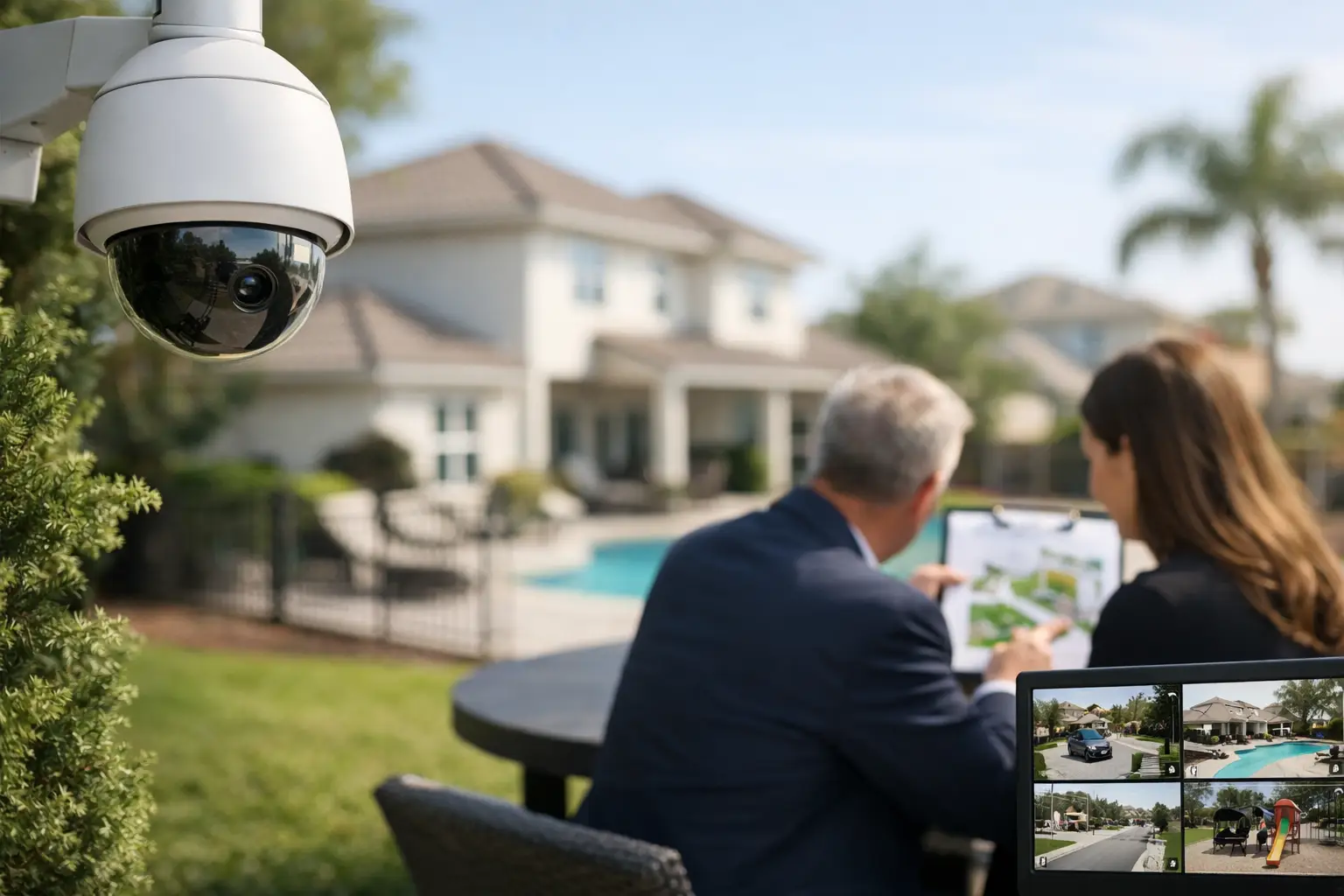
Before selecting an installation partner, boards and managers should expect direct answers about coverage, privacy, reliability, and long-term service. Ask to see a proposed camera map that identifies what each device is intended to capture. Confirm how the design handles nighttime conditions, restricted views, data storage, and access permissions.
It is also wise to ask who will own and administer the system after installation, what training management will receive, and how service calls will be handled. Communities change over time. New landscaping, construction, gate modifications, or a shift in traffic patterns may require camera adjustments. A system should be designed with room for future expansion without forcing the association to replace the foundation later.
For associations in Boca Raton, Fort Lauderdale, and surrounding South Florida communities, Sentry Audio Video provides custom surveillance design, professional installation, integration, and ongoing support for properties that need dependable protection of shared spaces. The right starting point is a site assessment focused on your community’s layout, security priorities, and resident expectations.
When HOA surveillance is planned with precision, it does more than record incidents. It gives property leaders a practical tool for responding with facts, protecting common assets, and maintaining the confidence of the people who call the community home.