Changing the company that monitors a commercial fire-alarm system requires more than replacing a billing account. The existing panel, communicator, central-station records, emergency contacts, inspection history and local requirements all have to line up before responsibility changes. A rushed handoff can create confusion about who receives signals and who is authorized to act.
This checklist is a planning guide, not a substitute for the requirements of the authority having jurisdiction, the system manufacturer or the monitoring provider. For work within the company’s licensed low-voltage scope, visit Sentry Audio Video’s fire alarm services page or call (561) 717-3280.
Confirm the system, property and responsible parties
Begin with the exact property address, building name, occupancy and areas served by the system. Identify the owner, property manager, fire-alarm contractor, monitoring provider and any separate company responsible for inspection, testing or sprinkler supervision. In a managed or multitenant property, document who has authority to approve account changes and receive reports.
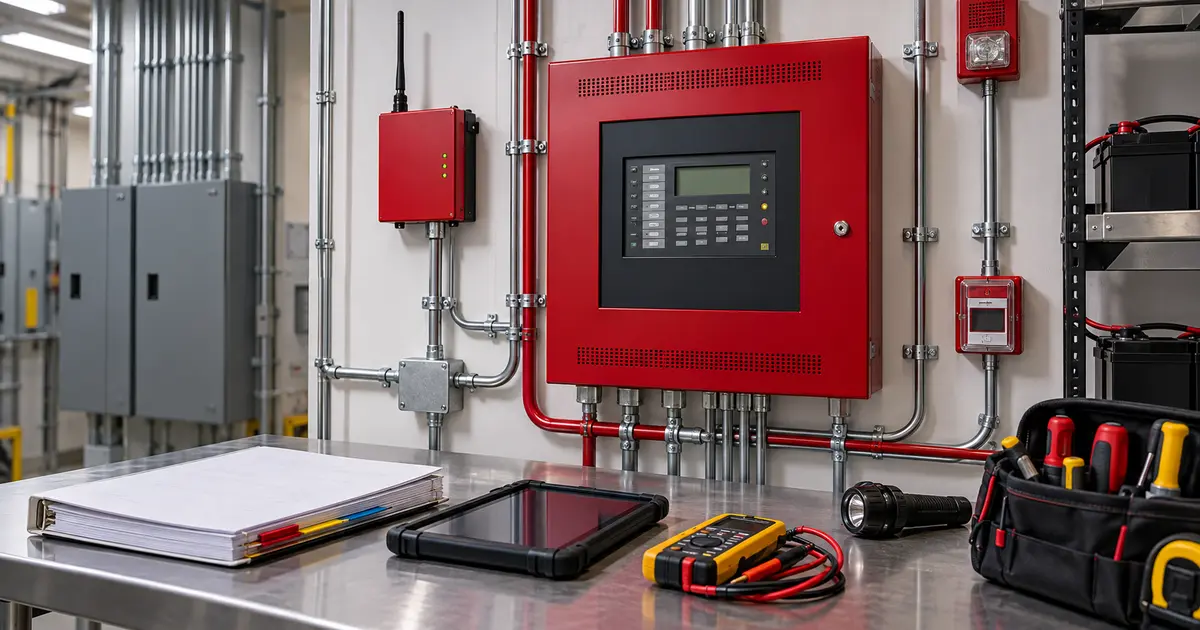
Record the panel manufacturer and model, communicator type, account numbers, monitoring format and the location of relevant equipment. Note any interconnected systems, elevators, smoke control, sprinkler monitoring or other interfaces that require coordination. Do not assume the available panel label or old invoice describes the current configuration.
Collect records before terminating the old service
Request recent inspection and test reports, service history, zone or point lists, monitoring account information and outstanding deficiency notices. Obtain current emergency contacts and any passcodes through an approved secure process. If drawings, programming records or permits exist, preserve them with the property records.
Review open problems before the takeover date. A new monitoring company should not unknowingly inherit unresolved troubles, disabled points or communication failures. Assign responsibility for correction and document whether the issue must be resolved before the handoff.
Verify communicator and transmission compatibility
Commercial systems may send signals through cellular, IP or other approved communication paths depending on the equipment and applicable requirements. The new provider must confirm that the existing communicator and reporting format are compatible with its central station. Reuse should never be assumed merely because the device powers on.
Check the communicator’s ownership, support status and service relationship. Some equipment may be tied to the prior provider. If replacement is required, coordinate power, mounting, antenna location, network access and programming. Any change should preserve required supervision and reporting behavior.
Build the correct central-station account
The central station needs accurate property data, signal definitions, dispatch instructions and contact order. Review the exact sequence for alarm, supervisory and trouble conditions. Confirm which individuals may place the system on test, cancel a response where permitted or authorize account changes.
Contact lists become stale quickly. Include primary and alternate contacts, appropriate after-hours numbers and any property-specific access instructions that the monitoring provider supports. Remove former employees and vendors promptly. Schedule a recurring review rather than waiting for the next emergency.
Coordinate testing and notifications
The transfer should include a controlled test of the communication path and representative signals as required by the responsible parties and applicable rules. Coordinate with occupants, building management, the central station and any required authorities before testing. Avoid creating an unnecessary dispatch or leaving the system in test mode after work is complete.
Document the start and completion of the test, signals received, time stamps, account information and any deficiencies. Confirm that normal monitoring is restored and that the former provider’s account is closed at the appropriate time. There should be no ambiguous period in which both or neither provider believes it is responsible.
Protect inspection and compliance continuity
Monitoring does not replace required inspection, testing or maintenance. Keep those services on their own documented schedule and clarify who performs them. Review the date and status of the most recent inspection and any corrective work still due.
Local requirements and system conditions can vary. Coordinate permits, notices, documentation and acceptance procedures with the authority having jurisdiction and qualified professionals where applicable. Sentry Audio Video holds Florida low-voltage license EF20001874; the scope of a particular project must still be confirmed before work begins.
Plan for power, network and carrier changes
A monitoring path can be affected by building power, cellular conditions, internet service or future network changes. Record which connections the communicator uses and who must be notified before a carrier, firewall or network is replaced. Keep the equipment accessible and protect its power as required for the system.
If the property is also changing cameras, access control or intrusion monitoring, coordinate schedules without treating those systems as interchangeable with fire alarm. The consolidated security systems page explains broader commercial, HOA and monitoring options, while fire-alarm responsibilities remain distinct.
Create a post-takeover record
After the handoff, the property should receive a concise record showing the active monitoring provider, effective date, account identifiers, responsible contacts, test results and equipment changes. Store it where management can find it during an incident. Add renewal dates and service contacts to the property’s operating calendar.
Schedule a follow-up review after personnel, tenancy or building systems change. The best takeover is not just a successful first signal; it is an accurate account that stays current.
Questions to resolve before the transfer date
- Who is authorized to approve the monitoring change?
- Are inspection reports and open deficiencies available?
- Is the communicator compatible with the new central station?
- Are signal definitions, contacts and dispatch instructions current?
- Who coordinates testing and any required notifications?
- When does the former provider’s responsibility end?
- Who owns ongoing inspection, testing and maintenance?
Plan the handoff as a life-safety transition
Sentry Audio Video helps commercial properties evaluate fire-alarm communication and monitoring transitions within verified licensed scope. The objective is a documented handoff with compatible equipment, confirmed signal receipt and clear responsibility.
Request a commercial fire-alarm monitoring assessment: call (561) 717-3280 or contact Sentry Audio Video.