A fire alarm is not simply a code requirement mounted on a wall. It is the system that gives people the time and direction they need to respond when seconds matter. For property owners, facility managers, and business leaders, Commercial Fire Alarm Systems also protect business continuity, limit property loss, and support the confidence of employees, tenants, guests, and insurers.
The difference between an adequate system and a dependable one often comes down to planning. Every facility has its own occupancy patterns, risk areas, operating hours, and building infrastructure. A professional fire alarm design accounts for those realities from the start, then provides a clear path for installation, inspection, monitoring, and ongoing service.
What a Commercial Fire Alarm System Is Designed to Do
A commercial fire alarm system detects signs of fire, alerts occupants, communicates critical information, and can initiate connected life-safety responses. Depending on the building and applicable requirements, it may also transmit alarm signals to a supervising monitoring station, release access-controlled doors, recall elevators, shut down air handling equipment, or activate smoke-control sequences.
The fire alarm control panel is the decision-making center of the system. It receives information from initiating devices, identifies the affected area, activates notification appliances, and reports trouble conditions that could compromise performance. In a properly designed installation, the panel is accessible to authorized personnel while protected from accidental interference.
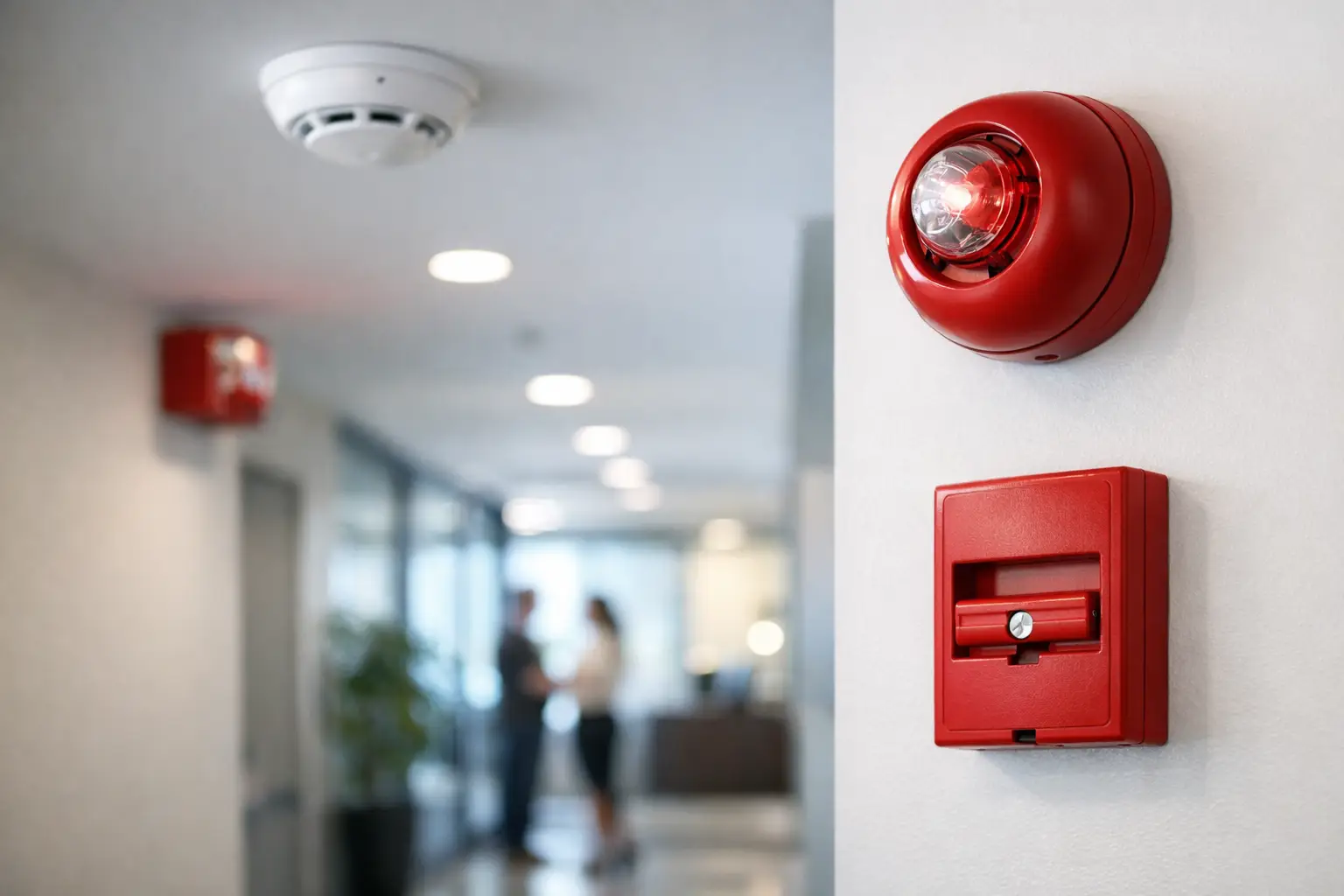
The most common system components include:
- Smoke, heat, duct, beam, flame, or specialty detection selected for the hazard and environment
- Manual pull stations that allow occupants to report an emergency immediately
- Horns, strobes, speakers, and visual notification devices that communicate an alarm clearly
- Fire alarm control panels, remote annunciators, batteries, and power supplies
- Monitoring communicators that report alarm, supervisory, and trouble signals off-site
Not every facility needs every device type. A warehouse with high ceilings presents different detection challenges than a restaurant, medical office, condominium common area, retail space, or professional office. The right equipment is determined by code requirements, fire protection engineering, the authority having jurisdiction, and how the space is actually used.
Start With the Building, Not the Equipment List
Selecting a fire alarm system by device count alone is a common mistake. A reliable design begins with a site evaluation and a review of the building plans, occupancy classification, existing life-safety systems, and local requirements. The goal is not merely to place devices throughout the property. It is to create a coordinated system that provides dependable detection and intelligible notification where people need it.
For example, high ambient noise may require carefully designed audible notification, while areas occupied by people with hearing impairments require properly located visible notification. Kitchens, parking areas, mechanical spaces, and humid environments may need detection methods that reduce unwanted alarms without weakening protection. Open ceilings, glass walls, renovations, and changing floor plans can all affect device placement and signal coverage.
A professionally prepared design also considers future changes. Businesses grow, tenants change, and spaces are reconfigured. A scalable panel, clearly labeled pathways, organized low-voltage cabling, and accurate documentation make future expansion far more manageable. This level of foresight is especially valuable in premium commercial properties where finished surfaces, architectural details, and uninterrupted operations matter.
Addressable vs. Conventional Commercial Fire Alarm Systems
Conventional systems divide a building into broad detection zones. When an alarm occurs, the panel identifies the zone rather than the exact device. This approach can be appropriate for smaller, straightforward facilities where the layout is stable and rapid pinpoint identification is less critical.
Addressable systems assign an identity to each connected device. When smoke is detected or a manual station is activated, responders and building staff can identify the specific device and its location. That added detail supports faster investigation, more efficient maintenance, and clearer response in larger or more complex buildings.
Addressable technology is often the better fit for multi-tenant buildings, hospitality spaces, large offices, mixed-use properties, and facilities with multiple levels or distinct operational areas. It can also provide detailed maintenance information, such as a detector that needs cleaning or a device that has entered a trouble condition. Still, the correct choice depends on the building, governing code, and the required level of system functionality, not on a one-size-fits-all preference.
Monitoring Turns an Alarm Into a Coordinated Response
An audible alarm inside the building is essential, but off-site monitoring adds another layer of protection. When a monitored system transmits an alarm signal, a supervising station can follow established response procedures, even when the property is unoccupied or staff members are unable to place a call.
Monitoring also reports supervisory and trouble signals. A supervisory condition may indicate that another fire protection component needs attention, while a trouble signal can point to an issue such as a communication failure, low battery, open circuit, or disabled device. These signals do not necessarily mean there is a fire, but they should never be ignored. They are early warnings that the system may not perform as intended during an emergency.
Communication paths deserve careful consideration as well. Modern systems may use cellular, internet-based, or dual-path communication methods, subject to local requirements and site conditions. A facility should have a monitored connection designed for reliability, tested regularly, and supported by a clear escalation process.
Integration Must Support Life Safety First
Commercial properties increasingly rely on connected access control, surveillance, communications, and network infrastructure. These systems can work alongside fire alarm equipment, but life safety must always take priority. Integrations must be designed and programmed so they support required emergency operations rather than create confusion or delay.
A common example is access control. During an alarm, designated egress doors may need to release so occupants can exit safely. Video surveillance can help security teams assess activity around an affected area, but it does not replace fire detection or notification. Mass communication systems may also support emergency messaging, yet they must be coordinated carefully with fire alarm voice evacuation requirements.
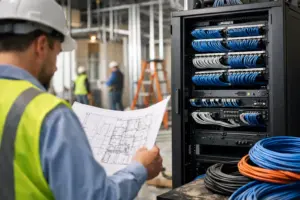
This is where working with an experienced technology integrator matters. Fire alarm systems should not be treated as isolated devices or added as an afterthought during construction. The equipment, cabling, network coordination, access control interfaces, and user training must be considered as part of the complete commercial environment.
Testing, Inspection, and Documentation Protect Performance
A fire alarm system can only protect a building if it is operating correctly. Inspection, testing, maintenance, and recordkeeping are not administrative tasks. They are the disciplines that reveal failed batteries, obstructed devices, impaired circuits, communication issues, and changes to the facility that affect coverage.
Required intervals and procedures vary by system type, occupancy, applicable codes, local regulations, and the authority having jurisdiction. A qualified provider can help establish a maintenance plan that addresses recurring inspections, functional testing, device cleaning where appropriate, battery replacement, monitoring verification, and documentation.
Facilities should also keep current records of device locations, panel information, inspection reports, impairments, service history, and staff contacts. When an alarm, inspection, renovation, or emergency occurs, organized documentation reduces uncertainty. It also makes it easier to coordinate with fire officials, property managers, insurers, and service professionals.
Signs Your System May Need Attention
A renovation, occupancy change, repeated nuisance alarms, outdated panel hardware, missing documentation, or recurring trouble signals should prompt a professional review. So should a building acquisition or tenant turnover. What was acceptable for a previous layout or use may no longer provide the level of protection the facility requires.
Business owners should also consider the user experience. Can authorized staff quickly understand panel messages? Is the system labeled clearly? Are emergency contacts current? Are notification devices visible and audible in occupied areas? A technically installed system still needs to be manageable when a stressful event occurs.
Sentry Audio Video helps businesses coordinate professionally designed fire alarm, security, communications, and infrastructure solutions with clean installation and accountable ongoing support. A thoughtful review of your facility today can help ensure its life-safety systems are ready when they are needed most.
For project-specific design, installation, monitoring coordination and continuing support, explore Sentry’s commercial fire alarm and life-safety services.