A camera that records an incident is useful. A system that helps identify a concern early, delivers a clear image when it matters, and fits naturally into how a property operates is far more valuable. That distinction is driving the most meaningful video surveillance technology trends for homeowners and businesses investing in long-term security.
For a waterfront residence, a retail location, a professional office, or a multifamily property, surveillance is no longer simply a collection of cameras mounted around the perimeter. It is becoming a carefully designed part of a broader security and technology plan, connected to access control, communications, automation, and reliable network infrastructure.
Video Surveillance Technology Trends Shaping Better Security
Artificial intelligence is becoming more practical
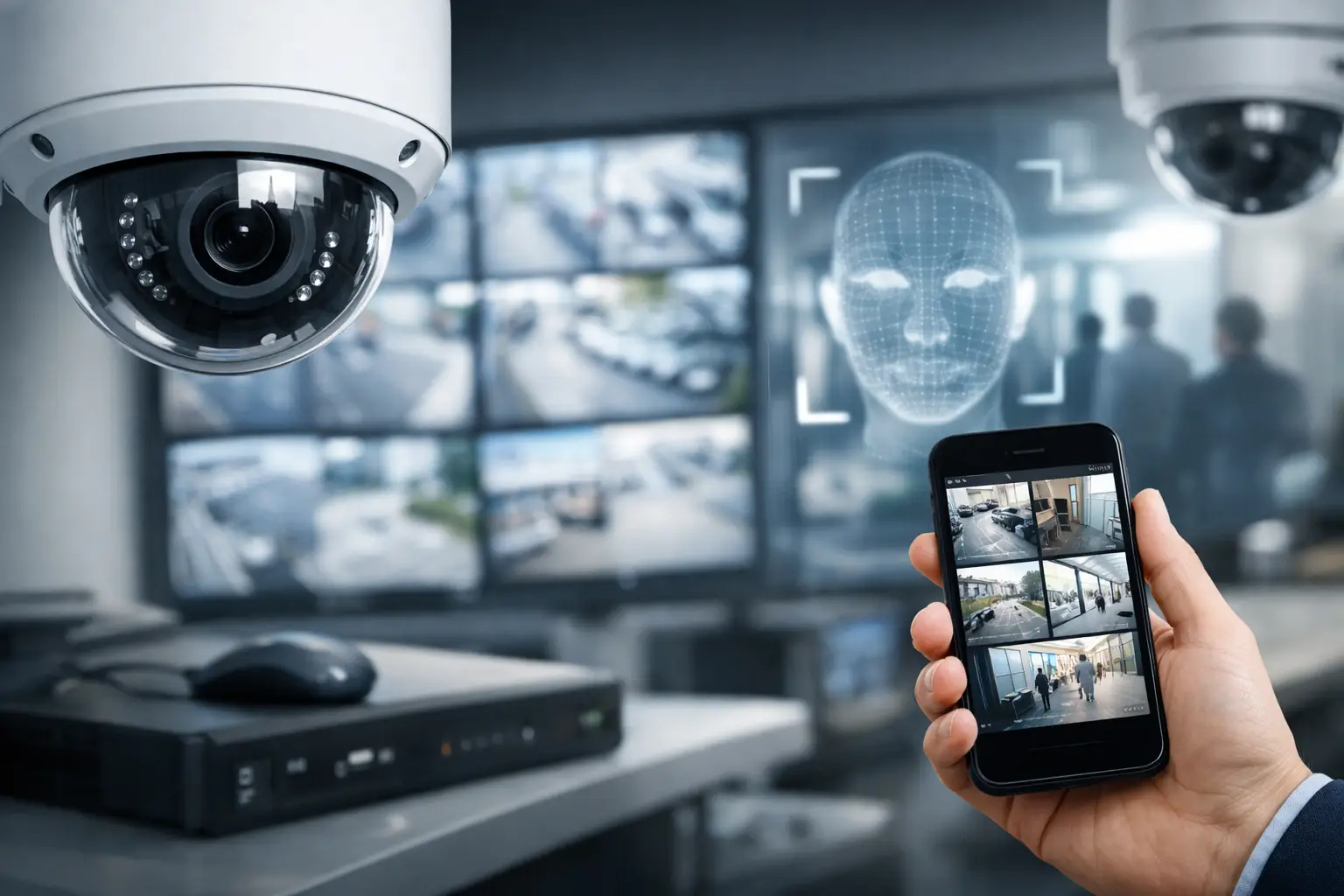
Artificial intelligence has moved beyond a marketing term when it is applied with purpose. Modern surveillance systems can distinguish among people, vehicles, animals, and other motion events. Instead of reviewing hours of ordinary activity caused by landscaping, weather, or passing traffic, an owner or manager can focus on alerts that deserve attention.
The value is not that a system replaces human judgment. It does not. The value is that it reduces noise and speeds up review. A business manager may want an alert when someone enters a restricted exterior area after hours. A homeowner may prefer notice of a person approaching a side gate, while ignoring activity from palms moving in the wind.
Accuracy depends on camera placement, lighting, viewing angle, and correct configuration. Analytics work best when they are designed around a real security objective rather than enabled indiscriminately across every camera. A professional site assessment remains essential.
Higher resolution is only part of the image-quality story
High-resolution cameras continue to improve, but pixel count alone does not guarantee useful evidence. The most effective systems balance resolution with lens selection, scene lighting, frame rate, and wide dynamic range. A camera overlooking a bright driveway entrance, for example, must handle strong Florida sunlight and deep shadows without losing a face or license plate in the contrast.
Low-light performance is also receiving greater attention. Color imaging in dim conditions, infrared illumination, and carefully planned exterior lighting can make a substantial difference after dark. For properties with long driveways, gates, docks, parking areas, or landscaped outdoor spaces, the correct camera type for each view matters more than installing identical cameras everywhere.
There is also a practical trade-off. Higher-resolution video requires more bandwidth and more storage. A well-designed system accounts for retention requirements and network capacity before equipment is selected, so quality does not create avoidable performance problems later.
Remote access is becoming more controlled
Owners expect to check a property from wherever they are. The trend is not merely remote viewing, but secure and well-managed remote access. Authorized users can view live video, review recorded events, receive selected notifications, and share footage when needed without exposing the entire system to unnecessary risk.
For businesses, user permissions are especially important. A property manager, front-office team, security lead, and executive may each need different levels of visibility. For residences, family members and household staff may require access to specific cameras without broad administrative control.
Convenience should never outweigh security. Strong passwords, multi-factor authentication where available, protected network design, regular firmware maintenance, and deliberate user management are now core parts of a surveillance installation. Cameras are network-connected devices, and they should be treated with the same care as any other critical connected system.
Video Surveillance Technology Trends and System Integration
The next major shift is integration. A surveillance system is more useful when it can work alongside other systems on the property, while still remaining straightforward to operate.
Cameras and access control are working together
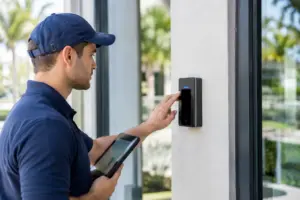
When video is paired with access control, an owner or manager can verify what occurred at a door, gate, or controlled entry point. Video can be associated with entry events, helping teams investigate questions quickly: Who arrived? Which credential was used? Did a door remain open longer than expected?
At a residence, this can support a more confident approach to managing gates, service entrances, and deliveries. At a commercial property, it can improve accountability around employee-only spaces, storage areas, or tenant access points. The goal is not to complicate daily routines. It is to put relevant information in one place when it is needed.
Centralized control improves the experience
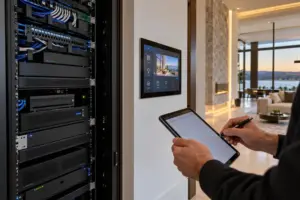
For larger homes and commercial environments, surveillance can be incorporated into a centralized control experience. A wall touchpanel, mobile interface, or dedicated monitor can provide fast access to selected camera views without requiring users to navigate multiple applications.
This is particularly valuable at entry points. A homeowner can view a gate or front door camera from a convenient control location. A receptionist can monitor key entrances while also managing communications and other building systems. The right interface should feel intuitive for the people who use it every day.
Integration also calls for discipline. Not every device needs to connect to every other device. The most reliable solution is one that supports clear daily use cases, maintains security, and is engineered for dependable operation.
Hybrid storage strategies are gaining ground
Cloud-connected video services offer convenient access and can simplify certain management tasks. Local network video recorders provide direct control, predictable on-site recording, and can support substantial retention periods. Many premium installations use a hybrid approach that combines local recording with secure remote access and, where appropriate, cloud-based services.
The right choice depends on the property, the number of cameras, expected retention, internet reliability, privacy requirements, and operational needs. A single-family home may prioritize easy access to important events. A business may need structured retention policies, multiple user roles, and a clear process for exporting evidence.
Storage should be planned rather than guessed. Recording continuously, recording on motion, and recording only analytics-triggered events each affect how much capacity is needed and what may be available during an investigation.
Privacy, Cybersecurity, and Trust Matter More Than Ever
As camera capabilities expand, responsible system design matters just as much as image quality. A surveillance plan should respect privacy, meet property-specific expectations, and avoid unnecessary views into private areas. For businesses, placement and signage may also be influenced by workplace policies, industry requirements, and the nature of the space.
Cybersecurity is equally central. An improperly secured camera system can become a weak point on a network. Professional installation should include protected network configuration, current software, appropriate access permissions, and a support plan for maintaining the system over time.
This is one reason off-the-shelf equipment choices often create frustration in larger or more demanding properties. A surveillance system must perform as a complete environment: cameras, recording equipment, network infrastructure, power, storage, remote access, and user controls all need to work together. If one piece is undersized or poorly configured, the experience suffers.
Designing for the Property, Not the Product Sheet
The strongest surveillance systems begin with questions, not camera counts. What areas create the greatest concern? Is identification required at a gate, or is broad situational awareness enough? Are there nighttime conditions, reflective surfaces, or long-distance views to address? Who needs alerts, and which events should generate them?
For South Florida properties, weather resistance, corrosion considerations near the coast, intense sunlight, landscaping growth, and outdoor living areas all influence design. For commercial spaces, the plan may need to account for guest flow, employee entrances, cash-handling areas, inventory, parking, and after-hours operations.
Clean installation is part of performance. Properly routed cabling, thoughtfully positioned equipment, labeled connections, and organized network components make the system easier to service and expand. They also preserve the finished appearance of a premium home or business environment.
A qualified integrator should explain the reasoning behind every recommended camera location and equipment choice. That transparency gives clients confidence that their investment is based on coverage needs, not a generic package.
What to Prioritize Before Upgrading
Before selecting a new surveillance system, define what success looks like. For some clients, that means a clear view of every arrival and departure. For others, it means faster event review, secure remote access, or reliable documentation across a commercial site.
Prioritize image usability over impressive specifications, alert quality over constant notifications, and secure integration over adding more disconnected apps. Also consider the future. A property renovation, a new gate, expanded outdoor areas, or business growth may change the coverage plan. Structured cabling and scalable infrastructure can make later additions far easier.
Sentry Audio Video approaches surveillance as part of a complete technology environment, with system design, professional installation, and ongoing support aligned around dependable performance. The right system should give you a clearer view of what matters without making security another daily task to manage.