A property can have exceptional finishes, thoughtful architecture, and beautiful outdoor spaces, yet still feel frustrating if its technology is scattered, unreliable, or difficult to control. This property technology guide explains how homeowners and business owners can approach integrated systems as part of the property itself – planned for performance, built cleanly, and supported long after installation.
The difference is not simply having more devices. It is having the right systems work together in a way that fits how people actually live, host, work, protect assets, and manage a building. When technology is considered early, it can disappear into the background while making every space more capable.
What Property Technology Really Includes
Property technology is the connected infrastructure that supports comfort, entertainment, communication, security, and daily operations. In a residence, that may include distributed audio, video, theater systems, motorized shades, surveillance cameras, access control, environmental control, outdoor entertainment, and a centralized control platform. In a commercial property, it can also include presentation systems, digital displays, communications, fire alarm integration, surveillance, and managed network infrastructure.
The shared foundation is the network and structured cabling. Wireless access points, switches, equipment racks, fiber or category cabling, and power protection may not be visible once a project is complete, but they determine whether the experience is dependable. A premium display or speaker system cannot perform consistently on an undersized or poorly designed network.
This is why a professional integration plan begins with the property, not a shopping list. Construction materials, square footage, outdoor areas, equipment locations, internet service, lighting conditions, acoustics, and the number of people using the system all affect the design.
Property Technology Guide: Start With How the Space Is Used
A successful technology plan starts with a conversation about routines. A family may want music in the kitchen, patio, primary suite, and pool area, with simple controls that do not require separate apps. A business owner may need conference rooms that begin meetings quickly, surveillance that can be reviewed remotely, and reliable Wi-Fi across guest and staff areas.
The questions should be specific. Which rooms are used for entertaining? Where do guests gather outdoors? Are there gates, service entrances, detached structures, or multiple floors that need coverage? Does the property need discreet security, or is visible deterrence part of the strategy? Will employees, tenants, household staff, or guests need different levels of access?
Those answers shape the system far more effectively than selecting equipment first. They also help identify where simplicity matters most. The main living areas, primary bedroom, entry points, and frequently used business spaces deserve controls that are intuitive enough for anyone to use without a learning curve.
Plan Early During Construction or Renovation
New construction and major renovations offer the greatest flexibility because infrastructure can be installed before walls and ceilings are finished. Prewiring for speakers, displays, access points, cameras, shades, touch panels, and future expansion protects the appearance of the property and reduces compromises later.
Even if every feature is not installed immediately, planning pathways and cable runs in advance creates options. A conduit to an outdoor entertaining area, a properly located equipment room, or a reserved connection behind a future display can prevent disruptive work down the road.
For existing properties, a qualified integrator can still develop a clean solution. The approach may rely more heavily on strategic wireless design, carefully selected equipment locations, and minimally invasive routing. The trade-off is that certain hidden installations may be more limited once finishes are complete, which makes an on-site assessment especially valuable.
Build Around a Dependable Network
The network is the operating backbone for nearly every connected system in a modern property. Video surveillance, streaming, automation controls, voice communication, access systems, and wireless devices all depend on stable coverage and thoughtful traffic management.
A professional network design considers more than internet speed. It accounts for where wireless signals must reach, how many connected devices will operate at once, which systems require priority, and where equipment should be secured and serviced. Large residences, concrete construction, metal framing, outdoor living spaces, and multi-story commercial sites often need more than a single wireless router to provide consistent coverage.
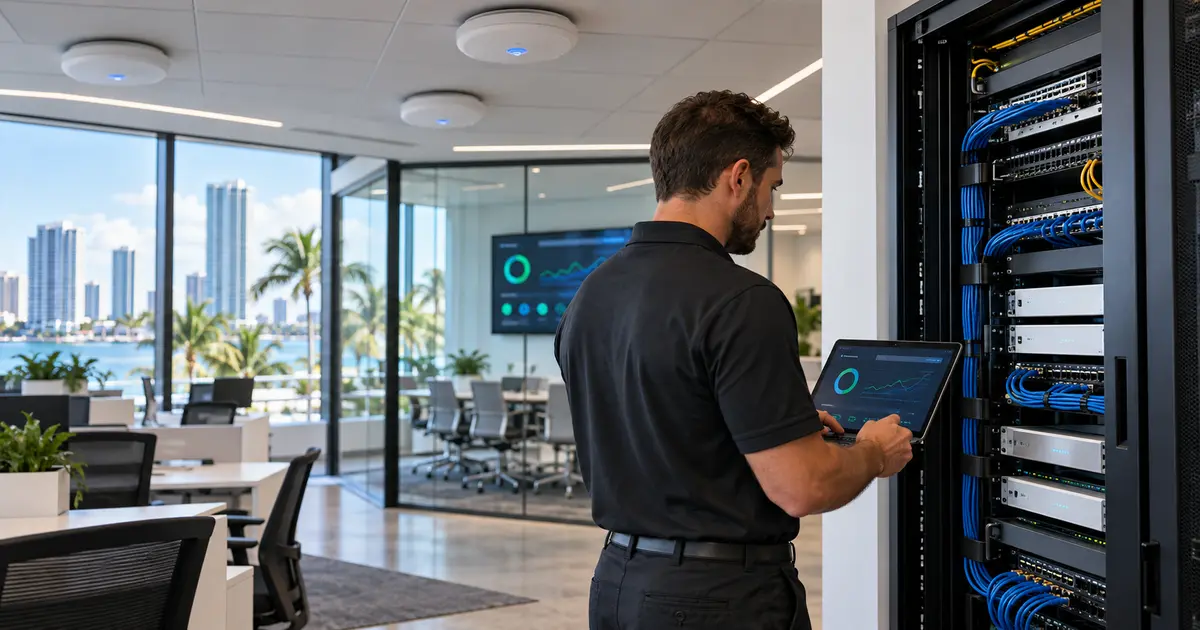
Equipment should also be organized for serviceability. A properly designed rack or structured wiring enclosure provides ventilation, labeling, power protection, and room for future changes. That organization may never be seen by visitors, but it makes maintenance faster and helps preserve reliable performance.
Choose Integrated Control Over App Clutter
Many properties accumulate individual apps and remotes over time. One controls audio, another adjusts shades, another views cameras, and another operates the pool or outdoor lighting. The result is often a system that technically works but is inconvenient enough that people stop using its full capability.
Integrated control brings key functions into a consistent interface. Depending on the project, that can mean elegant wall keypads, touch panels, handheld remotes, or a mobile control experience. A single command might prepare a room for a movie, lower shades, set the desired lighting scene, and start the sound system. At a business, it might turn on a presentation display, select the correct source, and establish a room-ready environment for a meeting.
Not every feature needs to be centralized. A specialty system may retain its own dedicated interface when it offers more detailed control. The goal is not to force every function into one screen. It is to make the common actions simple while retaining appropriate control for advanced settings.
Treat Security as a Layered System
Security is strongest when it is designed in layers. Video surveillance provides visibility, but it works best alongside access control, perimeter awareness, reliable network infrastructure, and thoughtful camera placement. Camera locations should be selected for useful identification and coverage, not just broad views of a driveway or lobby.
For residential properties, coverage often focuses on entry doors, gates, vehicle approaches, outdoor living spaces, and secondary access points. Business properties may require additional attention to receiving areas, cash-handling zones, staff entrances, hallways, common areas, and property boundaries. Retention needs, remote viewing requirements, lighting conditions, and privacy expectations should all be discussed before equipment is selected.
Access control adds another level of management. Instead of distributing physical keys that are difficult to track, authorized users can receive controlled credentials with schedules and permissions. This can be particularly valuable for second homes, managed properties, offices, and locations with staff turnover.
A well-designed security system should feel dependable rather than intrusive. It should give owners and managers meaningful awareness without creating unnecessary notifications or complexity.
Design Entertainment for the Way People Gather
Whole-property entertainment is about more than placing speakers in every room. Sound quality, speaker placement, zoning, source selection, and control all determine whether the system feels refined. The right design can provide focused listening in a theater, clear background music in a kitchen, and high-energy sound around a pool or patio without one area overwhelming another.
Outdoor systems deserve specialized planning. South Florida heat, humidity, salt air near the coast, landscaping, and large open spaces can affect equipment selection and speaker placement. A system designed specifically for the environment will deliver better coverage and a more polished appearance than a collection of visible components placed after the fact.
Video planning matters just as much. Consider viewing distance, natural light, room layout, and whether a display will be used for casual viewing, formal presentations, or a dedicated theater experience. A theater should be designed as a complete environment, where sound, screen size, seating, acoustics, and control work together.
Select a Partner Who Owns the Outcome
Technology integration is not a one-time equipment transaction. It involves design, coordination with builders and designers, installation, programming, testing, client education, and ongoing support. The quality of that process directly affects the final experience.
Look for a partner that can address the full scope of the property rather than treating each category as an isolated project. A coordinated team can design the network to support surveillance, ensure controls work across entertainment and shading, and keep equipment locations clean and accessible. This reduces handoffs, prevents conflicting decisions, and creates clearer accountability.
Before work begins, the proposal should explain what the system is intended to accomplish, where major components will be located, and how the installation will be supported. The lowest initial figure is rarely the full story. Long-term value comes from correct design, clean execution, dependable equipment, and a team that remains available when needs change.
For property owners in Boca Raton, Fort Lauderdale, and surrounding South Florida communities, Sentry Audio Video provides the design-to-support approach required for sophisticated residential and commercial environments. The objective is straightforward: technology should add confidence, enjoyment, and control to the property without adding daily friction.
The most useful next step is to walk through the property with an experienced integrator before decisions become difficult to change. Bring the real questions – how you entertain, how the building operates, what you need to protect, and what has frustrated you in the past. Those details are where a high-performing system begins.