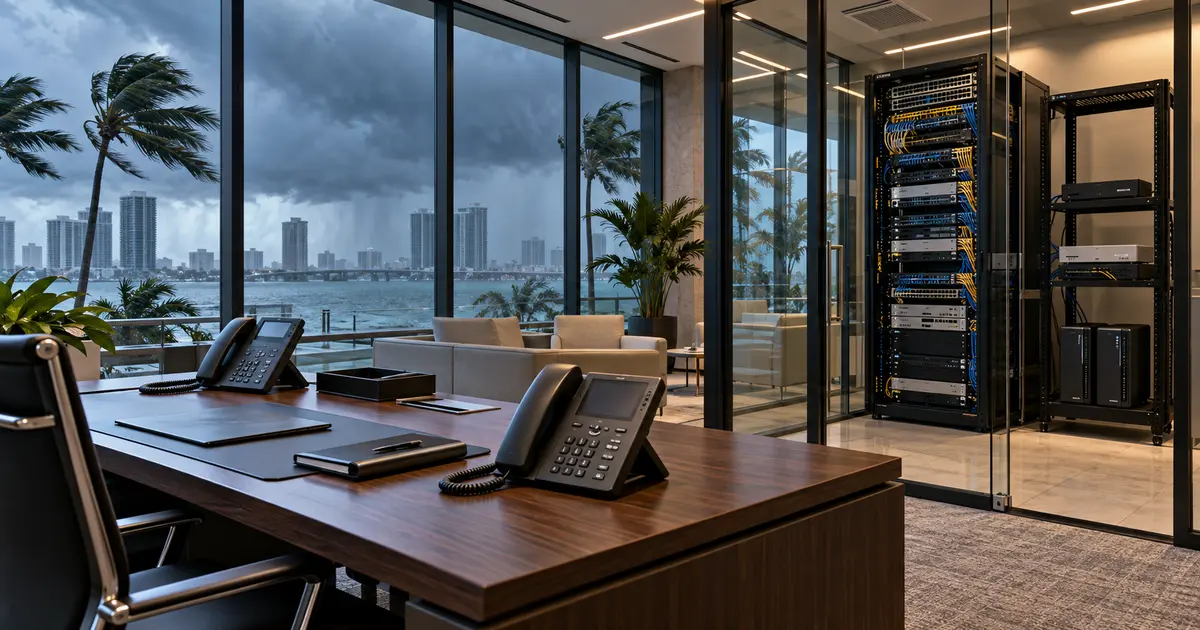
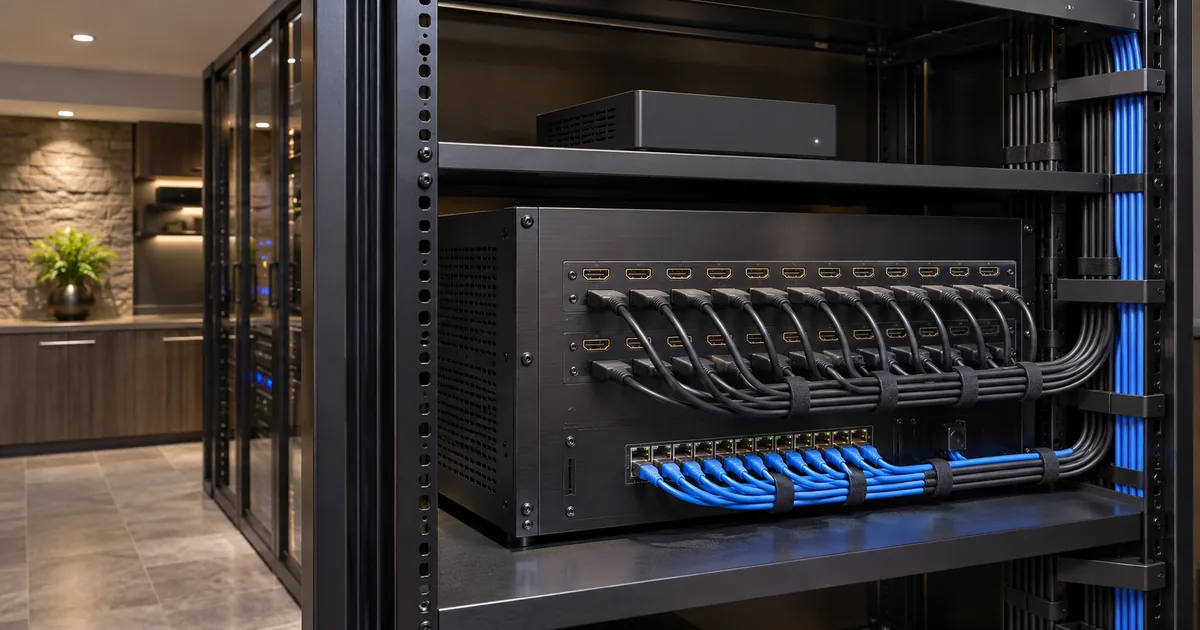
A large Crestron rack can contain a video distribution system that still serves the house well even when the control system needs attention. Replacing the controller does not automatically require replacing every DigitalMedia component. It also does not establish that the existing matrix will work with the proposed platform unchanged.
For a Fort Lauderdale or Palm Beach takeover, the right starting point is an exact inventory and a test of the routes the household wants to retain. The reuse decision should be made at the level of the chassis, cards, room endpoints and supported configuration—not from the DigitalMedia name alone.
Identify what is actually installed
Record the matrix chassis model, installed input and output cards, room receivers or other endpoints, source devices and displays. Note the connections between them and the routes currently used. A photograph of the front of the rack is helpful, but it rarely identifies the complete signal path.
Include equipment status and known faults. A matrix that works for one source in one room has not yet demonstrated that every installed card and endpoint is healthy. Distinguish a confirmed working route from an untested one.
The assessment should also establish what project information and access are available. Existing programming can help explain how the system was intended to operate, but its presence does not replace a current hardware review.
Name the proposed control destination
“New Crestron controller” is not a complete migration plan. Identify whether the proposal involves Crestron Home or a custom-programmed system and which control hardware is intended. The supported integration route can differ.
Crestron Home’s published video compatibility information lists specific DigitalMedia switchers, cards and related devices. Those lists provide a way to check an exact proposed combination. They do not mean every product carrying a DM label is interchangeable or that a listed chassis makes every installed card suitable.
If a custom-programmed route is proposed, ask the programmer to confirm the supported method and scope. Do not assume that an old project can simply be copied to different hardware without the required assessment, tools and testing.
Review the complete chain for each retained room
The signal travels through more than the matrix chassis. An input card, output card, cable path, endpoint and display can each affect the available result. A change at one point may expose a limitation elsewhere.
For every room being retained, record the source-to-display path and compare it with the desired use. This makes a partial upgrade easier to evaluate. The owner can see which routes meet the requirement, which need further testing and which require equipment changes.
Avoid using a successful picture as proof of every requested capability. The relevant formats, content protection behavior and audio routing depend on the actual products and configuration. Verify what matters to the household rather than relying on the age or appearance of the chassis.
Separate control reuse from video capability
A controller may be able to issue routing commands while the retained video hardware still falls short of a new display or source requirement. Those are different findings. The takeover estimate should distinguish the ability to control the matrix from the ability to deliver the requested signal.
The reverse can also occur: existing video routes may be satisfactory, while the control integration needs substantial work. Keeping the matrix does not mean the programming effort is trivial. The proposal should state the retained hardware and the new configuration or programming deliverables separately.
This distinction helps avoid two expensive assumptions: replacing healthy distribution equipment without a demonstrated reason, or retaining equipment that cannot meet a clearly stated new requirement.
Test before committing to a reuse allowance
Choose representative sources and destinations from the owner’s actual usage. Check ordinary switching, startup from a normal resting state and the intended audio path. Include any rooms or routes associated with reported problems.
Record conditions that could not be tested. A disconnected source, inaccessible display or missing account may limit the assessment. An honest unverified item is more useful than a blanket statement that the rack is compatible.
Where testing reveals a fault, identify whether it follows a particular component or route. The diagnostic scope may justify a targeted replacement rather than a full matrix change. The owner should understand which conclusion is established and which still depends on further work.
Compare retention with a defined replacement scope
A reuse option should include the work needed to make the retained system supportable: documentation, configuration, repairs, programming and commissioning. Compare that complete scope with a replacement option rather than comparing only a new controller’s price with a new matrix’s price.
Also discuss future service considerations and the status of the actual products. Existing equipment may remain useful while carrying different support or replacement-parts considerations from new hardware. Confirm those details for the model rather than treating age alone as a failure diagnosis.
If AV-over-IP or another distribution architecture is offered, it should be presented as a separate designed option. It is not an automatic consequence of replacing the controller, and it brings its own equipment and infrastructure requirements.
Document the retained system at handover
The final record should identify the components retained, those replaced, the routes tested and any agreed limitations. Update room and source names so future service can connect the user-facing interface with the physical equipment.
Demonstrate the household’s normal activities from the intended controls. A takeover is easier to maintain when the owner knows what was preserved and the next technician can see why it was considered suitable.
Sentry Audio Video can assess the matrix and endpoints through our Crestron service and takeover process. Call (954) 859-6475 for Fort Lauderdale or (561) 717-3280 for Palm Beach. For a new platform scope, see Crestron installation and programming. Bring model photographs and the list of rooms and sources you want to retain.
Manufacturer and technical references
Technical references reviewed November 19, 2026. Confirm the exact equipment, software and licensing requirements for your project before ordering.