A ceiling fan should not become the one device that breaks the rhythm of a well-designed smart home. Can Lutron control ceiling fans? Yes, when the fan, wall control, wiring, and automation platform are correctly matched. The catch is that ceiling fans are not all built the same, and the wrong control can lead to poor speed performance, audible motor noise, or a fan that will not respond as expected.
For homeowners planning a renovation or building a connected home, the goal is more than replacing a wall switch. It is creating reliable control that feels natural: a keypad that sets the room for sleep, an app that adjusts outdoor comfort before guests arrive, or an automation system that coordinates lighting, shades, and fan speed without adding remotes to every surface.
Can Lutron Control Ceiling Fans in a Smart Home?
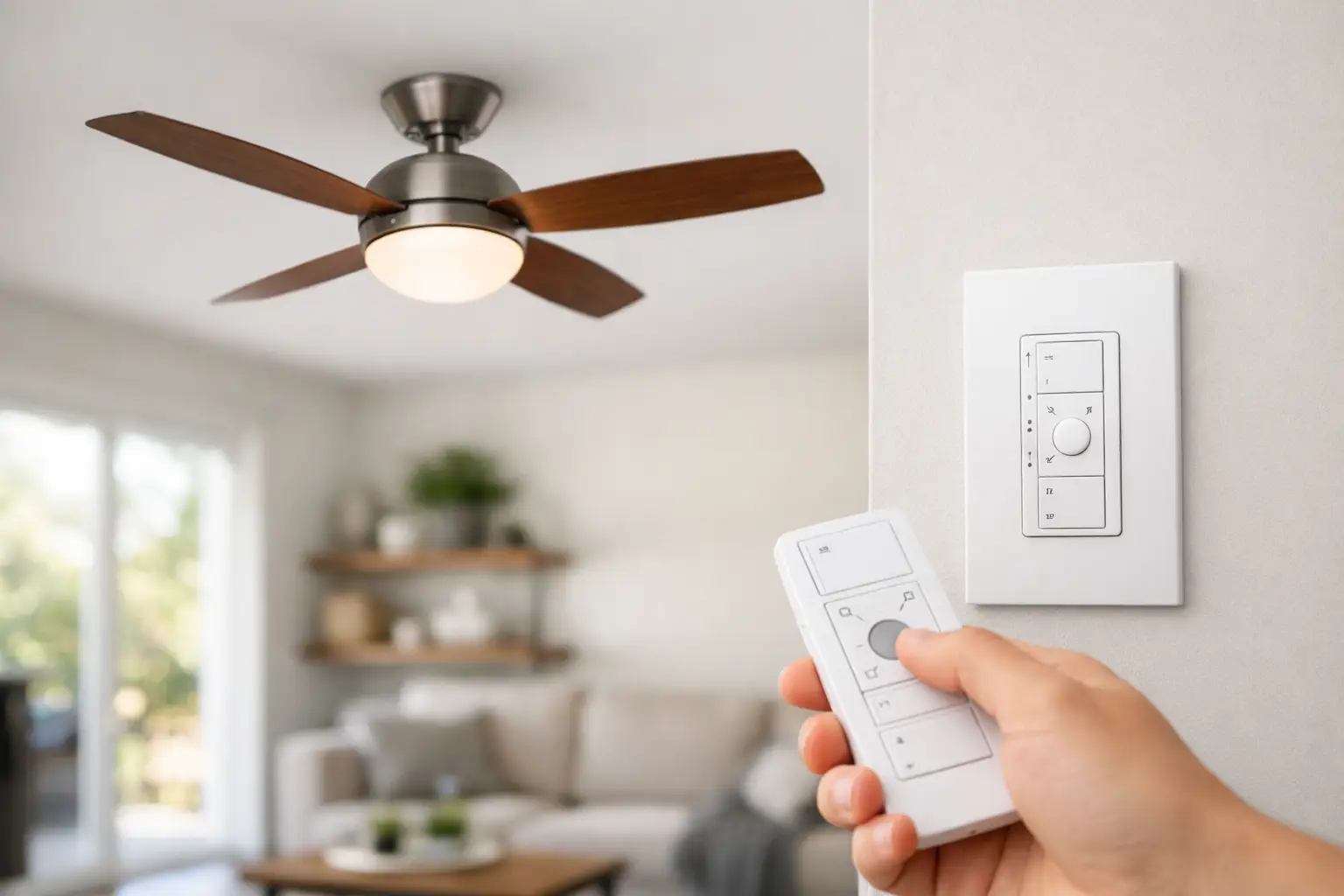
Lutron can control many ceiling fans through compatible fan-speed controls and integrated lighting controls. In a properly designed system, those controls can be operated from a wall station, keypad, mobile app, scheduled event, or selected voice-control integration.
Lutron’s approach is especially useful when the fan is part of a broader environment. A bedroom keypad can lower shades, turn off decorative lighting, and set a compatible fan to a preferred overnight speed. In a covered outdoor living area, the same system can coordinate lighting and fan operation for entertaining without requiring multiple remotes or separate apps.
The right solution depends on the Lutron system in the property. Caséta is often appropriate for focused smart lighting and fan-control applications. RadioRA 3 and HomeWorks are designed for larger, more customized residences, where keypads, centralized control, motorized shades, and other integrated systems are expected to work together. Compatibility is determined by the specific control, processor, and fan selected for the project.
The Fan Motor Determines What Is Possible
The first question is not which keypad or app you prefer. It is what type of motor is inside the ceiling fan.
Many traditional ceiling fans use AC motors. A compatible Lutron fan-speed control can typically manage the available speed settings on these fans. This is a dedicated fan control, not a standard lighting dimmer. It is engineered to manage a fan motor’s speed characteristics rather than reduce the output of a light fixture.
DC-motor ceiling fans require more care. These models commonly depend on a proprietary receiver and handheld remote, often located in the fan canopy. Their speed commands are interpreted by that receiver, so a conventional wall-mounted fan-speed control may not be compatible. Some DC fans can still participate in a larger smart-home experience through approved integration methods, but that must be evaluated by model rather than assumed.
Fans with built-in receivers, specialty multi-speed motors, or proprietary control packages also need a compatibility review. A beautiful fixture can be the wrong fit if its control architecture conflicts with the room’s planned wall control or centralized automation system.
Why a Fan Control Is Not a Light Dimmer
This distinction protects both performance and equipment. Lighting dimmers are designed for lighting loads, while fan-speed controls are designed for compatible fan motors. Installing the wrong device can cause buzzing, unstable speeds, reduced motor life, or control failure.
A ceiling fan with an integrated light kit adds another layer. The fan motor and light normally require separate control paths. This allows the homeowner to set fan speed independently from the light level, rather than having one command affect both functions. Depending on the fan and system design, the light may use a compatible dimming control, a switching control, or the fan manufacturer’s own receiver-based solution.
In premium spaces, that separation matters. A primary bedroom may need a low fan setting with lights fully off. A patio may call for high airflow while the lighting remains at a comfortable level for dining. The control design should support how the room is actually used.
What a Professional Compatibility Review Covers
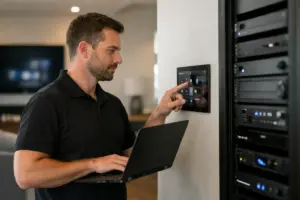
The cleanest installations begin before the fan is purchased or mounted. An integration professional reviews the fan specifications, existing wiring, desired control locations, and the automation platform already in place or planned for the home.
A proper review considers four practical issues:
- Motor and receiver type: AC, DC, remote-receiver, and proprietary-control fans behave differently at the wall.
- Available wiring: Some smart fan controls require a neutral connection, and separate fan and light control may require additional conductors between the wall box and ceiling location.
- Load ratings: The control must be rated for the motor load and configuration it will operate.
- Control experience: The system should account for keypads, app control, scenes, schedules, and whether the original fan remote needs to remain part of the solution.
This planning prevents a common frustration: selecting a fan based on style, then discovering after installation that it only works through its included remote. In a custom residence, controls should be considered alongside lighting, shades, audio, security, and networking during the design phase, not as an afterthought.
The Difference Between On/Off and True Speed Control
Not every smart control provides the same fan experience. A switching control can turn a compatible fan on or off. A dedicated fan-speed control can provide selected speed levels, which is usually what homeowners expect in bedrooms, living rooms, and outdoor entertaining spaces.
There is also a difference between controlling a fan locally and integrating it into whole-home scenes. Local control may mean a wall control and app access. Integrated control means the fan can respond as part of a programmed routine, such as an evening scene that adjusts lighting, lowers shades, and activates the preferred fan setting.
That distinction helps set the right expectations. A fan may be controllable, yet its proprietary remote features – such as a specialized breeze mode, color-temperature adjustment, or unique timer function – may not transfer to a wall keypad or automation scene. The priority should be identifying which functions matter most and designing around them.
Ceiling Fans in Coastal and Outdoor Living Spaces
In South Florida, ceiling fans are often essential in covered patios, lanais, cabanas, and other outdoor living areas. These spaces introduce additional requirements beyond motor compatibility. The fan itself must be appropriately rated for the environment, and the control solution must be selected with location, exposure, and access in mind.
For example, a homeowner may want a wall keypad near an exterior entry, app control from inside the home, and scene-based operation for evening entertaining. That can be accomplished when the selected fan and control strategy support it. However, outdoor-rated equipment does not automatically mean every smart-control method is suitable. A detailed plan keeps the experience dependable through changing weather and frequent use.
When the Included Fan Remote Should Stay
There are cases where retaining the manufacturer’s remote is the most reliable choice. This is common with DC fans and models with highly specific features controlled through a dedicated receiver. Keeping the remote does not necessarily mean giving up a polished control experience. The system can often be designed around the fan’s capabilities, using appropriate integration or a practical combination of wall control and remote operation.
The right answer is not always replacing every control method. It is delivering predictable performance with a clean finish and an interface that makes sense for the homeowner. Forcing a fan into an incompatible control scheme creates more inconvenience than it removes.
Questions Homeowners Commonly Ask
Can one Lutron control operate the fan and its light?
Usually, the fan motor and light require separate control channels if independent operation is desired. The exact configuration depends on the fan’s wiring, light kit, and whether a receiver is installed in the canopy.
Can a Lutron keypad control a ceiling fan?
Yes, in a compatible, programmed system. A keypad button can be assigned to commands such as on, off, or a preferred speed setting, depending on the selected Lutron platform and fan-control design.
Can I add fan control after the home is finished?
Sometimes. The available wiring, wall-box capacity, existing fan hardware, and system architecture determine the options. A site evaluation identifies whether a direct control replacement, a revised wiring plan, or a different integration approach will provide the most dependable result.
For a home where every room is expected to perform with the same level of polish, ceiling fans deserve the same design attention as lighting and shades. Sentry Audio Video can evaluate the fan, control system, and room requirements together, then deliver an installation built for reliable daily use.