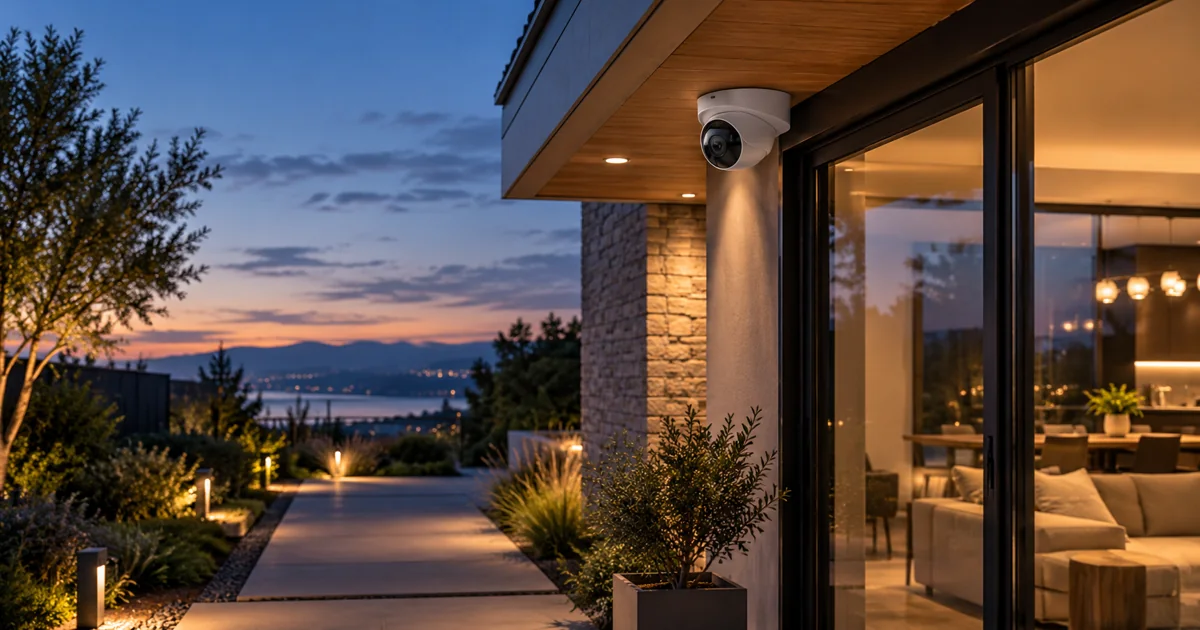
A security camera should be evaluated after dark at the actual location before its view is accepted. A crisp daytime picture does not establish that the same camera can show useful detail when the entrance is backlit, a walkway is dark or headlights cross the scene. Nighttime performance depends on the scene, placement, illumination, exposure settings and recording system together.
Plan your Security cameras project
Tell us which nighttime views are important and what the current recordings fail to show. We can review placement, illumination, recorder settings and the most useful upgrade path.
Request a Sentry Audio Video consultation Call (561) 717-3280
For a camera upgrade, define what the view needs to accomplish at night. Seeing that something moved is different from obtaining a useful image of a person at a particular doorway. The proposed equipment and test should match that task without promising identification in every condition.
Start with the event and distance that matter
Identify the entrance, path or area the camera is intended to observe. Record the important distance and where a person or vehicle will normally move. A wide overview may be useful for context while providing limited detail at a distant gate.
Review the view with realistic movement. A still scene can look impressive while motion becomes blurred or indistinct. Test a person walking through the intended area and, where safe and appropriate, the normal vehicle approach.
Keep the test consistent with privacy expectations and the agreed system scope. The aim is to evaluate the property’s security view, not to record neighboring private spaces or collect unnecessary personal information during a demonstration.
Inspect reflections and nearby surfaces
Integrated infrared illumination can reflect from nearby walls, glossy trim, glass, soffits or other objects. An obstruction outside the visible picture may still sit in the illumination path and affect the image. Placement therefore matters as much as the camera’s headline low-light specification.
A camera looking through glass can encounter reflections from its own illumination or from lights inside the room. Do not assume that a camera placed behind a window will perform like a properly located exterior camera after dark.
Domes and protective covers also require correct installation and maintenance. Dirt, moisture, damaged surfaces or an unsuitable arrangement can affect nighttime images. Follow the exact manufacturer’s instructions rather than treating every camera housing the same way.
Compare infrared and visible-light approaches honestly
Some scenes can use infrared illumination; others may benefit from appropriate visible lighting and a camera selected for the conditions. A color-at-night claim should be reviewed with the illumination requirements and exposure settings of the exact model.
More light is not automatically a complete answer. Bright fixtures, reflective water, white walls and vehicle headlights can create difficult contrast or glare. Coordinate camera placement and lighting so the important area is visible without making the property uncomfortable.
Do not choose an image only because it looks bright. Check whether moving subjects retain the detail required for the task. A visually attractive static image can conceal an exposure setting that is poorly suited to activity.
Check the recorded result, not only the live preview
The owner’s evidence comes from the recording system. Review recorded nighttime clips at the agreed settings, including resolution, frame rate, bitrate and recording rules. Live viewing may use a different stream or display quality from the stored footage.
Test playback and a sample export through the normal user workflow. Confirm that the date and time are correct and that the relevant event is included. If the system uses event recording, review the start and end behavior rather than assuming the entire approach has been captured.
Keep retention requirements separate from image quality. Improved detail or higher bitrate may change storage use. The recorder, drives and recording plan should be sized around the agreed operating settings.
Review weather and changing site conditions
South Florida properties experience rain, humidity, landscaping growth and strong reflected light. A view that works on a dry evening may need another review after a meaningful change in the scene. Branches, new decorative lighting and a moved fixture can affect the result.
Use equipment with suitable documented environmental ratings and install it according to the manufacturer’s requirements. A product being described as outdoor-rated does not remove the need for correct mounting, cable entry and service access.
Record the accepted camera position and any scene limitations. If nighttime lighting is supplied by another contractor or controlled by a schedule, identify that dependency so it is not accidentally removed later.
Make nighttime acceptance part of the upgrade scope
The proposal should state whether an after-dark visit or another agreed nighttime verification method is included. Define the important views, test actions and recording workflow before the project begins. This is more useful than an undefined promise of excellent night vision.
Where the existing camera can be improved through repositioning, settings or scene changes, explain that option. Where the required result needs different optics, illumination or equipment, describe the specific reason for the replacement.
At handoff, show the owner representative recorded clips and the normal retrieval process. Keep the final settings and installation details with the system records so future service can distinguish a changed condition from an equipment failure.
Arrange a camera-upgrade review
Sentry Audio Video provides camera design, installation, upgrades and service. Review AI-camera planning for the broader recording and alerting context. Call (561) 717-3280, (954) 859-6475 for Fort Lauderdale, or request a system assessment. Manufacturer reference: Axis guidance on infrared reflections. Exact performance depends on the selected model and installation conditions.