A Savant proposal can include touch interfaces, audio equipment, lighting integration and an impressive room list. Behind those visible choices is the host platform that supports the specified system. Choosing it by the size of the house alone can miss the functions and dependencies that actually determine the design.
For a new Miami or Fort Lauderdale installation, start with the household’s room-by-room requirements. The host should be selected around an agreed system scope and current manufacturer requirements, with the reasons for that selection explained before the equipment order is approved.
Describe the house in activities, then equipment
Begin with how the home will be used. Which rooms need music? Which televisions need integrated control? Are lighting, shades, climate or other supported systems part of the initial installation? Which activities should be available from a wall interface, a handheld remote or the app?
Then translate those activities into an equipment schedule. “Music throughout the house” could mean background listening in a few shared spaces or several independent activities happening at once. “Control the theater” could mean selecting a source or coordinating a more detailed sequence with supported equipment.
These differences belong in the scope before host selection. A dealer cannot responsibly turn a broad phrase into a reliable design without resolving the equipment, interfaces and functions behind it.
Distinguish the host from the other hardware
The host is part of the system architecture, not a replacement for every other component. Audio amplification, source devices, network equipment, supported third-party interfaces and physical control connections still need their own specifications.
Some Savant hardware combines particular functions. That does not mean every host includes the same audio capability, connection types or expansion limits. Ask the dealer to identify the exact proposed host and any companion equipment, then explain which item performs each required function.
A clear proposal avoids making the host model carry the meaning of an entire package. If an activity needs a separate source, interface or license, that dependency should be visible in the equipment and software schedule.
Use current platform information
Host families, software requirements and supported configurations can change. An old brochure or an earlier installation at another property is not sufficient evidence that the same selection suits a new project. The dealer should verify the current requirements for the exact hardware and intended software release.
Ask which functions drive the selection and what documented limits apply. Avoid comparing options using an unexplained capacity number. A claim about rooms, audio or devices only helps if its definition matches the way the proposed system will actually be used.
If an alternative host is offered, request the practical difference for this project. Does it change supported functions, available connections, expansion options or another documented requirement? The answer should connect the price difference to the approved scope rather than simply describing one option as more powerful.
Identify integrations before promising the experience
A Savant installation may coordinate equipment from other manufacturers. The supported interface for each integration determines what can be controlled and what information comes back to the user. A familiar brand name does not establish identical functionality across every model or software version.
For each important integration, identify the equipment model, control method and expected actions. If lighting scenes, shade positions or theater functions are central to the purchase, demonstrate those actions on a relevant supported configuration or specify how they will be validated during commissioning.
Separate a requested future integration from an included deliverable. “Provision for future shades” should state what is being provided now. It should not imply that the complete shade system, its power infrastructure and all programming have already been purchased.
Plan simultaneous use without turning it into guesswork
The whole family will not necessarily use the home one room at a time. Discuss a representative busy evening: music in shared spaces, another activity in the guest suite and a movie in the theater. Identify which sources, services and control paths those activities require.
This exercise helps the designer review the complete architecture. It does not replace the separate calculation of source availability, audio distribution or network requirements. A host choice alone cannot resolve a missing source or an unsupported integration.
Also decide who will maintain service accounts and subscriptions. Owner-supplied accounts, dealer-supplied equipment and recurring services should have clear responsibilities. Avoid leaving a critical function dependent on an account whose owner is unknown at handover.
Allow for likely changes, not every imaginable feature
Useful expansion planning starts with a realistic next step. A future guest suite, additional shade group or outdoor entertaining area may justify a documented allowance. Buying around an undefined promise of unlimited expansion is harder to evaluate and support.
Ask what would need to change if that next phase were added. The answer may involve equipment beyond the host: pathways, network capacity, interfaces, amplification or programming. Record the assumption and the limits so that a later phase can be quoted against an understood starting point.
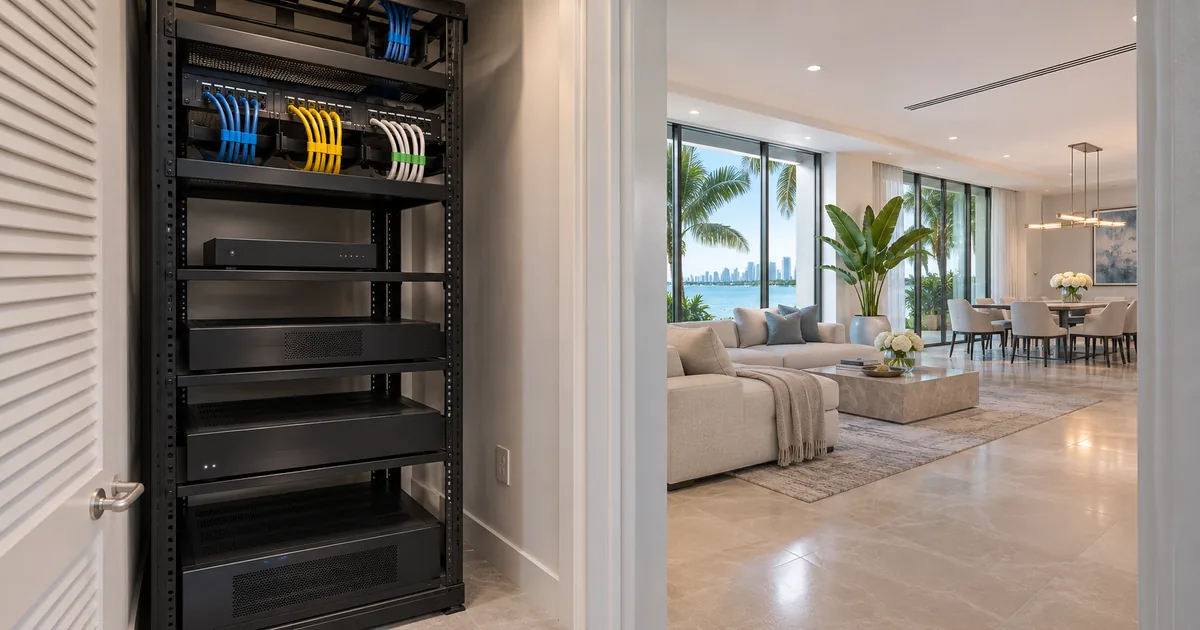
Keep physical service access in the design as well. A suitable host in an inaccessible cabinet can still create an inconvenient installation. Power, ventilation, network connections and equipment removal should be coordinated before finished cabinetry is closed.
Make the selection review part of the purchase
Before ordering, request a final room list, the exact host model, the associated hardware and software, the included integrations and a concise explanation of the selection. The acceptance plan should then demonstrate the agreed activities from the intended interfaces.
This gives the homeowner a more useful basis for approval than a model number alone. It also gives the installer a defined target: the activities and equipment that were actually included, with future items clearly identified.
Sentry Audio Video can scope a new Savant system and equipment package for a Miami or Fort Lauderdale home. Call (305) 502-0003 for Miami or (954) 859-6475 for Fort Lauderdale. Bring your room list and architectural plans; our Savant design guide provides a useful starting point.
Manufacturer and technical references
Technical references reviewed November 19, 2026. Confirm the exact equipment, software and licensing requirements for your project before ordering.