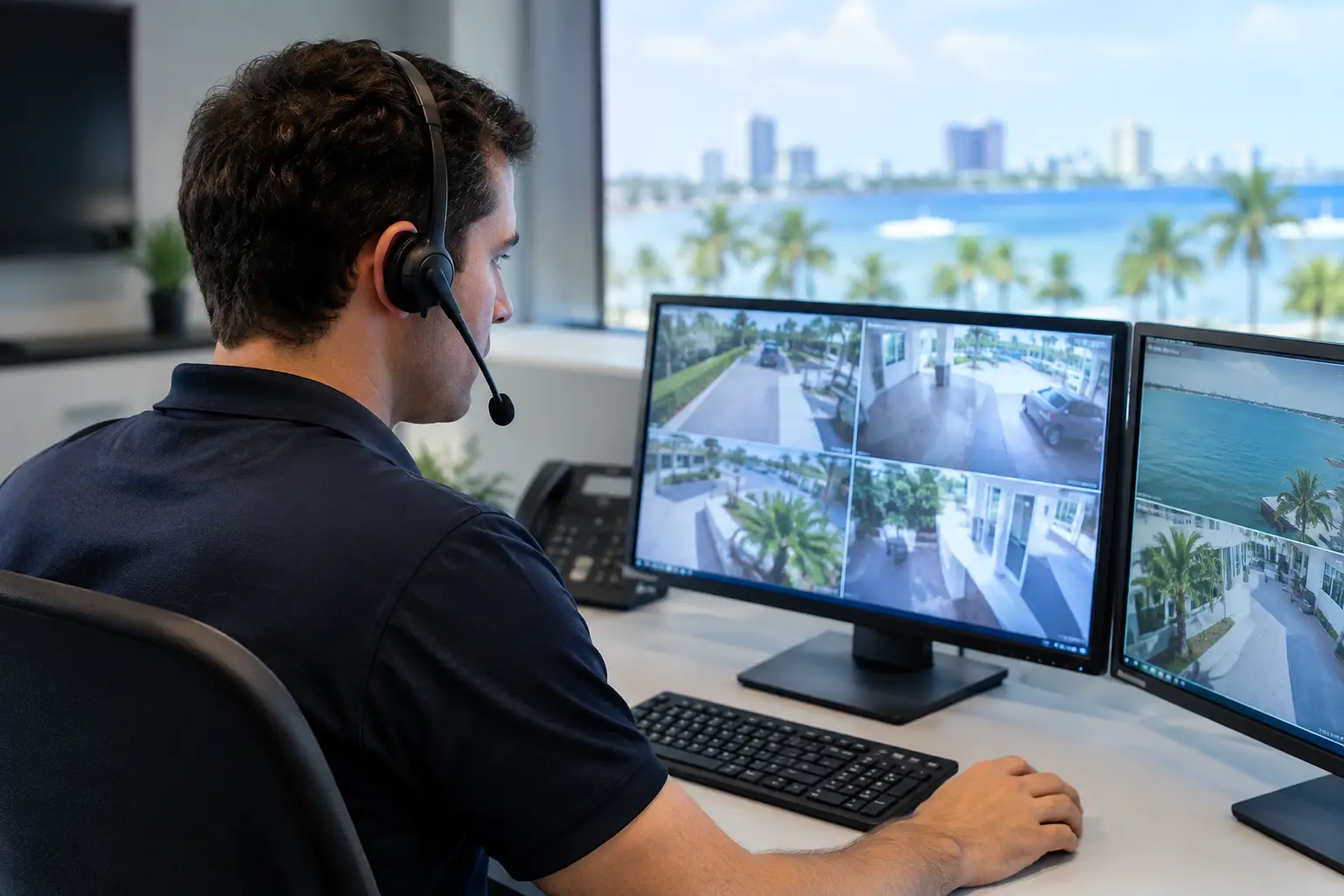
A security event does not wait for business hours, a vacation schedule, or the moment someone happens to check an app. Central station alarm monitoring Palm Beach property owners rely on provides a trained response team that receives alarm signals around the clock and follows a defined emergency procedure when something demands attention.
For a waterfront residence, seasonal property, professional office, retail space, or hospitality environment, monitoring is what turns a security system from a set of devices into an active protection plan. Cameras, sensors, access control, and fire detection all have vital roles. A central station gives those systems a place to send critical events when the property is empty or occupants need help quickly.
What Central Station Monitoring Actually Does
A monitored alarm system communicates with a professional monitoring center whenever it detects a qualifying event. That could include an intrusion alarm, a smoke or heat signal, a panic button activation, a carbon monoxide event, a water-related alert, or a system trouble condition, depending on how the system is designed.
The central station receives the signal, identifies the account and event type, and follows the response instructions established for that property. Depending on the event and local requirements, the operator may contact designated keyholders, attempt verification, dispatch first responders, or escalate through a specific call list.
That process matters because an alarm notification on a phone is only as useful as the person available to receive it and make an informed decision. Owners may be in a meeting, flying, sleeping, overseas, or simply unsure whether an alert is urgent. Professional monitoring creates a consistent response path when the unexpected occurs.
Monitoring Is Not the Same as a Security App
Mobile access remains valuable. It allows owners and managers to arm or disarm areas, review notifications, check camera views, and stay connected to the property. But app alerts do not replace a staffed central station.
The difference is accountability. A monitoring center is operating continuously with procedures intended for emergency events. It does not depend on one family member noticing a notification, interpreting it correctly, and knowing whom to call next. For properties with higher value assets, multiple occupants, employees, or frequent periods of vacancy, that distinction is significant.
Why Palm Beach Properties Need a Thoughtful Monitoring Plan
Palm Beach County properties often present security requirements that go beyond a standard entry-door alarm. Large homes may include guest suites, detached structures, pool areas, wine rooms, equipment spaces, private offices, and perimeter gates. Commercial locations can have multiple entrances, employee access schedules, restricted rooms, inventory areas, and life-safety obligations.
A system designed around the actual property can divide these spaces into logical zones. This allows a residence to protect exterior openings while occupants move freely indoors, or allows a business to secure a stockroom while the main area remains open. It also gives the monitoring center clearer information about where an event originated.
The right design considers the realities of South Florida as well. Seasonal occupancy may mean a home is vacant for months at a time. Severe weather can affect power and communications. Coastal conditions and outdoor living areas can influence equipment selection and sensor placement. A professionally planned system accounts for these factors before installation, rather than trying to correct gaps after an incident.
The Signals That Deserve Professional Attention
Intrusion detection is commonly the first concern, but central station monitoring can support a broader security and life-safety strategy. The appropriate services depend on the property, its use, and applicable code requirements.
For residences, monitored entry points, motion detection, glass-break detection, panic devices, smoke and heat detection, and environmental alerts can provide meaningful coverage. Water sensors are especially useful near mechanical rooms, laundry areas, and other locations where a leak can cause costly damage before anyone is present.
For businesses, monitored fire alarm systems, intrusion protection, access control events, duress buttons, and supervisory signals may be part of the design. A supervisory signal can report a condition that needs service attention before it becomes a larger problem, such as a communication issue or a device fault.
Not every event should trigger the same response. A panic activation needs a different protocol than a low battery condition. A smoke detector signal requires different urgency than an after-hours door opening. Clear programming and well-maintained account instructions help the monitoring center respond appropriately.
Communication Reliability Is Part of the Protection
An alarm system must be able to communicate when it matters. Traditional phone-line-only reporting is no longer the preferred approach for many properties, particularly where communication reliability is a priority. Modern systems may use cellular communication, internet reporting, or a combination of paths designed to maintain contact if one method is unavailable.
There is a trade-off to consider. Internet-based communication can be fast and effective, but it depends on the network and power at the site. Cellular communication provides an independent path, although signal conditions and equipment placement should be evaluated. Dual-path reporting adds another level of resilience for properties where continuity is especially important.
Backup power also deserves attention. A well-designed system should continue operating through a short power interruption, and it should report low-battery or communication trouble conditions so they can be addressed. The details matter because reliability is not created by one component. It comes from the entire design, installation, configuration, and service process.
Verification, False Alarms, and Faster Decisions
False alarms waste time, frustrate occupants, and can lead to fines in some jurisdictions. They are also avoidable more often than many people realize. Proper device placement, quality equipment, careful programming, user training, and routine service all reduce the likelihood of unwanted activations.
Verification can add valuable context. When integrated appropriately, video surveillance may help a property owner or authorized party assess an alarm event. Some monitoring solutions also use enhanced verification methods based on the system configuration. The goal is not to delay a genuine emergency. It is to improve the quality of information available when a decision must be made quickly.
Good alarm management also requires current contact information. Keyholders, call order, emergency contacts, and special instructions should be reviewed periodically. This is particularly important for seasonal residences, changing staff, and commercial properties with evolving management teams.
How Monitoring Fits Into an Integrated Property System
Central station monitoring works best when it is planned with the rest of the property technology, not added as an isolated afterthought. Security cameras can provide visual awareness. Access control can document and manage authorized entry. Structured wiring and properly designed networks support dependable communication. Smart home automation can provide controlled alerts and status updates without giving convenience features authority over critical emergency response.
For example, a residence may use one interface to view cameras, manage access, and receive status notifications, while the central station maintains its independent emergency procedures in the background. A commercial property may connect monitored intrusion points with access control schedules so authorized opening and closing activity is less likely to create unnecessary alarms.
This kind of integration requires disciplined planning. Systems must remain understandable for the people who use them every day, and critical security functions should be configured with reliability ahead of novelty. A clean installation, labeled equipment, documented zones, and responsive support are not cosmetic details. They make the system easier to operate and service over time.
Questions to Ask Before Choosing a Monitoring Provider
The conversation should begin with the property and its risks, not a prepackaged equipment list. Ask how alarm signals are transmitted, what happens during a power or internet outage, and which events qualify for emergency dispatch. Confirm whether the monitoring service is equipped to support the alarm, fire, and environmental devices being proposed.
It is also wise to ask who will handle installation, programming, testing, and ongoing support. When a problem occurs, owners benefit from working with a team that understands how the entire system was built. Sentry Audio Video approaches security as part of a complete technology environment, with design and execution tailored to the way each home or business operates.
Finally, review the service plan. Monitoring is ongoing, but the system itself also needs periodic attention. Batteries age, contacts can shift, communications change, and contact lists become outdated. A professional relationship should include a clear path for updates, testing, and support.
A properly monitored alarm system cannot prevent every event. What it can do is reduce uncertainty, create a disciplined response when an alarm occurs, and help protect the people and property entrusted to you. Start with a site-specific assessment, establish the response procedures you want in place, and choose a partner prepared to stand behind the system long after installation day.