The most expensive technology problems in a new home or major renovation are rarely caused by the equipment itself. They begin when decisions about wiring paths, equipment locations, lighting control, speakers, security devices, and displays are made after walls are closed and finishes are selected. When should your builder bring the AV and smart-home integrator into the project? Ideally, before the architectural and construction plans are finalized.
For a premium property, technology is not an accessory added near the end of construction. It is part of the home’s infrastructure. The earlier your builder, architect, interior designer, and integration team coordinate, the more polished, reliable, and intuitive the finished system will be.
Bring the Integrator In During Pre-Construction
The right time to start the conversation is as soon as the project has a preliminary floor plan and a clear vision for how the property will be used. That does not mean every speaker, keypad, camera, or display must be chosen immediately. It means the team should establish the technology strategy while there is still room to make smart decisions without disrupting the build.
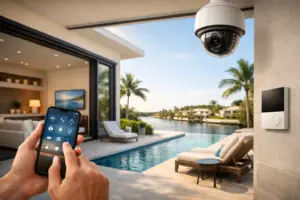
At this stage, an AV and smart-home integrator can review room layouts, ceiling heights, wall construction, outdoor areas, mechanical spaces, network requirements, and the homeowner’s lifestyle goals. A family that entertains outdoors, for example, may need a very different infrastructure plan than a homeowner focused on theater performance, whole-home security, or automated shades throughout a waterfront residence.
Early consultation also prevents a common issue: beautiful plans that leave no practical home for the systems that support them. Network equipment, audio amplification, surveillance recording, control processors, and other components need ventilation, service access, and an organized location. A thoughtfully planned equipment rack or technology closet keeps these systems protected and out of sight while making future service far more efficient.
Why Builders Need the AV and Smart-Home Integrator Early
A builder coordinates many interdependent trades. Technology integration touches more of those decisions than most people realize. It affects framing, low-voltage pathways, ceiling details, cabinetry, millwork, lighting control locations, motorized shade pockets, outdoor structures, and the network backbone that supports connected systems across the property.
When the integrator is involved early, the builder receives a coordinated set of requirements rather than a series of late-stage requests. That protects the construction schedule and reduces the likelihood of visible surface-mounted wiring, compromised architectural details, or last-minute changes to finished spaces.
This is especially valuable in luxury homes where clean design is non-negotiable. A television may be intended to disappear into custom millwork. Ceiling speakers may need to align with lighting fixtures and architectural lines. Cameras must cover meaningful approaches without becoming the dominant visual feature of the façade. Those outcomes require planning, not improvisation.
For builders, early coordination also creates clearer accountability. The technology team can define its pathways, back boxes, blocking needs, conduit runs, equipment-room requirements, and rough-in schedule before construction reaches critical milestones. The builder remains in control of the project, while the integrator takes ownership of the systems within its scope.
The Design Phase Is Where Performance Is Protected
A preliminary plan is enough to begin a technology design. The integrator should ask detailed questions about daily routines and long-term expectations: Which rooms will be used for entertaining? Is the outdoor living area a casual retreat or a full event space? Should the home be monitored while the owners travel? Are there guest areas, staff spaces, a theater, wine room, gym, pool area, or detached structure that need coverage and control?
The answers influence far more than product selection. They determine wire routes, wireless access point placement, camera coverage, speaker zones, lighting control architecture, video distribution, and the level of redundancy appropriate for the property.
A professionally designed network deserves particular attention. Smart-home control, streaming media, surveillance, communications, and connected devices all depend on it. Treating the network as an afterthought can leave a sophisticated home with inconsistent performance in the spaces that matter most. Planning coverage and structured cabling early gives the system a stronger foundation and gives the homeowner more flexibility as needs evolve.
The design phase is also the time to coordinate interior aesthetics. Interior designers may prefer specific keypad finishes, concealed speakers, discreet sensors, custom display placement, or motorized shade solutions that complement the room. Those preferences are far easier to honor before framing and finish decisions are locked in.
Rough-In Must Happen Before Walls Close
The most critical construction milestone is the rough-in period, after framing is complete and before insulation, drywall, and finished ceilings are installed. By this point, the technology plan should be detailed enough for the integration team to install cabling, conduits, mounting supports, back boxes, and any infrastructure needed for future expansion.
This is when the system gains its invisible backbone. Structured wiring can be run to televisions, access points, cameras, touch panels, speakers, shade locations, gates, outdoor entertaining areas, and designated equipment locations. Conduit can be installed where access may be limited later, giving the property a practical route for upgrades without disturbing finished walls.
The value is not simply having more wire in the walls. It is having the right cable, in the right path, labeled correctly, protected from damage, and terminated according to a documented plan. That discipline supports better performance and makes troubleshooting or expansion far more straightforward years later.
Builders should schedule a walk-through with the integrator before the walls are closed. This gives the homeowner, builder, and design team a final opportunity to verify display locations, speaker placements, keypad heights, camera views, and outdoor coverage. A short review at this stage can prevent a costly correction after the home is complete.
Do Not Wait Until Trim-Out to Start the Conversation
Trim-out is the phase when speakers, keypads, displays, cameras, racks, shades, and other visible components are installed. It is the right time to execute a planned system, not to begin designing one.
Waiting until this point limits choices. Without a preplanned infrastructure, a desired theater may not have the proper speaker locations. A video display may compete with artwork or cabinetry. Outdoor audio may require visible pathways. Reliable wireless coverage may be harder to achieve in a concrete-heavy or expansive property. Even a basic request for centralized control becomes more complex when the supporting network and cabling were never considered.
There are exceptions. A focused retrofit in an existing home can often be designed around finished construction, and modern wireless solutions have their place. But new construction and substantial renovations offer an opportunity that should not be wasted: the ability to build technology into the property cleanly from the start.
Coordinate the Team, Not Just the Equipment
The strongest projects come from collaboration among the builder, architect, interior designer, landscape team, security stakeholders, and integrator. Each professional protects a different part of the homeowner’s investment. The integrator’s role is to translate lifestyle, entertainment, comfort, communications, and protection goals into a system that works as one coordinated environment.
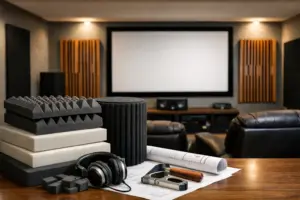
For example, a motorized shade plan may need recesses or pockets coordinated with window treatments. Exterior audio and surveillance need to account for landscaping, pool features, guest circulation, and local visibility concerns. A theater requires coordination with room dimensions, seating, acoustics, ceiling details, and equipment ventilation. None of these decisions should be made in isolation.
This coordination is just as relevant for commercial projects. Restaurants, offices, retail spaces, and hospitality environments benefit when audio, video, surveillance, communications, fire alarm requirements, and IT infrastructure are addressed alongside the construction plan. Early involvement supports a cleaner installation and helps the business open with systems that are ready to perform.
What Homeowners Should Ask Their Builder
Homeowners do not need to manage every technical detail, but they should ask one clear question before construction progresses: Who is coordinating the technology infrastructure, and when will that plan be reviewed?
A capable builder should welcome the discussion. The goal is not to complicate the project. It is to prevent competing decisions and ensure that the home’s technology supports the way the owner intends to live in it. Ask whether there is a dedicated equipment location, whether structured cabling and network coverage have been planned, and whether the integrator will complete a pre-drywall review.
It is also wise to discuss service after move-in. Integrated systems perform best when one experienced partner understands the design, documentation, installation, and programming behind them. That continuity matters when the homeowner wants an adjustment, an expansion, or prompt support.
For projects in South Florida, where outdoor living, concrete construction, hurricane considerations, and large connected properties can add complexity, early design is even more valuable. Sentry Audio Video works with builders and homeowners from the planning stage through installation and ongoing support, helping ensure the final system matches both the property and the people who use it.
The right time to involve an integrator is before technology becomes a construction change order. Bring the conversation forward, coordinate the details while choices are still open, and give the finished property the performance, appearance, and long-term flexibility it deserves.