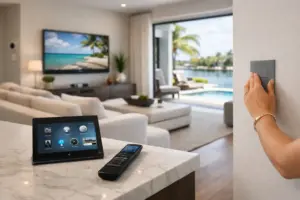
A speaker can look identical on the ceiling while the system behind it performs very differently. The decision between centralized versus distributed audio determines where amplification lives, how music sources are shared, how the system is serviced, and how easily the property can evolve. For a luxury residence, hospitality space, office, or retail environment, that decision should be made before walls are closed and equipment locations are finalized.
The right answer is not simply a matter of property size. It depends on how people use each room, how much control is expected, what cabling is available, and whether the owner values a single equipment location or greater independence at the edge of the system. A professional design accounts for all of it.
Quick answer: Centralized audio is usually the strongest choice for properties with many wired zones, shared sources, and a dedicated equipment rack. Distributed audio is useful for additions, retrofits, and independent rooms. Many premium homes and commercial spaces perform best with a carefully designed hybrid system.
What Centralized Audio Means
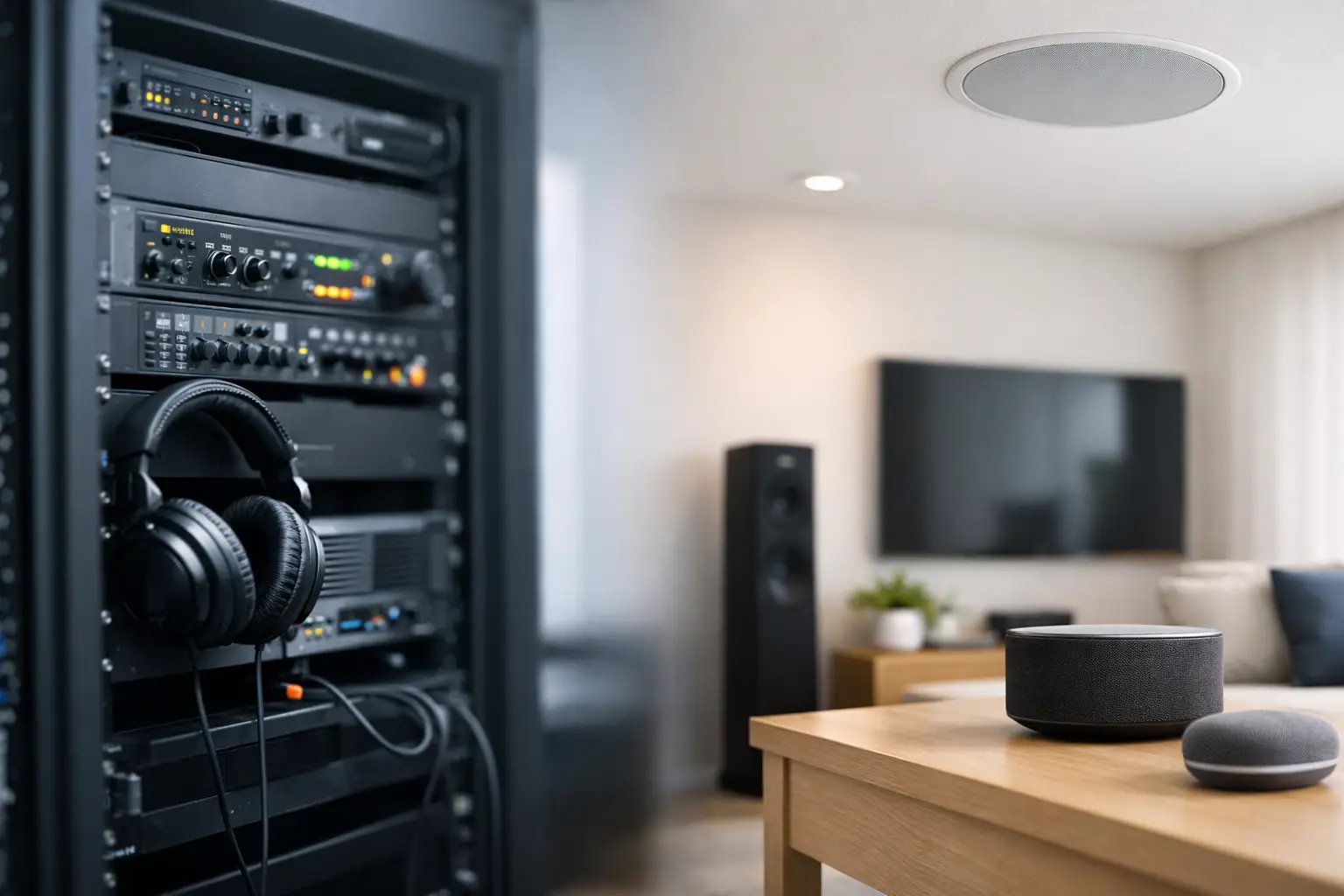
A centralized audio system places the primary sources, amplifiers, audio matrix, and control hardware in one dedicated equipment rack or technology room. Speaker wire runs from that location to each room or listening zone. The rack may also house streaming players, television audio distribution, satellite receivers, media servers, and network equipment that support the broader AV system.
This design has a clear operational advantage: the core of the system is in one accessible, organized location. When service is needed, a technician can inspect, test, and maintain major components without entering bedrooms, offices, or finished living areas. For homes with multiple entertainment sources and businesses with scheduled audio or paging requirements, centralization creates an orderly foundation.
Centralized architecture is especially well suited to properties where numerous zones need access to the same content. A homeowner may want television audio on the patio during a game, music in the kitchen and pool area, and a different playlist in the primary suite. A restaurant or showroom may need programmed background music, microphone announcements, and zone-specific volume control. With the correct audio matrix and amplifier capacity, these needs can be managed from one integrated system.
The trade-off is cabling. Every speaker location requires a dedicated wire run back to the rack, and larger properties may require substantial pathways, labeling, and planning. This is most efficient during new construction or a major renovation, when structured wiring can be placed cleanly and documented correctly.
What Distributed Audio Means
Distributed audio places more intelligence and amplification closer to the room or zone where sound is heard. Instead of routing every speaker wire to one central rack, each space may use a local streaming amplifier, a network-connected audio player, powered speakers, or another zone-specific device. These components communicate over the property network and can generally be controlled individually or grouped when desired.
For a smaller addition, a detached guest space, a conference room, or an existing finished area where new speaker cabling is difficult to run, distributed audio can be a practical solution. It allows a zone to be added with less dependence on a distant equipment rack.
Distributed designs also provide a measure of zone independence. If one local device requires attention, the rest of the property may continue operating normally. In a commercial setting, that can be valuable when separate tenant areas, meeting rooms, or distinct operating hours call for independent control.
However, distributed does not mean the system needs less planning. It shifts the planning to device placement, network design, power availability, wireless coverage, and access for future service. A local amplifier hidden above a ceiling, behind millwork, or inside a cabinet can create avoidable service challenges if it was not installed with ventilation and accessibility in mind.
Centralized Versus Distributed Audio: The Key Differences
The most meaningful difference is where the system’s complexity lives. Centralized audio concentrates it in a purpose-built location. Distributed audio spreads it across the property. Neither approach is automatically superior.
Centralized systems often deliver a cleaner result when a property has many wired speaker zones, several shared sources, and a dedicated equipment space. They simplify system-wide control and make it easier to integrate audio with home theater, video distribution, lighting scenes, motorized shades, and outdoor entertainment. A single “entertain” command, for example, can prepare a room’s lighting and audio experience without requiring separate actions across multiple apps.
Distributed systems can be more flexible when spaces are added over time or when portions of a building are difficult to wire. They can also be appropriate when every room primarily streams its own content and does not need access to a large shared source library.
Sound quality depends more on speaker selection, amplifier matching, acoustic conditions, installation quality, and tuning than on architecture alone. A well-designed distributed zone can sound exceptional. So can a centralized system. Problems arise when equipment is selected only for convenience, with no consideration for impedance, power requirements, speaker placement, room acoustics, or the demands of outdoor environments.
Consider the Property Before Choosing an Architecture
New construction creates the broadest range of options. Dedicated conduit, home runs, speaker locations, rack ventilation, and network infrastructure can all be designed as one coordinated plan. In this setting, centralized audio is often compelling because the wiring is already being installed and the system can be sized for future zones.
Renovations require a more selective approach. If ceilings are open in the kitchen, living room, and patio but not in upstairs bedrooms, a hybrid design may make the most sense. The wired areas can return to a central rack, while finished rooms use carefully placed distributed components. The result is one control experience without forcing a single architecture everywhere.
For waterfront homes and South Florida outdoor living spaces, environmental conditions deserve special attention. Speakers, enclosures, equipment locations, and wiring methods must be selected for heat, humidity, salt exposure, and seasonal use. Outdoor audio should feel as deliberate as the interior system, not like an afterthought attached to a patio.
Commercial properties need an additional layer of consideration: daily operation. Who adjusts the volume? Does staff need to select music by area? Are announcements required? Can a manager confirm the system is working before guests arrive? Centralized control can reduce operational friction, while localized zones may be useful where separate teams manage separate spaces.
Why Hybrid Audio Systems Are Often the Smartest Choice
Many premium properties benefit from a hybrid model. This is not a compromise made out of necessity. It is often the most intentional way to design a system around the way the property is actually used.
A central rack can manage high-use shared spaces such as the great room, kitchen, dining room, outdoor living area, and home theater. Those zones typically benefit from shared sources, higher amplifier power, stronger integration, and centralized service access. Guest rooms, offices, detached structures, or future expansion areas can use distributed audio components where they make sense.
The key is that the experience should remain consistent. Owners should not need to remember which rooms use one control method and which use another. A properly integrated system presents a clear interface, reliable grouping options, and predictable behavior throughout the property.
Questions That Lead to a Better Audio Design
Before selecting equipment, the design conversation should establish how the system will be used. Will different family members regularly play different music in different areas? Is television audio needed outdoors or in adjacent entertaining zones? Will the property host events? Does the business need background music, paging, or scheduled operation? Is there a dedicated equipment room, and can future cabling be added later?
It is also worth discussing service expectations early. Centralized systems make much of the hardware easier to reach, but they require careful rack design and ventilation. Distributed systems may simplify a targeted upgrade, but only if each device is installed in an accessible, documented location. The most reliable system is one that considers long-term ownership, not only opening-day operation.
Design for Control, Service, and Growth
Audio architecture should support the property rather than dictate how people use it. A large home with extensive shared entertainment areas may benefit from a centralized backbone. An existing office, guest house, or renovated space may be better served by distributed zones. For many projects, the ideal solution combines both.
Sentry Audio Video designs audio systems around real rooms, real routines, and the level of performance clients expect from a professionally integrated property. A thoughtful consultation before construction or renovation decisions are finalized can prevent visible equipment, fragmented control, and difficult service access later. The right system should make great sound feel like part of the property from the first day forward.
Plan Your Audio System With Sentry
Sentry Audio Video designs whole-home audio and commercial AV distribution around the property, wiring, equipment rack and long-term service requirements—not a one-size-fits-all equipment list.