A listening room is not the only place where audio matters. The right song in the kitchen, clear sound on the patio, or an effortless playlist during a dinner party can change how a home feels. When weighing wired vs wireless home audio, the real question is not which option is universally better. It is which architecture will deliver the performance, appearance, and ease of use your property deserves.
Wireless audio has made multi-room listening more accessible, while professionally installed wired systems remain the standard for properties that demand long-term reliability, discreet design, and consistent sound in every space. The right answer often involves both.
Wired vs Wireless Home Audio: The Core Difference
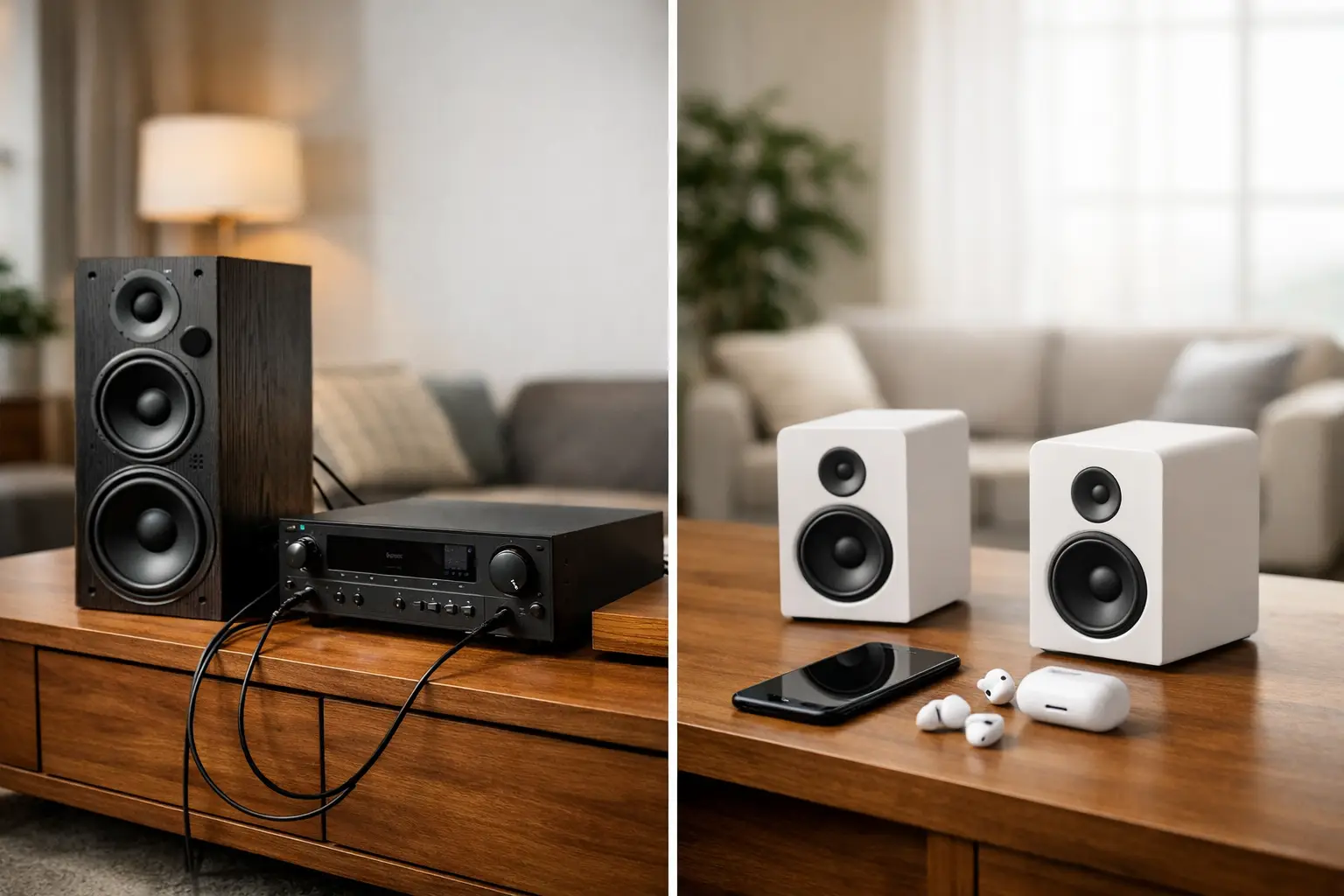
A wired home audio system sends audio and control signals through dedicated low-voltage cabling installed behind walls, above ceilings, or through structured pathways. Speakers may be mounted in ceilings, walls, outdoor landscape areas, or custom cabinetry, while amplifiers and source equipment are organized in a central equipment location.
A wireless system relies on the property’s Wi-Fi network or another wireless protocol to communicate with speakers and audio components. It can be an attractive choice for finished rooms where opening walls is not desirable, or for a homeowner who wants to add music to a limited number of spaces.
Both approaches can support streaming services, voice control, and app-based operation. The difference becomes more apparent when the system expands across a larger home, reaches outdoor areas, or must perform flawlessly when family and guests are using the network at the same time.
Why Wired Audio Still Sets the Standard for Custom Homes
A professionally designed wired system is built around predictability. Each speaker location is planned for coverage, tonal balance, and visual discretion. Each cable run is installed with a purpose. The result is a system that does not depend on a speaker maintaining a strong wireless signal from room to room.
Consistent sound in every zone
Wireless speakers can sound impressive in a single room. But a whole-home system has a more demanding job: delivering synchronized, stable audio throughout the kitchen, great room, bedrooms, hallways, gym, pool area, and patio. Wired speaker connections provide a dependable foundation for that scale.
This matters in larger residences with concrete construction, metal framing, radiant barriers, dense cabinetry, or expansive outdoor living spaces. These conditions can weaken wireless coverage and create inconsistent performance between rooms. Hardwired speakers and centralized amplification avoid those limitations.
A cleaner architectural result
For many premium homes, the visual benefit is as valuable as the audio benefit. In-ceiling and in-wall speakers can blend into the architecture, while landscape speakers can distribute sound across a backyard without placing a single conspicuous box near the seating area.
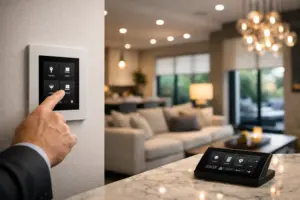
A wired system also keeps power supplies, cords, and individual speaker controls out of sight. Instead of managing several visible devices, homeowners can access music from a wall keypad, touchscreen, handheld remote, or centralized smart home interface.
Stronger long-term infrastructure
Cabling is an investment in the property itself. During new construction or renovation, installing speaker wire, network cabling, conduit, and equipment pathways creates flexibility for future upgrades. Speakers, amplifiers, and control platforms can evolve over time without revisiting every wall or ceiling.
For a home expected to serve a family for years, this infrastructure can be more valuable than choosing components based only on what is convenient today.
Where Wireless Audio Makes Sense
Wireless is not a compromise by default. In the right application, it is a practical and elegant part of a larger audio plan.
A finished guest room, a secondary office, or a space where construction is not planned may benefit from a high-quality wireless speaker. Wireless audio can also be useful for portable listening, temporary entertaining areas, or a homeowner who wants a simple way to extend music to one additional room.
The key is understanding that wireless performance is tied to network performance. Strong Wi-Fi design, properly placed access points, reliable network equipment, and thoughtful configuration make a meaningful difference. A property with weak or overloaded Wi-Fi will not become more reliable simply by adding wireless speakers.
Wireless systems also require power at every speaker location. That is easy to overlook when comparing a visible plug-in speaker with a concealed in-ceiling speaker powered by a centralized amplifier. The installation may appear simpler, but the finished look and control experience can be very different.
Sound Quality Is About Design, Not Just Connection Type
It is tempting to assume wired always means better sound and wireless always means less capable sound. In practice, speaker quality, placement, room acoustics, amplification, tuning, and source material have a major influence on what you hear.
A poorly placed wired speaker system will not outperform a thoughtfully positioned wireless solution simply because it has cables. Conversely, a well-engineered wired system gives an integrator more control over speaker selection, power distribution, zoning, and placement. That control is especially valuable in open-concept homes, rooms with high ceilings, and outdoor environments where sound can easily become uneven.
For critical listening spaces, dedicated media rooms, and home theaters, wired connections are generally the preferred approach. These environments benefit from precise speaker placement, calibrated amplification, and stable signal paths. For casual background listening in a small finished space, wireless may be entirely appropriate.
Control and Reliability Matter More Than Most Buyers Expect
The audio system should feel simple even when the infrastructure behind it is sophisticated. A homeowner should be able to select a room, choose a source, adjust volume, and group spaces without wondering which app controls which device.
A custom audio system can bring wired and wireless zones into one control experience. For example, architectural speakers in the kitchen, family room, primary suite, and patio can operate alongside a wireless speaker in a flex space. Everyone sees the same intuitive interface, but each zone is supported by the technology that makes the most sense for its location.
Reliability is equally important. Audio should start when requested, stay synchronized between zones, and remain available without routine troubleshooting. A professionally managed network, carefully organized equipment rack, and documented system design support this level of performance. They also make service and future changes far more straightforward.
Outdoor Audio Changes the Conversation
Outdoor entertainment is one of the clearest cases for a wired approach. A patio or pool deck may be only a short distance from the house, but it presents challenges that indoor wireless speakers do not face: weather exposure, larger coverage areas, open-air sound loss, and the need to avoid disturbing neighbors.
Distributed landscape speakers and buried subwoofers can create even coverage at comfortable volumes. Rather than turning up one or two speakers near the house, sound is placed where people gather. This produces a more refined experience and helps contain audio within the property.
For South Florida properties, outdoor audio planning should also account for humidity, salt air near the coast, storm exposure, and equipment placement. Purpose-built products and proper installation practices are not optional details in these environments.
How to Choose the Right Approach
Start with the scope of the experience you want. If music is limited to one or two finished rooms, wireless may meet the need well. If you want consistent audio across multiple interior areas and outdoor spaces, a wired backbone is usually the more dependable choice.
Next, consider the stage of the property. New construction and renovations offer the ideal opportunity to install wiring before finishes are complete. For an existing home, an experienced integrator can assess accessible pathways, attic space, equipment locations, and network coverage to determine what can be accomplished cleanly.
Finally, think beyond the first installation. Will you want to add a pool area, a guest house, motorized shades, a theater, surveillance, or centralized control later? A properly planned infrastructure allows those systems to work together rather than becoming a collection of disconnected apps and devices.
Sentry Audio Video designs audio systems around the way each client uses a property, not around a one-size-fits-all equipment package. That means balancing performance, visual integration, control, and serviceability from the first proposal onward.
The strongest home audio systems do not call attention to their wiring or wireless technology. They simply fill the spaces you use with clear, reliable sound and make every gathering, quiet morning, and outdoor evening easier to enjoy.