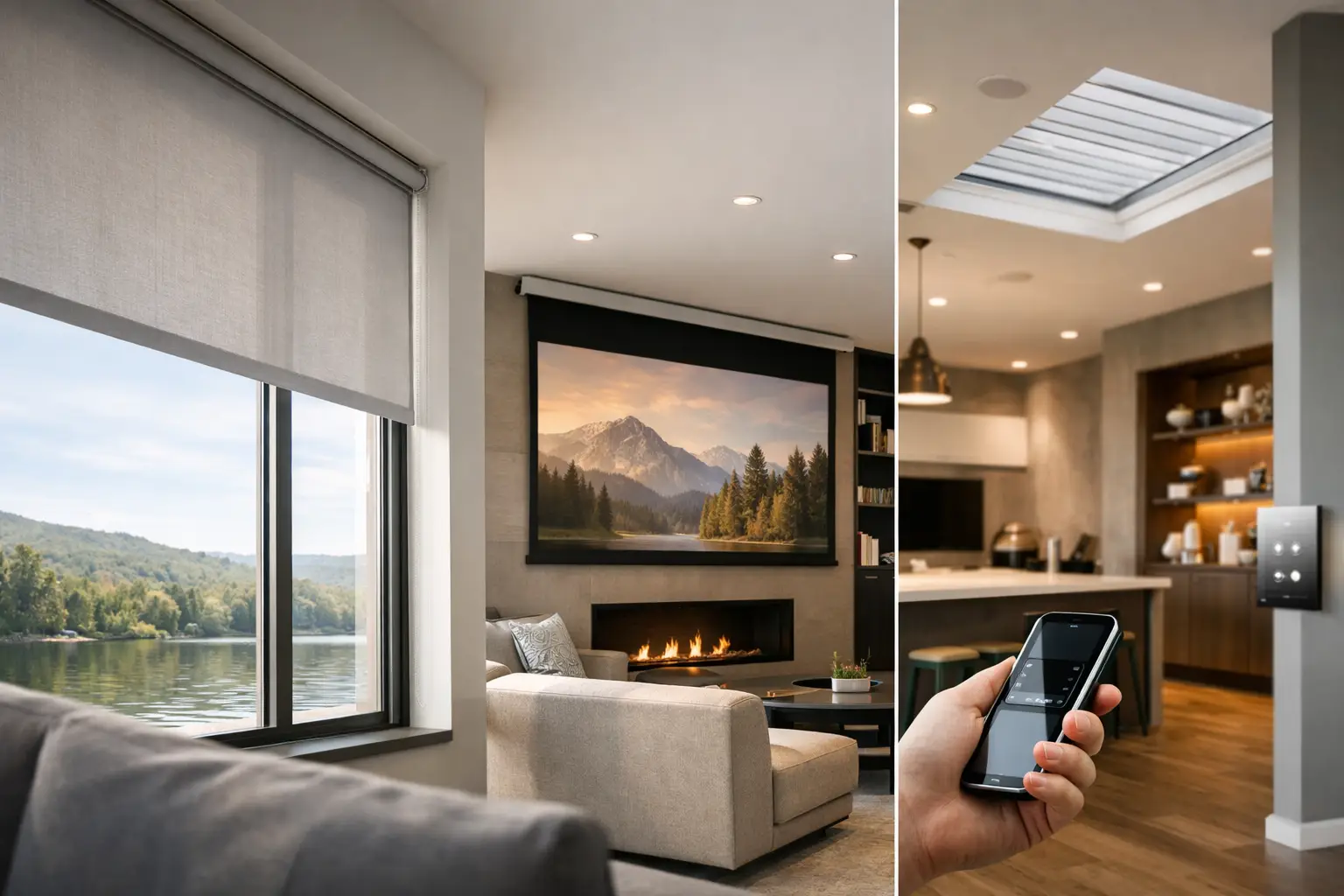
The right window treatment does more than finish a room. It determines how sunlight moves through the space, how private the home feels after dark, how comfortable rooms remain through South Florida heat, and how easily the property responds to daily routines. Lutron shades bring those decisions into one refined, reliable system – operated from a wall keypad, handheld remote, app, or a broader smart home control platform.
For homeowners building, renovating, or refining a luxury property, motorized shades are not an afterthought. They are an architectural and performance-driven part of the home. The difference comes down to proper design, precise fabric selection, professional wiring or power planning, and integration that works exactly as expected every day.
Why Lutron Shades Are a Different Category
A manual shade solves one basic problem: covering a window. A professionally specified Lutron shading system manages light, privacy, comfort, and ambiance across the home without requiring someone to adjust every opening individually.
That control matters in rooms with expansive glass, waterfront views, double-height windows, or multiple exposures. The morning sun in an east-facing bedroom requires a different response than the late-afternoon glare in a west-facing great room. With programmed scenes, shades can move according to time of day, a button press, occupancy, or commands from an integrated control system.
Lutron is known for quiet, accurate movement and an extensive range of fabrics, styles, and control options. Just as important, the system is designed to coordinate with lighting, climate controls, security, and entertainment. A single “Good Night” command can lower bedroom shades, turn off selected lights, arm the security system, and set the home for the evening. That is a meaningful improvement over a collection of disconnected remotes and apps.
Light Control Without Giving Up the View
The most common mistake in shading design is treating every room and every window the same. Homes with premium views often need solar control during the day and privacy at night, but homeowners understandably do not want to lose the openness that made the space appealing in the first place.
Solar Shades for Daytime Comfort
Solar shade fabrics filter sunlight while preserving an outward view. They can reduce glare on displays, protect furnishings from harsh UV exposure, and make bright living areas more comfortable without closing the room off. Openness factors, fabric color, window orientation, and the distance from glass all influence the result.
A more open fabric generally provides a clearer view outward, while a tighter weave delivers stronger glare and solar control. Darker fabrics often provide better daytime visibility toward bright exteriors, while lighter fabrics can create a softer interior appearance. There is no universal right answer. The appropriate selection depends on how the space is used, the view direction, and the amount of direct sun it receives.
Blackout Shades for Rest and Privacy
Bedrooms, media rooms, and certain conference spaces need more complete light blockage. Blackout roller shades, often paired with side channels or carefully designed drapery, provide a more controlled environment for sleep, presentations, and movie viewing.
It is worth being precise with the term “blackout.” A blackout fabric blocks light through the fabric itself, but small perimeter light gaps can remain depending on the shade style and installation conditions. For clients who want the darkest possible room, recessed pockets, fascia details, side channels, and layered treatments should be evaluated early in the design process.
Layered Shading for More Flexibility
In many luxury homes, the strongest approach is a dual-shade system. A solar shade handles daytime glare and heat, while a room-darkening or blackout shade provides privacy and darkness when needed. This arrangement offers far more flexibility than choosing a single fabric to do competing jobs.
Layered treatments can also create a polished architectural look, particularly when shade pockets and wiring are planned before drywall. In a finished home, surface-mounted solutions can still look clean, but early coordination provides more opportunities to conceal hardware and preserve the intended design lines.
The Real Value Is in the System Design
Motorized shading can appear simple from the user’s perspective. Press a button and the shade moves. Behind that simple experience is a system that must account for window measurements, bracket placement, fabric roll direction, motor capacity, power source, wireless signal coverage, control programming, and coordination with other systems.
This is why shade design should begin with a room-by-room conversation rather than a product selection alone. An experienced integrator will ask how each space is used, when sunlight becomes disruptive, where privacy is essential, which windows are difficult to reach, and how the shades should behave alongside lighting and other home controls.
For example, a primary suite may require automated morning shade scenes, individual bedside controls, and privacy settings that operate independently from the rest of the home. A great room may need grouped solar shades that respond to late-day sun, with a separate setting for entertaining. A home theater requires carefully managed blackout conditions that support the viewing experience without making the room complicated to operate.
The visual details deserve equal attention. Exposed roller shades, fascia panels, recessed pockets, drapery tracks, and fabric choices all affect the finished appearance. The goal is not merely to install a motorized product. It is to make the shading system look intentional, operate reliably, and complement the architecture.
Wired or Battery-Powered Shades: Which Is Right?
Both wired and battery-powered Lutron shades have a place in a well-designed project. The decision should reflect the stage of the property, the number of windows, access to power, and the level of long-term automation desired.
Wired shades are often preferred during new construction and major renovations. Power can be planned in advance, wires can be concealed, and the system can support extensive installations without the ongoing task of replacing batteries. For whole-home shading across many windows, wired power typically provides the most refined and maintenance-conscious result.
Battery-powered shades can be an excellent solution in finished homes where opening walls is not desirable. They allow motorized control in areas that would otherwise be difficult to automate and can deliver a clean finished appearance when specified correctly. Their trade-off is maintenance: batteries must eventually be replaced or recharged, and access to high windows should be considered before installation.
A professional recommendation may include a mix of both. A renovation may have wired shades in principal living areas and battery-powered units in a completed guest wing or a difficult-to-reach window group. The right solution is the one that fits the property without compromising daily usability.
Shades Work Better When They Work With the Home
The full potential of motorized shades appears when they are part of an integrated environment. Rather than managing shades in isolation, homeowners can use scenes that coordinate lighting, entertainment, security, and comfort settings around real routines.
A “Morning” scene might gradually raise bedroom shades, bring on selected lights, and open common-area solar shades. A “Movie” scene can lower media room blackout shades, dim the lights, and prepare the room for viewing. Before leaving the property, an “Away” command can lower selected shades for privacy and manage lighting patterns that support a lived-in appearance.
Automation should always remain practical. Not every shade needs to move on a schedule, and overly complicated programming can frustrate users. The best systems provide intelligent default behavior while keeping manual control easy and accessible. A wall keypad should be clearly labeled. A family member or guest should understand the primary commands without training. Technology earns its place when it reduces friction.
Considerations for Coastal South Florida Homes
In Boca Raton, Fort Lauderdale, and surrounding coastal communities, shade selection often involves powerful sun exposure, wide glass openings, and a desire to protect interior finishes while keeping water or city views visible. Salt air, humidity, and intense light also make dependable equipment and precise installation especially valuable.
Large openings may require multiple shades operating as a coordinated group. Windows facing east or west may benefit from more aggressive solar management than shaded northern exposures. Properties that are vacant part of the year can use scheduled shade positions to support privacy and help manage direct sun exposure, though shades should be part of a broader property-management strategy rather than the sole solution.
Fabric samples should be viewed in the actual space whenever possible. A color that appears subtle in a showroom can look dramatically different against bright coastal light, pale flooring, or reflective water. The same is true for openness and glare control. Real-world conditions should guide the final specification.
A Professional Installation Protects the Investment
Premium shades deserve more than an installation that simply gets them moving. Accurate measurements, secure mounting, clean wire management, consistent alignment, reliable programming, and thorough client walkthroughs all shape the ownership experience.
Sentry Audio Video approaches motorized shading as part of a complete technology plan. That means coordinating shades with lighting and control systems, designing around the architecture, and standing behind the performance after installation. Whether the project involves a single media room or an entire residence, the objective remains the same: dependable control with a polished result.
Well-designed shades become almost invisible in the best sense. They move when the home needs them to, preserve the view when it matters, create privacy when the day ends, and make every room feel more intentional. That is the standard worth planning for before the windows are covered.