A beautiful patio can lose its appeal quickly when hosting means searching for remotes, adjusting multiple apps, and walking inside to change music or lighting. Learning how to automate outdoor entertainment is about replacing those small interruptions with a system that makes the space feel ready when guests arrive. The goal is not more technology for its own sake. It is dependable control over the sound, picture, comfort, and atmosphere that define time spent outdoors.
For homes in South Florida, where outdoor living is part of everyday life for much of the year, a professionally integrated system can turn a pool deck, covered terrace, outdoor kitchen, or waterfront lounge into a true extension of the home.
Start With How the Space Will Be Used
The right outdoor entertainment system begins with the experience, not a list of equipment. A family watching a movie by the pool needs something different from a homeowner who hosts large dinner parties, follows market updates from an outdoor office, or wants calm background music throughout the property.
Consider where people naturally gather and how activity moves through the space. A covered lanai may call for a weather-rated display and focused speakers. A larger yard may benefit from distributed landscape audio that delivers even coverage without forcing one area to play too loudly. An outdoor kitchen, bar, fire feature, and pool area can each have their own audio zone, allowing guests to enjoy the same event or separate entertainment without competing volume levels.
Automation should reflect those patterns. Instead of treating the backyard as one on-or-off area, a custom design gives each zone a clear purpose while keeping control simple.
Build Outdoor Entertainment Around One Control Platform
The most meaningful step in how to automate outdoor entertainment is centralizing control. Audio, video, lighting, motorized shades, pool features, and climate-related comfort systems should operate from one intuitive interface rather than a collection of disconnected controls.
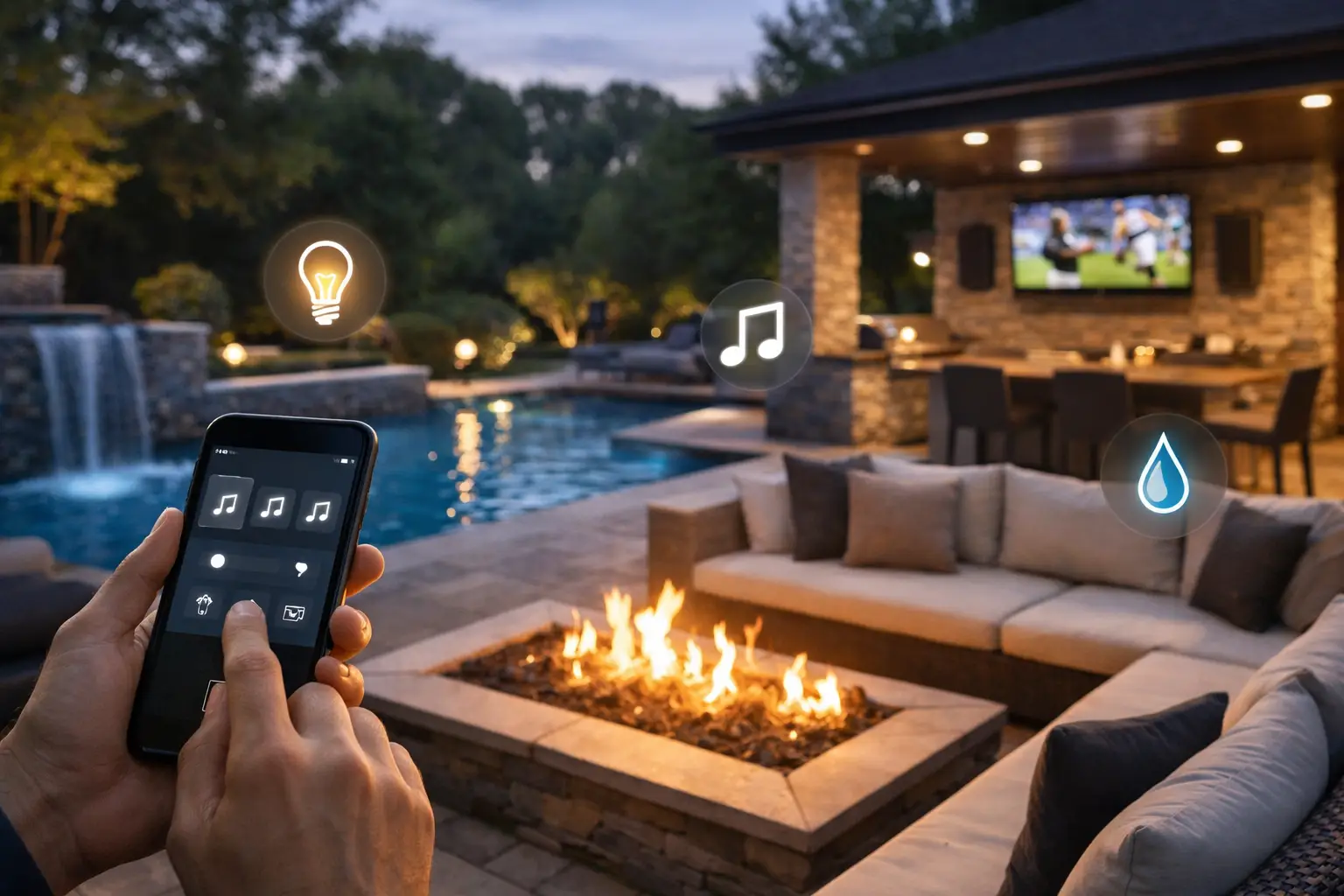
A wall-mounted keypad near the patio door can activate a complete setting as someone enters the outdoor area. A handheld remote can operate the television and sound system from a seating area. A mobile device can offer convenient control from anywhere on the property. The best interface depends on the home and the people using it, but the experience should remain consistent across every option.
For example, an “Entertain” scene might turn on selected speakers, set the pool lights to a preferred color, bring landscape lighting to an appropriate level, and power on the outdoor display. A “Dinner” scene could lower audio volume, adjust lighting around the table, and close motorized shades on a covered patio for privacy. At the end of the evening, one command can power down entertainment equipment and return lighting and water features to their normal schedule.
This is where professional integration matters. Reliable automation is not achieved by adding more remotes or relying on a patchwork of separate applications. It requires a control strategy that accounts for network performance, equipment communication, user permissions, and the way the property is actually used.
Choose Equipment Designed for Outdoor Conditions
Outdoor spaces are demanding environments. Heat, humidity, salt air, rain, insects, direct sunlight, and rapid weather changes all affect system performance. Equipment selected for an interior room may look acceptable at first, but it is not engineered for the exposure found near a pool, coast, or open patio.
Outdoor-rated displays are designed to deliver a visible picture in brighter conditions and withstand changing temperatures. Their placement remains just as important as their construction. A display installed under cover, away from direct afternoon sun, is easier to view and typically has a more comfortable operating environment.
Speaker selection also deserves careful planning. Surface-mounted speakers, in-ground landscape speakers, and buried subwoofers each serve a different purpose. The objective is full, balanced sound across the entertaining area, not a pair of speakers blasting toward the entire yard. Proper speaker placement creates coverage that feels natural near seating, dining, and pool areas while respecting adjacent properties.
Equipment enclosures, cable pathways, mounting hardware, and ventilation need the same level of attention. A clean installation protects performance and preserves the design of the home. Visible wires, poorly placed components, and makeshift mounting solutions can undermine an otherwise exceptional outdoor space.
Plan for Sun, Weather, and Viewing Angles
A display that faces the wrong direction can be difficult to enjoy, even when it is specifically built for outdoor use. Before installation, evaluate glare, shade patterns, seating positions, and sightlines from the pool, bar, and dining area. A slightly different mounting location may produce a dramatically better viewing experience.
Weather planning should extend beyond the display. Outdoor audio components need proper drainage and placement. Connections should be protected. Equipment that belongs indoors, such as source devices and control hardware, should be located in a conditioned equipment area whenever possible. This approach improves serviceability and reduces unnecessary exposure.
Design the Network Before Adding More Features
Outdoor entertainment depends on a stable network. Streaming music, live television, surveillance notifications, pool controls, and mobile control all place demands on Wi-Fi and wired infrastructure. If coverage weakens near the patio or the connection drops when guests join the network, even premium equipment cannot deliver the experience it should.
A professional design evaluates the property as a whole. Outdoor wireless access points may be needed to extend strong coverage to the pool, dock, guest house, or detached entertaining area. Where feasible, hardwired connections provide dependable performance for displays, access points, and control devices.
Network design also helps separate essential home systems from guest access and entertainment traffic. That distinction supports stronger performance and a more secure environment, especially for homes with integrated surveillance, access control, and smart home systems.
Use Lighting and Shades to Shape the Experience
Outdoor entertainment is not only about what people watch or hear. Lighting determines whether the area feels inviting, whether guests can move safely, and whether a display remains comfortable to view after sunset.
Integrating landscape, architectural, pathway, and pool lighting into the same control platform makes the environment easier to manage. Rather than manually changing multiple zones, a scene can bring up the lights needed for a gathering while keeping other areas understated. Late-night settings can reduce brightness around the seating area without leaving walkways or steps in the dark.
Motorized shades are especially valuable in covered outdoor areas. They can reduce glare, add privacy, and help define a more comfortable entertaining zone. Their value depends on the architecture and exposure of the space. A west-facing terrace may benefit greatly from automated shade control in the late afternoon, while a fully enclosed outdoor room may require a different solution.
Connect Pool and Water Features Thoughtfully
For properties with pools, spas, fountains, or fire features, integrated control creates a more complete outdoor environment. A single scene can coordinate entertainment and ambiance: music begins, pool lighting changes, water features activate, and the outdoor living area is prepared for guests.
There are trade-offs to consider. Not every existing pool control system communicates with every automation platform in the same way, and some upgrades may be needed to achieve reliable control. A site evaluation identifies what can be integrated, what should remain separate, and where modernization will add meaningful value.
The priority should be dependable operation. A polished interface means little if core functions do not respond consistently. Custom programming and thorough commissioning ensure that scenes work as intended and that the homeowner understands exactly how to use them.
Plan for Service, Expansion, and Everyday Simplicity
Outdoor systems should be designed with future needs in mind. A homeowner may initially want music around the pool and a display on the patio, then later add landscape speakers, a second outdoor television, motorized shades, or expanded lighting control. Thoughtful wiring and equipment planning make those additions far easier to accommodate.
Ongoing support also matters. Outdoor environments change, software updates occur, and occasional service is part of protecting a high-performance system. Working with a trusted integrator provides one accountable partner for design, installation, programming, maintenance, and future enhancements.
Sentry Audio Video approaches outdoor automation as part of the total property experience. The result is a clean, professionally executed system that brings sight, sound, comfort, and control together without making the homeowner manage the technology.
The most successful outdoor entertainment spaces feel effortless because the planning behind them is precise. When every component is selected for the environment, connected through dependable infrastructure, and programmed around the way you host, the backyard is ready with a single touch – and stays that way long after the first gathering.