A synagogue should feel open to its members, welcoming to guests, and calm for every person who walks through its doors. That responsibility makes synagogue security systems Boca Raton congregations choose especially important: the goal is not to turn a sacred space into a fortress. It is to create a well-planned, professionally managed security environment that supports awareness, response, and peace of mind without interrupting worship, learning, celebrations, or daily operations.
The strongest security plans do not begin with a camera count or a catalog of devices. They begin with how the congregation uses the property. A campus with a sanctuary, religious school, social hall, offices, outdoor gathering areas, and multiple entrances has different needs than a smaller congregation operating from one primary building. The right design respects those differences while bringing critical systems together under one dependable plan.
What Synagogue Security Systems in Boca Raton Should Accomplish
A security system should help authorized staff understand what is happening at the property, control who can enter sensitive areas, and respond quickly when an issue requires attention. For a synagogue, that means addressing both scheduled events and the many moments in between: early arrivals for services, school pickup, vendor access, after-hours meetings, lifecycle events, and holiday attendance.
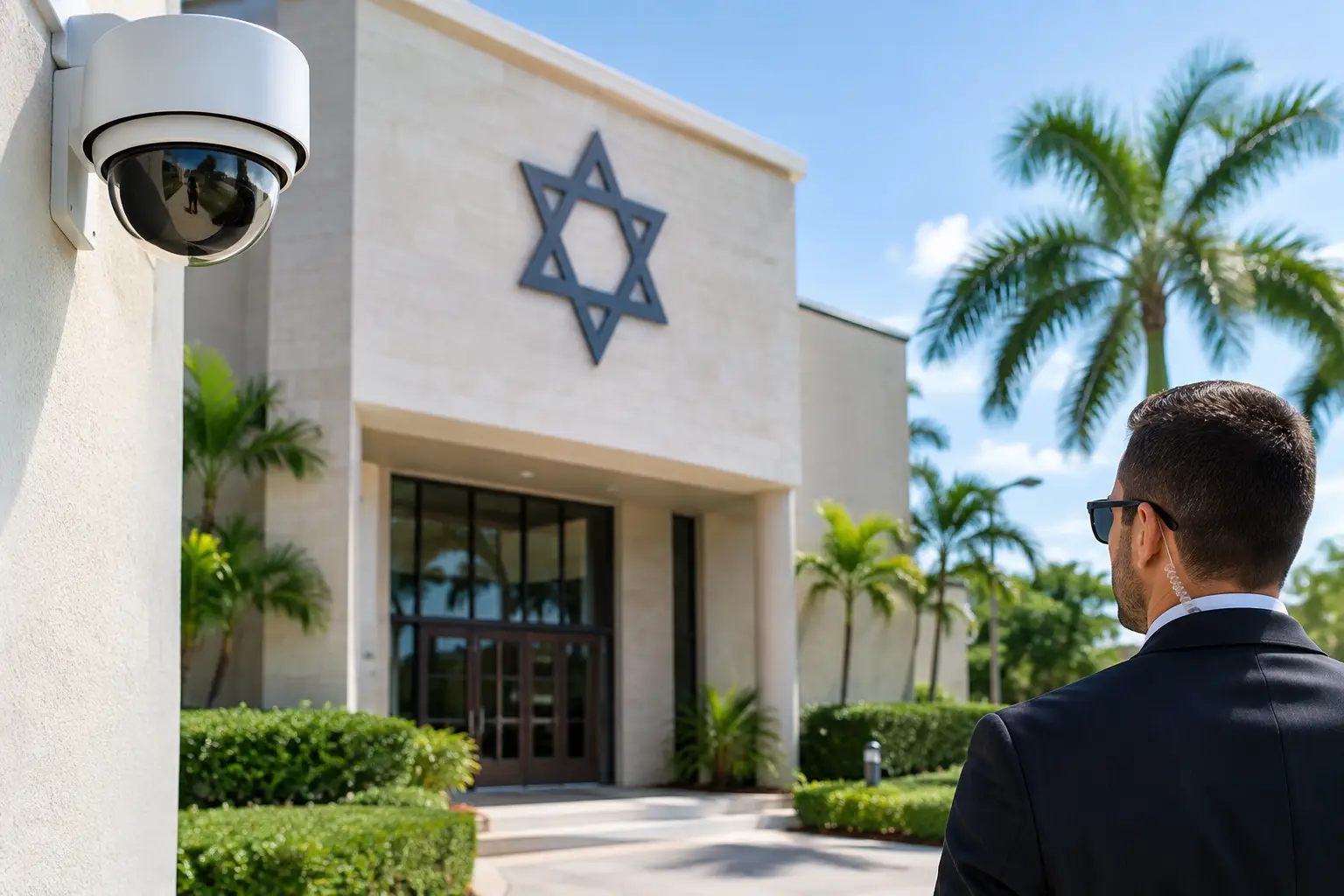
Video surveillance is often the foundation. Clearly positioned cameras can provide visibility at approaches to the building, parking areas, main entrances, reception spaces, hallways, and other key common areas. Image quality matters, but placement matters just as much. A camera that has been selected and positioned around real sight lines, changing daylight, landscaping, and nighttime conditions delivers more useful footage than a collection of devices installed without a site-specific plan.
Access control adds another layer of management. Rather than relying solely on physical keys that can be copied, lost, or remain in circulation after staffing changes, authorized personnel can use credentials assigned to their role. Administrators can manage access to offices, records areas, classrooms, equipment rooms, and other restricted spaces while maintaining an appropriate welcome at public entrances.
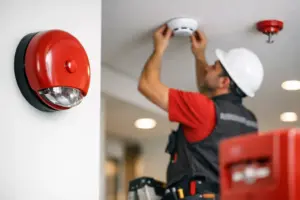
Intrusion detection, monitored alarms, intercoms, emergency communications, and fire alarm integration may also be part of the overall design. The correct combination depends on the facility, its existing infrastructure, and the congregation’s operating procedures. More equipment is not automatically better. Every system should have a clear purpose, a responsible user, and a support plan.
Start With the Congregation’s Daily Reality
A thoughtful security consultation considers traffic patterns before recommending technology. Who arrives first? Which doors are used during weekday programming? Where do parents and students gather? Which rooms hold confidential records or valuable equipment? How does the property change during High Holy Days, weddings, community programs, or large events?
This assessment helps avoid two common problems. The first is covering only the obvious areas while overlooking a secondary entrance or a poorly lit approach. The second is making daily access so cumbersome that staff begin working around the system. Security is strongest when it supports consistent, manageable routines.
It also helps to establish clear priorities. A preschool or religious school may require carefully managed entry during the day. A large social hall may need flexible access for event staff and vendors. An office wing may benefit from access history and controlled credentials. The sanctuary itself may call for discreet camera placement that preserves the character and dignity of the space. Each decision should reflect how that area is actually used.
Security and Hospitality Can Work Together
Warm hospitality and sound security are not opposing goals. A well-designed entry experience can make visitors feel acknowledged while giving staff appropriate control over access. Video intercoms, professionally managed doors, and clear communication procedures can reduce uncertainty for both guests and the people responsible for the facility.
The balance is particularly important during high-attendance services and events. A design that works for a quiet weekday may not be appropriate for hundreds of arrivals in a short period. Congregations should consider how entrance management, camera coverage, communication, and staff visibility will function when the campus is busiest.
The Core Systems to Consider
Most synagogue security plans bring several systems into a coordinated environment. The priorities vary, but the following components often deserve discussion during a professional site review:
- Video surveillance for live awareness, recorded review, and coverage of key approaches, entrances, parking areas, and common spaces.
- Access control for managing credentials, restricted doors, schedules, and changes in staff or volunteer responsibilities.
- Intrusion detection for after-hours protection and notification when protected areas are entered unexpectedly.
- Intercom and communication systems for verifying visitors, coordinating staff, and communicating across larger facilities.
- Centralized monitoring and notifications that help authorized personnel receive relevant information without sorting through disconnected platforms.
Integration is what turns these components into a workable system. For example, a door event can be associated with relevant video, helping an authorized administrator understand what occurred without moving between multiple applications. A reception team can view an entry camera and communicate with a visitor from an appropriate location. These practical connections save time and reduce confusion when clarity matters.
Camera Coverage Requires More Than a Floor Plan
Camera design is frequently treated as a simple coverage exercise, but quality surveillance depends on real conditions at the property. Direct South Florida sun, shadows under covered walkways, nighttime lighting, rain, and reflective glass can all affect image clarity. The camera selected for an interior corridor may not be suitable for a vehicle entrance or a dark parking area.
Retention planning also matters. Congregation leadership should determine how long recorded footage needs to be available, who can review it, and how access is protected. Storage requirements change based on the number of cameras, image resolution, recording schedules, and retention period. A professional design accounts for those requirements upfront rather than leaving the facility with insufficient storage when footage is needed.
Privacy should be addressed with the same care. Camera locations and permissions should support safety while respecting private offices, counseling areas, and other sensitive spaces. Leadership should establish who is authorized to view video and how footage is handled. Technology provides the capability; responsible policies determine how that capability is used.
Access Control Should Match Roles, Not Just Doors
Physical keys offer limited accountability. When a key is misplaced or a role changes, it can be difficult to know who may still have access. Access control provides a more organized approach by assigning permissions based on responsibilities and schedules.
That does not mean every door needs the same treatment. Main entrances, administrative offices, classrooms, clergy offices, storage rooms, and technology areas may each require different rules. Some doors may be scheduled for regular operating hours, while others remain credential-only. Temporary access can be assigned to vendors or event personnel and removed when it is no longer needed.
The system should also be straightforward for the people who will manage it. If administration is overly complex, updates may be delayed and permissions may become inaccurate over time. Training, documented procedures, and responsive ongoing support are as valuable as the equipment itself.
Reliability Depends on Installation and Support
A sophisticated security design cannot perform well if cabling is poorly routed, network capacity is overlooked, equipment is inaccessible for service, or components are selected without regard for the property. Professional installation protects performance and preserves the appearance of the facility. Clean equipment placement, labeled infrastructure, and organized cabling make future maintenance more efficient and less disruptive.
Network planning deserves particular attention because cameras, access control, communications, and administrative operations may share infrastructure. The system should be designed to maintain dependable performance without creating unnecessary strain on the congregation’s business operations. Backup power considerations, remote service capabilities, and equipment health monitoring may also be appropriate depending on the scale of the campus.
A security plan is not finished on installation day. Staff members need to know how to use the system, whom to contact for service, and how to handle routine events. Periodic reviews are worthwhile as facilities expand, staffing changes, or new programming creates different traffic patterns.
Choose a Partner That Can Take Ownership
For synagogue leadership, the decision is not simply about purchasing cameras or door hardware. It is about selecting an integration partner that can assess the property, design around its real operations, execute a clean installation, and remain available after the system goes live.
Sentry AV approaches security as part of a complete technology environment, with the technical scope to coordinate surveillance, access, communications, structured cabling, and related systems into one professionally executed plan. For congregations in Boca Raton, that means fewer disconnected decisions and a clearer path from consultation through long-term support.
The right security system should fade into the background of a well-run congregation: present, dependable, and ready when needed. A professional assessment is the practical first step toward creating that confidence while preserving the welcome that defines your community.