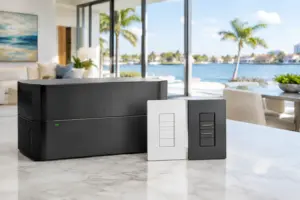
A beautifully renovated residence can still feel unfinished if the technology operates as a collection of unrelated systems. Lights need one app, shades need another, music depends on a third, and family members are left guessing which remote controls what. Control4 and Lutron Integration in a Woodfield Country Club Renovation changes that experience by giving the property one intelligent, professionally designed control environment.
For homeowners investing in a major renovation, technology should support the architecture, not compete with it. Keypads should feel intentional, televisions should disappear when not in use, speakers should blend into the finishes, and lighting should make every room more inviting. The goal is not more devices. It is dependable control, refined presentation, and an installation that performs consistently long after construction is complete.
Why Control4 and Lutron Work So Well Together
Control4 and Lutron each have distinct strengths. Lutron is widely respected for sophisticated lighting control and motorized shading, particularly in high-end homes where fixture performance, dimming quality, and fabric selection matter as much as convenience. Control4 serves as the central automation platform, bringing lighting, shades, audio, video, security, surveillance, pool features, and other connected systems into one tailored interface.
When these systems are integrated correctly, a homeowner does not need to think about the underlying technology. A “Good Morning” scene can raise bedroom shades, bring lights up gradually in the kitchen and hallway, and start music in selected areas. An “Entertain” scene can set the dining room and outdoor lighting, lower shades where afternoon sun creates glare, activate distributed audio, and prepare the media room for guests.
The value is not limited to scenes. Control4 provides consistent control through touchscreens, elegant in-wall keypads, handheld remotes, and mobile access, while Lutron delivers the lighting and shading response expected in a luxury residence. The systems should feel like one coordinated experience, even though each is performing a specialized role.
Start the Renovation With the Experience, Not the Equipment
The strongest technology plans begin before walls are closed and finishes are selected. During a Woodfield Country Club renovation, design decisions involving ceiling details, window treatments, millwork, stone, lighting fixtures, and outdoor living spaces all affect how the finished system can be installed.
For example, motorized shades require more than choosing a fabric. The integration team must evaluate window dimensions, pocket depth, fascia options, power location, privacy needs, and how the shades will interact with the room’s lighting. A shade that is visually perfect but difficult to service or improperly powered is not a successful solution.
The same principle applies to audio and video. Ceiling speaker placement should be coordinated with lighting layouts, vents, decorative beams, and architectural elements. Television locations may require recessed mounting, custom framing, hidden equipment placement, and wiring paths that preserve the clean appearance of the room. Outdoor entertainment areas need equipment selected and installed for South Florida conditions, with careful attention to coverage, control, and protection.
A qualified integration partner asks practical questions early: How does the family use the home on a typical weekday? Which spaces are used for entertaining? Is the residence occupied seasonally? Are there staff members who need simple control without access to every system? What should happen when the property is vacant? These answers shape the system more effectively than a generic equipment list ever could.
Lighting Design Is About More Than Turning Fixtures On and Off
In a premium renovation, lighting has a direct effect on how the property feels at every hour. Lutron lighting control allows fixtures to be organized into layers, such as ambient, accent, task, and decorative lighting. Instead of a single switch controlling an entire room, homeowners can create purposeful settings that match the activity.
In the kitchen, bright task lighting may be appropriate for food preparation, while undercabinet and pendant lighting create a warmer setting for an evening gathering. In a great room, artwork lighting, cove lighting, lamps, and recessed fixtures can be balanced into a scene that feels polished without appearing overlit. Dimming quality matters here. Poorly matched lighting components can flicker, pop on at distracting levels, or create inconsistent color output.
Lutron keypads also reduce wall clutter. Rather than filling a renovated space with rows of conventional switches, a professionally specified keypad can provide direct access to the scenes a household uses most. Engraved buttons make control intuitive for family members and guests, while the programming behind them can remain as detailed as the property requires.
Shades Protect Interiors While Improving Comfort and Privacy
Woodfield Country Club homes often feature generous glass, open floor plans, and spaces designed to bring in natural light. That is a major design advantage, but it also creates practical concerns: glare on displays, fading of furnishings, daytime privacy, and heat entering the home through exposed windows.
Motorized shades address those concerns without requiring daily manual adjustment. Lutron shading can be scheduled around the time of day, managed through a keypad, or included in a Control4 scene. In a media room, shades can lower automatically when a film begins. In primary living areas, they can adjust to reduce glare while maintaining an open view. At night, privacy settings can be activated as part of a whole-home scene.
There is a trade-off to consider. Some rooms benefit from blackout treatments, while others need translucent fabrics that preserve daylight and views. The right choice depends on orientation, interior use, window shape, and desired appearance. A design consultation should address these factors before fabrics and mounting details are finalized.
Control Should Be Easy for Everyone in the Home
Complexity belongs behind the scenes, not in the homeowner’s hands. A well-programmed Control4 system gives each person a clear, simple way to use the home. A bedside keypad can offer lighting, shade, and whole-house off functions. A media-room remote can operate the television, audio, streaming sources, and room lighting without a pile of remotes on the coffee table.
Mobile control is valuable when homeowners are away, but it should not be the only way to operate essential systems. Physical keypads remain fast, reliable, and easy for guests, children, and household staff. Touchscreens work well in high-traffic areas where visual feedback is useful, such as a kitchen, foyer, or primary suite.
Thoughtful programming also supports security and peace of mind. A single departure command can turn off selected lights, lower designated shades, power down entertainment zones, and arm integrated security features where applicable. Away settings can give a seasonal residence a more lived-in appearance while homeowners travel. The exact scope should be tailored to the property and the household’s preferences.
The Infrastructure Determines Long-Term Reliability
A polished control interface is only as dependable as the infrastructure behind it. Renovations provide an ideal opportunity to install structured wiring, dedicated equipment locations, enterprise-grade networking, properly labeled connections, and serviceable pathways for future upgrades.
Wireless technology has a place in sophisticated systems, especially where finished areas limit access. However, relying on wireless communication for every critical device can create avoidable performance issues in larger residences with concrete construction, metal finishes, extensive glass, or multiple outdoor zones. A professional design balances wired and wireless connectivity according to the property’s layout and the needs of each system.
Equipment placement also deserves careful planning. Network components, audio distribution, control processors, surveillance hardware, and power management should be accessible for maintenance without intruding on living spaces. Organized racks, clear labeling, ventilation, and remote service capability protect the investment and make future support far more efficient.
A Coordinated Team Prevents Expensive Rework
Control4 and Lutron integration is not a last-stage add-on. It requires coordination among the homeowner, designer, architect, builder, electrician, lighting designer, window-treatment professional, and technology integrator. When those conversations happen early, the finished home is cleaner, more functional, and easier to maintain.
Sentry Audio Video approaches renovations as complete technology environments rather than isolated installations. That includes reviewing plans, specifying systems that fit the property, coordinating infrastructure before finishes go in, programming the user experience, and providing support after move-in.
For a Woodfield Country Club renovation, the most successful result is one that feels effortless: the lighting flatters the home, shades respond when they should, entertainment is ready when guests arrive, and every control point works exactly as expected. That level of performance comes from careful planning, precise installation, and a partner willing to take ownership of the details.