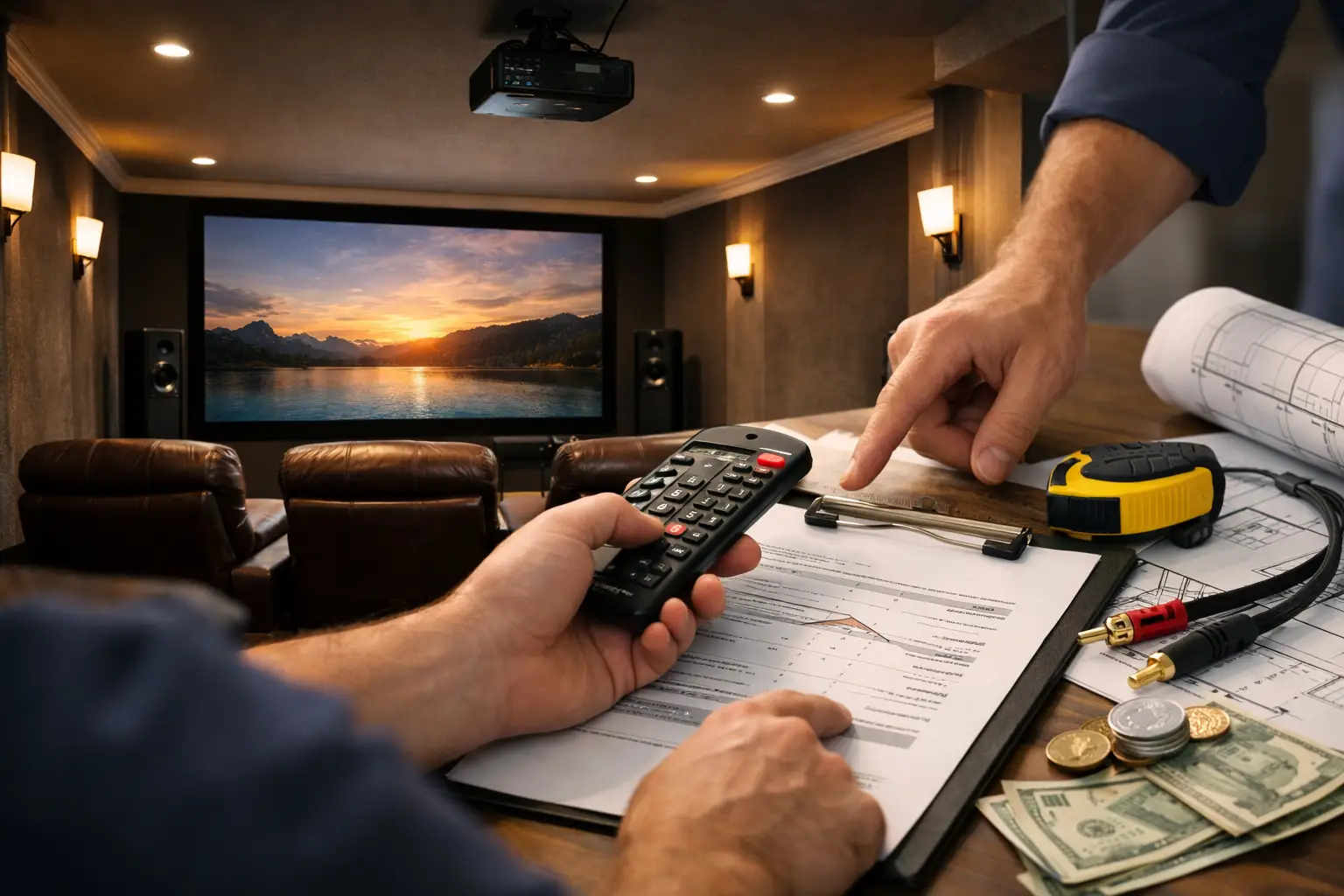
A projector and screen can be the visible centerpiece of a theater, but they are only part of the investment. When homeowners ask, how much does home theater installation cost, the meaningful answer includes the room, sound design, equipment integration, control, calibration, and the workmanship behind it all. A professionally designed theater should feel effortless when the lights lower and the first scene begins.
How Much Does Home Theater Installation Cost?
For a dedicated home theater, professional installation commonly begins around $15,000 to $25,000 for a thoughtfully designed system in an existing room. Many premium installations fall between $30,000 and $75,000, while highly customized theaters with architectural finishes, advanced acoustics, luxury seating, and reference-level audio can exceed $100,000.
These figures typically include some combination of display technology, speakers, amplification, processing, controls, wiring, installation, and system calibration. The final investment varies because no two rooms, performance expectations, or levels of finish are identical.
A media room with a wall-mounted display, discreet surround sound, and centralized control may require a lower investment than a dedicated cinematic space. Conversely, a theater built during a renovation offers opportunities for hidden wiring, in-wall speakers, acoustic treatments, and motorized shades that create a more refined result but add scope to the project.
Typical investment ranges
A professionally integrated media room generally ranges from $10,000 to $30,000. This can include a premium display or projector, surround sound, equipment concealment, and a simple control interface.
A dedicated theater with a projection system, immersive surround sound, acoustic considerations, theater seating, and lighting control often ranges from $30,000 to $75,000. At this level, the room is designed around performance rather than simply placing equipment in an available space.
For large residences and luxury properties, custom theaters can move beyond $75,000. These projects may include bespoke millwork, star ceilings, multiple subwoofers, professional-grade acoustic design, automated shades, premium recliners, and integrated control of the entire environment.
What Drives Home Theater Installation Pricing?
The display is a major part of the decision, but it rarely tells the full story. A larger screen or premium projector can raise equipment costs, yet its performance also depends on the room’s light control, viewing distance, mounting location, and calibration. Selecting a display without considering these factors can leave performance on the table.
Audio is often where a theater becomes genuinely immersive. A compact surround system has different requirements than a multi-channel immersive audio layout with dedicated amplifiers, in-wall speakers, subwoofers, and acoustic tuning. More channels do not automatically mean better sound. Proper speaker placement, room geometry, and calibration are what allow dialogue, music, and cinematic effects to remain clear and balanced.
Installation complexity also matters. A finished room may require carefully planned wire paths, custom mounting, and equipment placement that protects the appearance of the home. In a renovation or new construction project, structured cabling can be installed before walls are closed, allowing for a cleaner and more flexible system. Both scenarios can produce exceptional results, but the labor and planning are different.
Control is another important consideration. A single, intuitive interface that manages the display, audio, sources, lighting, and shades provides the polished experience clients expect from a custom theater. The scope can range from straightforward room control to a fully integrated smart home environment where the theater responds to pre-set scenes.
Finally, room finishes influence both performance and price. Carpet, wall treatments, ceiling design, seating, cabinetry, and light management are not merely decorative choices. In the right combination, they reduce distractions, improve sound quality, and make the space feel intentional.
Dedicated Theater or Multipurpose Media Room?
This is one of the first decisions that shapes the investment. A dedicated theater is optimized for focused viewing. It can use controlled lighting, fixed seating positions, projection, acoustic treatments, and a speaker layout designed specifically for the room. It is the right choice for homeowners who want a true cinematic environment.
A multipurpose media room prioritizes flexibility. It may serve as a family gathering space, entertaining area, or secondary living room during the day, then transition into a high-performance viewing space at night. A large premium display often works well here, paired with discreet speakers, automated shades, and lighting scenes that quickly change the mood of the room.
Neither approach is inherently superior. The right design starts with how the household will use the space, how many people it needs to accommodate, and whether the room must perform multiple roles.
Why Professional Design Changes the Result
The installation labor line on a proposal is not simply about mounting equipment. It covers planning, system design, wiring strategy, equipment integration, programming, testing, calibration, and accountability for the final experience.
A properly designed system considers sightlines before seating is selected, speaker locations before finishes are completed, and equipment ventilation before cabinetry is built. It also anticipates practical details: where components will live, how the system will connect to the home network, and how family members and guests will operate it without needing instructions.
Calibration is especially valuable. A display should be adjusted for the room and the intended viewing conditions. Audio should be measured and tuned so that voices are intelligible, effects move convincingly around the room, and bass is controlled rather than overwhelming. Premium equipment deserves this level of attention, but so does every finished space.
For homeowners in Boca Raton, Fort Lauderdale, and surrounding South Florida communities, a knowledgeable integrator can also coordinate with builders, designers, electricians, and millwork teams. That coordination helps prevent visible wiring, poorly placed outlets, blocked speaker locations, and last-minute compromises that can affect the finished room.
Planning an Investment That Fits the Home
The most effective way to approach a theater project is to establish priorities early. Some clients place the greatest value on projection and screen size. Others want immersive sound, concealed technology, refined lighting, or easy control from throughout the home. A clear design conversation identifies where the investment will have the greatest impact.
It also helps to think beyond opening night. Consider whether the room may eventually need additional seating, updated sources, expanded smart home control, or outdoor audio integration. A scalable infrastructure can protect the long-term value of the installation and make future enhancements far more straightforward.
Sentry Audio Video approaches each project as a complete environment, not a collection of components. The goal is a theater that looks polished, performs reliably, and remains enjoyable long after installation day.
A well-planned home theater is not defined by the most visible piece of equipment. It is defined by the moment everything works together: the room darkens, the sound fills the space, and every control responds exactly as expected. Start with a professional consultation, share how you want to use the room, and let the design determine the right level of investment.