A lighting control system should disappear into the way you live. A single command can set the right lighting for an arrival, dinner, movie night, or bedtime, while keypads replace crowded switch banks with a clean, intentional look. But the control platform behind that experience matters. Lutron HomeWorks vs RadioRA 3: Which Is Right for Your Home? The answer depends less on a feature checklist and more on the scale of the property, the construction conditions, and how much you expect the system to do over time.
Both platforms deliver the reliability, refined keypad design, dimming performance, and shade integration Lutron is known for. The difference is in their scope. RadioRA 3 is an excellent fit for many established homes and focused renovations. HomeWorks is designed for larger, more complex residences where lighting, shades, keypads, and integrations must work together across many spaces without compromise.
Lutron HomeWorks vs RadioRA 3 at a Glance
RadioRA 3 is Lutron’s whole-home lighting control platform for properties that need sophisticated control without the scale of a full HomeWorks system. It is especially well suited to renovations, furnished homes, condos, and properties where running new low-voltage control wiring to every keypad location is not practical. Wireless keypads, dimmers, and switches provide substantial design freedom while preserving finished walls and architectural details.
HomeWorks is Lutron’s flagship residential platform. It supports a far broader and more customized lighting design, including extensive wired and wireless control options, higher device capacity, advanced keypad programming, and deeper integration opportunities. For a large estate, a new construction project, or a residence with multiple structures and expansive outdoor areas, HomeWorks creates the foundation for a more comprehensive control strategy.
Neither system is merely about turning lights on and off from an app. A properly designed Lutron system gives each area of the home a purpose-built interface, from engraved wall keypads to elegant tabletop controls, occupancy sensing, timeclock events, and automated shades.
Start With the Property, Not the Product
The most reliable way to choose between HomeWorks and RadioRA 3 is to evaluate the home before discussing individual devices. Square footage is part of the equation, but it is not the only factor. A 4,000-square-foot condominium with detailed lighting layers, custom millwork, motorized window treatments, and demanding aesthetic requirements may require a more deliberate design than a larger but simpler home.
RadioRA 3 is often the right choice when the project involves a defined number of rooms, a main residence plus a few outdoor living zones, or an upgrade to selected areas such as the kitchen, great room, primary suite, and entertaining spaces. It is a capable system for homeowners who want scene-based control, Lutron shades, app access, and integration with an established smart home environment.
HomeWorks becomes the stronger choice when the home has many rooms, multiple floors, guest quarters, detached structures, significant landscape lighting, extensive shade coverage, or a large number of custom keypad locations. It is also the more appropriate platform when the homeowner wants the lighting system to serve as a long-term backbone for a high-performance residence.
A project should not be sized solely for the rooms being renovated this month. If a future addition, pool house, outdoor kitchen, or window-treatment phase is already on the horizon, designing for that direction now can prevent unnecessary limitations later.
Wiring Changes the Conversation
Construction conditions are one of the clearest dividing lines between these two platforms. RadioRA 3 is built to perform exceptionally well in applications where wireless control is the practical answer. It uses Lutron’s Clear Connect technology to communicate between devices, providing dependable performance without relying on a home’s general Wi-Fi network for core lighting commands.
That makes RadioRA 3 particularly attractive for completed homes. Existing switch locations can be upgraded with compatible controls, and wireless keypads can be placed where a homeowner wants convenient scene control without opening walls for new control wiring. A well-planned wireless layout still requires professional design, especially in concrete construction, large residences, and properties with challenging radio conditions, but it offers considerable flexibility.
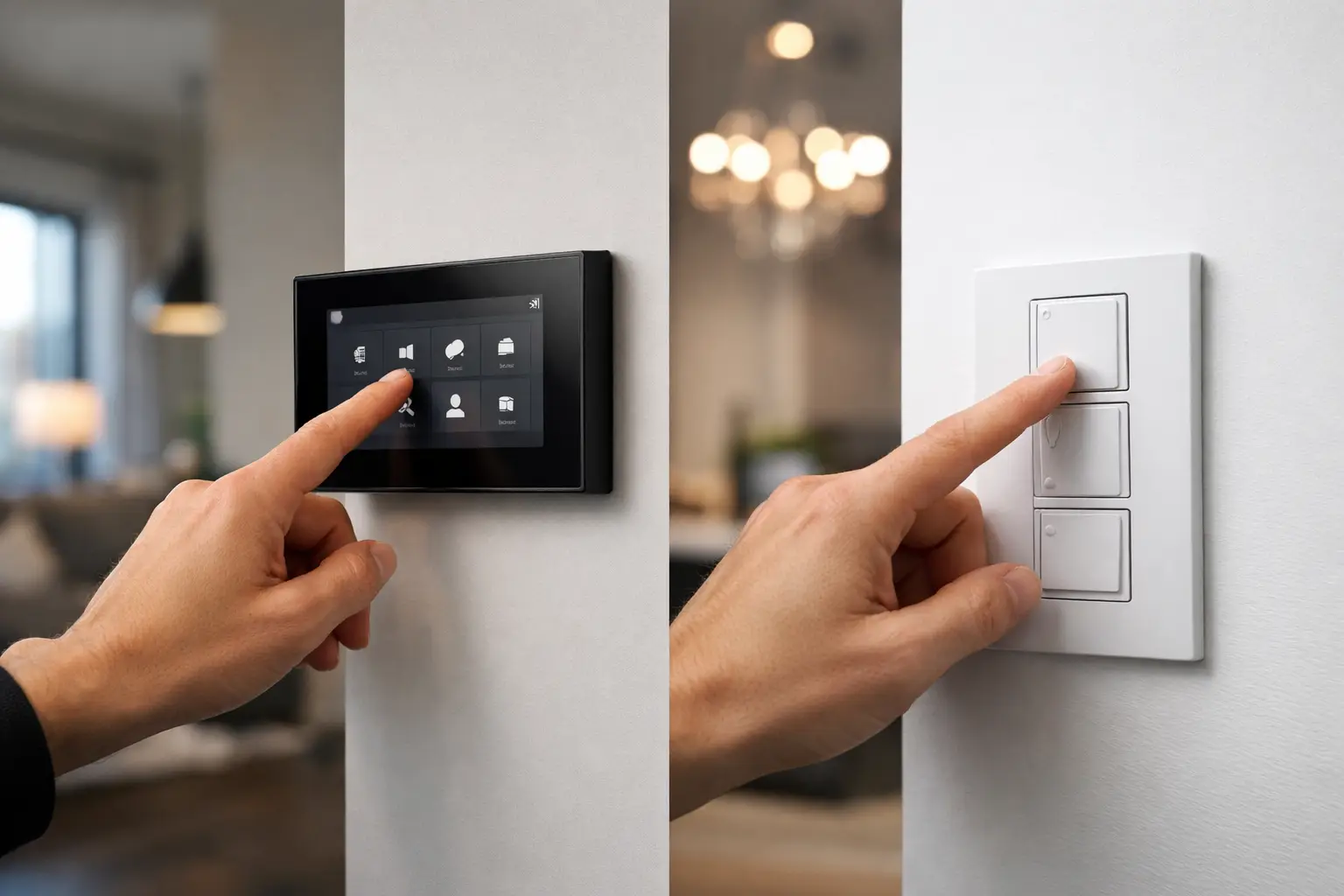
HomeWorks supports wireless devices as well, yet it also adds extensive wired control capabilities. In new construction and major renovations, wired keypads and centralized lighting panels can create a more tailored result. Centralized panelized lighting moves dimming modules away from living spaces and can reduce the number of visible switches on the wall. Instead of a large cluster of controls near an entry, homeowners can have a single elegant keypad with scenes such as Welcome, Entertain, Evening, and Goodnight.
This approach also gives the lighting designer greater flexibility. Decorative fixtures, recessed lighting, toe-kick lighting, art lighting, exterior lighting, and other layers can be controlled independently without forcing the wall layout to accommodate every load. For high-end homes where finishes and visual order matter, that is a meaningful advantage.
Capacity and Customization: Where HomeWorks Pulls Ahead
RadioRA 3 provides meaningful customization. Homeowners can create scenes, personalize keypad button functions, schedule lighting events, control shades, and manage the system from Lutron’s app. For many residences, this is exactly the right level of control.
HomeWorks is intended for projects with greater complexity and a higher expectation for personalization. It supports more devices, more zones, more keypads, and more extensive programming. The practical benefit is not simply having more hardware. It is the ability to make every area feel purposeful, even in a home with a long list of spaces and lighting layers.
For example, a HomeWorks design can coordinate a whole-property arrival sequence: entry lighting comes up at an appropriate level, selected landscape zones activate, shades adjust for privacy, and key interior areas are ready without illuminating the entire residence. In a large home, that kind of scene design improves comfort and makes the property easier to manage.
HomeWorks is also the better fit for highly customized keypad requirements. Engraved buttons can be organized around the way a family actually uses the home rather than around electrical circuits. This matters when a property has multiple entertaining areas, a dedicated theater, layered outdoor lighting, or household staff who need simple, consistent controls.
Shades Should Be Part of the Decision Early
Lutron lighting and motorized shades are most effective when designed together. Shades control glare, protect furnishings, support privacy, and help rooms feel more comfortable throughout the day. When paired with lighting, they create scenes that match the time of day and the use of the room.
Both RadioRA 3 and HomeWorks can integrate Lutron shading solutions. The question is scale. A home with several bedroom shades and a few large living-room openings can be an excellent RadioRA 3 project. A residence with wall-to-wall glass, dual roller shades, blackout requirements, challenging window shapes, or many rooms of coordinated treatments may point toward HomeWorks.
Shade planning should begin before fabrication decisions are finalized. Power locations, pocket dimensions, fascia details, fabric selection, control placement, and access for service all affect the final result. The earlier the system is coordinated with the architect, designer, and window-treatment team, the cleaner the installation will be.
Integration Matters, but It Should Serve the Home
Lighting control rarely exists alone in a premium residence. It may need to work alongside whole-home audio, video distribution, surveillance, gate access, pool features, and a centralized smart home control interface. Both Lutron systems can participate in an integrated environment, but HomeWorks offers more room for sophisticated whole-property programming.
That does not mean every RadioRA 3 project needs to become a HomeWorks project. The right approach is to identify the moments that deserve integration. A theater scene may lower lights and close shades. An away command may turn off selected interior lights, adjust shades, and place the home in a preferred lighting state. Outdoor entertaining can combine landscape lighting with music and patio zones from one control location.
The goal is clarity, not complexity. A homeowner should not need to remember which app controls which part of the property. The strongest systems present useful commands in the right places and make them easy to trust.
Choose RadioRA 3 When the Project Is Focused
RadioRA 3 is a strong choice for a finished home or a contained renovation where wireless flexibility is valuable. It delivers premium lighting and shade control with the refined interface Lutron is known for, while avoiding the construction demands of a fully panelized design.
It is particularly appropriate when the home has a manageable number of lighting zones, the desired control locations are clear, and the long-term plan does not call for extensive expansion across multiple structures or a highly detailed control architecture. For many luxury condos, seasonal residences, and targeted upgrades, it provides a polished, dependable solution.
Choose HomeWorks When the Home Demands a Platform
HomeWorks is the right choice when lighting is a central part of the home’s architecture and lifestyle. New builds, substantial renovations, waterfront estates, and large properties benefit from its scale, wired capabilities, design flexibility, and capacity for future phases.
It is also the right platform for homeowners who want centralized lighting panels, a minimal wall-control aesthetic, many customized scenes, expansive shade control, and a system designed to grow with the property. The investment is justified by the ability to deliver a more complete, carefully coordinated experience from day one.
The right system is the one that fits the home you are creating, not simply the rooms visible on a floor plan. Sentry Audio Video can evaluate the property’s construction, lighting plan, shade requirements, and integration goals to design a Lutron control system that performs beautifully for years to come.