Walk into a well-designed home at 7:00 p.m. and everything should feel right before anyone touches a switch. The lights settle to the proper level, shades lower for privacy, music follows the evening, the pool area glows, and the security system stays watchful in the background. That is the real promise of smart home automation for luxury homes – not more gadgets, but a residence that responds with precision, consistency, and discretion.
In high-end properties, technology should support the architecture, the lifestyle, and the expectations of the people living there. A luxury home is rarely limited to one room or one use case. It may include formal entertaining spaces, outdoor living areas, a theater, guest suites, wellness rooms, wine storage, a detached guest house, or multiple entry points that all need to work together. The difference between a basic smart setup and a professionally integrated system is what happens when all of those moving parts need to perform as one.
What smart home automation for luxury homes should actually deliver
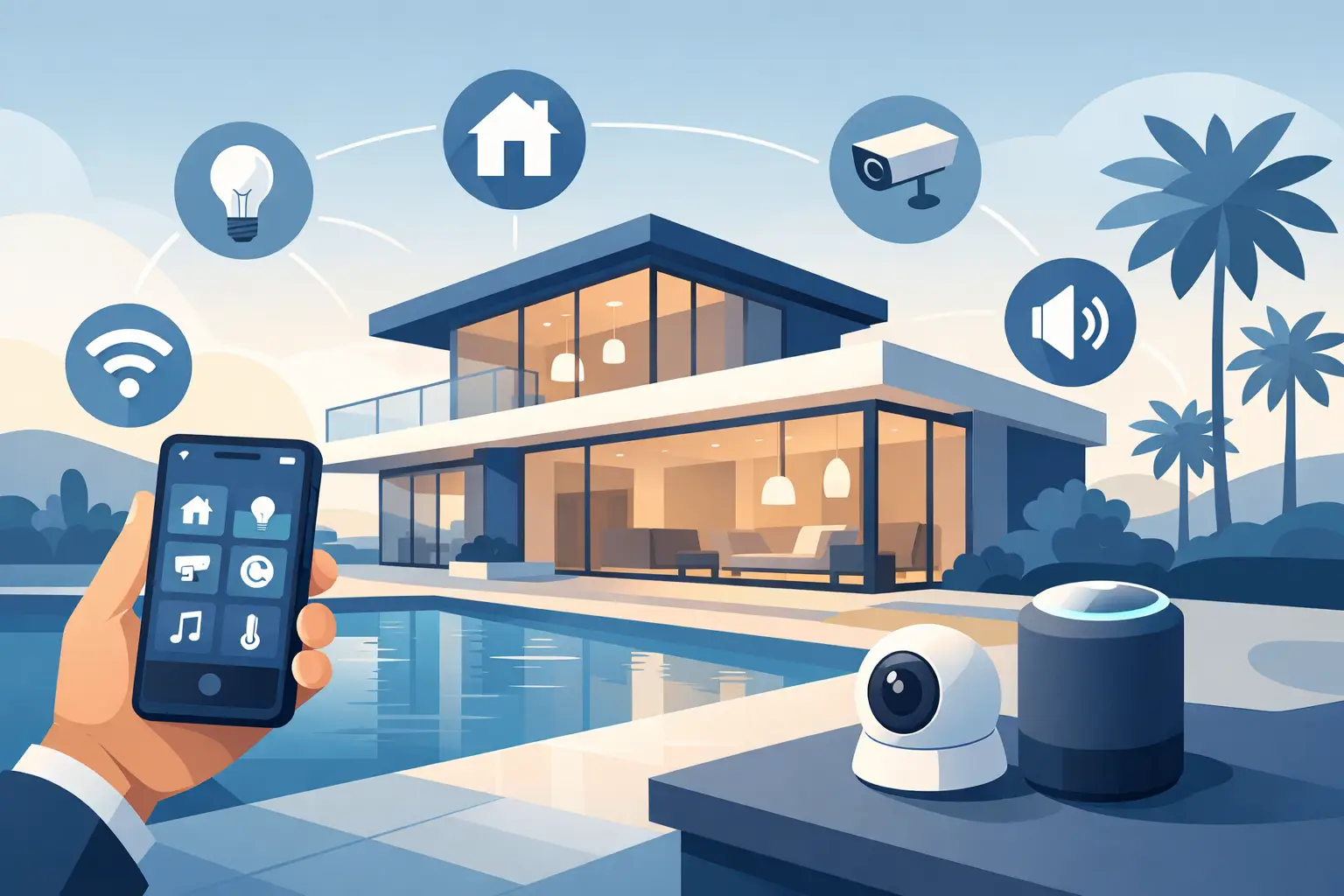
The standard for luxury is not novelty. It is control without friction, performance without guesswork, and design without visual clutter. A quality automation system lets homeowners manage lighting, audio, video, shades, climate, surveillance, access control, and outdoor features from a unified platform. More importantly, it makes those systems behave intelligently based on time of day, occupancy, and the way the home is used.
That may sound straightforward, but execution is where projects succeed or fall short. If lighting is responsive but the shades lag, if the theater performs beautifully but outdoor audio cuts in and out, or if surveillance works well while user interfaces feel confusing, the home never feels truly finished. Luxury clients are not paying for isolated devices. They are investing in a complete experience.
A properly designed system also respects the home itself. Keypads should look intentional. Speakers should blend into finishes. Racks should be organized, labeled, ventilated, and built for serviceability. Wiring infrastructure should support current needs and future expansion. These details are not cosmetic. They are what allow a property to remain dependable over time.
Why custom integration matters more than brand names alone
Premium equipment matters, but equipment alone does not create a premium result. In luxury residences, the real value comes from system design, engineering, programming, and ongoing support. Two homes can use similar products and deliver completely different outcomes depending on how those products are specified and integrated.
For example, large residences often require careful network planning because nearly every system relies on stable connectivity. Surveillance cameras, access control, streaming sources, touch panels, gate communication, outdoor entertainment zones, and remote management all place demands on the network. If that foundation is treated as an afterthought, the homeowner experiences delays, dropouts, and inconsistent control. The issue is rarely the concept of automation itself. It is the lack of a properly designed infrastructure beneath it.
The same applies to programming. A luxury home should not require a manual for everyday living. Scenes should be intuitive. Guest mode should be simple. Homeowners should be able to secure the property, lower shades, and shut down nonessential systems with a single command when leaving. Entertaining should be just as easy, with one-touch control for lighting, music, climate, and selected outdoor areas. Good programming feels invisible because it reflects the client’s routines rather than forcing the client to adapt to the technology.
The systems that define a high-performance luxury home
Lighting control is often the backbone of the entire environment. It shapes mood, improves convenience, and protects finishes by managing daylight. In a luxury home, lighting control is rarely limited to on and off. It includes layered dimming, architectural scenes, pathway lighting, exterior illumination, and integration with motorized shades to create comfort and privacy throughout the day.
Shading is equally important, especially in homes with expansive glass, waterfront exposure, or strong afternoon sun. Automated shades protect interiors, reduce glare, and maintain a polished appearance across the property. They also contribute to energy efficiency, although that is usually a secondary benefit for this audience. The main advantage is consistent comfort and visual control.
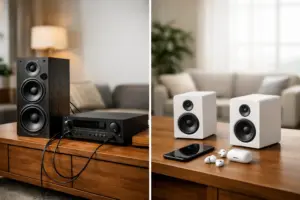
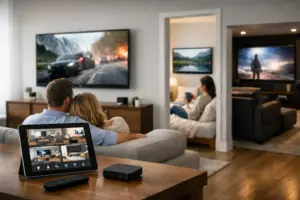
Whole-home audio and video remain central to the lifestyle side of automation. Families may want music in the kitchen, patio, primary suite, gym, and pool area, while keeping volume levels and source selection independent by zone. Video distribution can place content where it is wanted without cluttering each room with visible equipment. When designed well, the system feels elegant rather than technical.
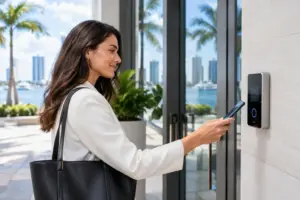
Security integration is where luxury homeowners often see the greatest day-to-day confidence. Video surveillance, smart locks, gate access, alarm monitoring, and notifications can all be incorporated into a single control environment. That matters in primary residences, seasonal homes, and properties with staff or frequent guests. Security should be strong, but it should also be easy to manage from anywhere.
Outdoor integration deserves the same attention as the interiors. In South Florida especially, exterior living spaces are not secondary zones. They are active extensions of the home. Pool controls, landscape lighting, weather-resistant audio, outdoor displays, and perimeter surveillance should operate with the same reliability and polish as the main living areas.
Where smart home automation for luxury homes often goes wrong
Most frustrations begin when a project is approached as a collection of products instead of a single ecosystem. A homeowner may end up with one app for lighting, another for gates, another for cameras, another for music, and a separate remote for media rooms. Everything technically works, yet nothing feels unified.
Another common issue is underplanning during construction or renovation. If low-voltage design is brought in late, opportunities are missed. Speaker placement becomes compromised. Keypad locations feel awkward. Rack space is insufficient. Shade pockets are not coordinated. Wi-Fi coverage becomes a patch rather than a strategy. In large homes, these decisions have long-term consequences.
There is also the question of scale. What works in a condo or small residence may not translate to an estate property with multiple floors, detached structures, extensive outdoor zones, and heightened security requirements. Luxury homes demand systems built for complexity, not systems stretched beyond their intended role.
Planning for the way the home is actually lived in
The strongest projects begin with lifestyle mapping, not product selection. How does the family start the day? Which entrances are used most often? Are there children, staff, guests, or extended family members with different access needs? Does the home host large gatherings, seasonal occupancy, or long periods away? These answers shape system design far more effectively than a list of device features.
A frequent entertainer may want preset scenes for arrival, dining, and late evening transitions. A family with multiple residences may prioritize remote monitoring, gate control, and indoor air and water alerts. A homeowner with an art collection may need carefully controlled lighting and shade schedules. None of these priorities are unusual in the luxury market, but they do require thoughtful integration.
This is also where white-glove service becomes part of the value. Installation quality, programming refinement, user training, documentation, and support all matter after the equipment is in place. Luxury homeowners expect their technology partner to take ownership, communicate clearly, and stand behind the system over time.
What to look for in a technology partner
For a project at this level, breadth of expertise matters. The ideal integration firm understands entertainment, networking, security, motorized shading, control systems, surveillance, outdoor environments, and the infrastructure that ties them together. That range helps eliminate the handoff problems that happen when too many vendors own too little of the overall outcome.
Just as important is process. A reliable partner should be able to guide a project from consultation and design through installation, programming, and post-install support. They should coordinate cleanly with builders, architects, designers, and property managers. They should also be realistic about trade-offs. For instance, the most ambitious automation vision may require more rack space, deeper planning, or stronger network architecture. An experienced integrator will address those requirements early instead of glossing over them.
In markets such as Boca Raton, Fort Lauderdale, and surrounding luxury communities, many homes combine sophisticated architecture with expansive indoor-outdoor living. That environment rewards careful planning and punishes shortcuts. Systems exposed to heat, humidity, seasonal occupancy, and complex property layouts need to be specified with those conditions in mind.
Technology should make a luxury home feel calmer, more capable, and easier to enjoy. When it is designed well, the homeowner notices the result more than the machinery behind it. Rooms feel ready. Security feels present. Entertainment feels effortless. The house simply responds the way it should – with the consistency, polish, and confidence that a premium property deserves.