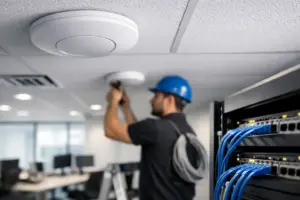
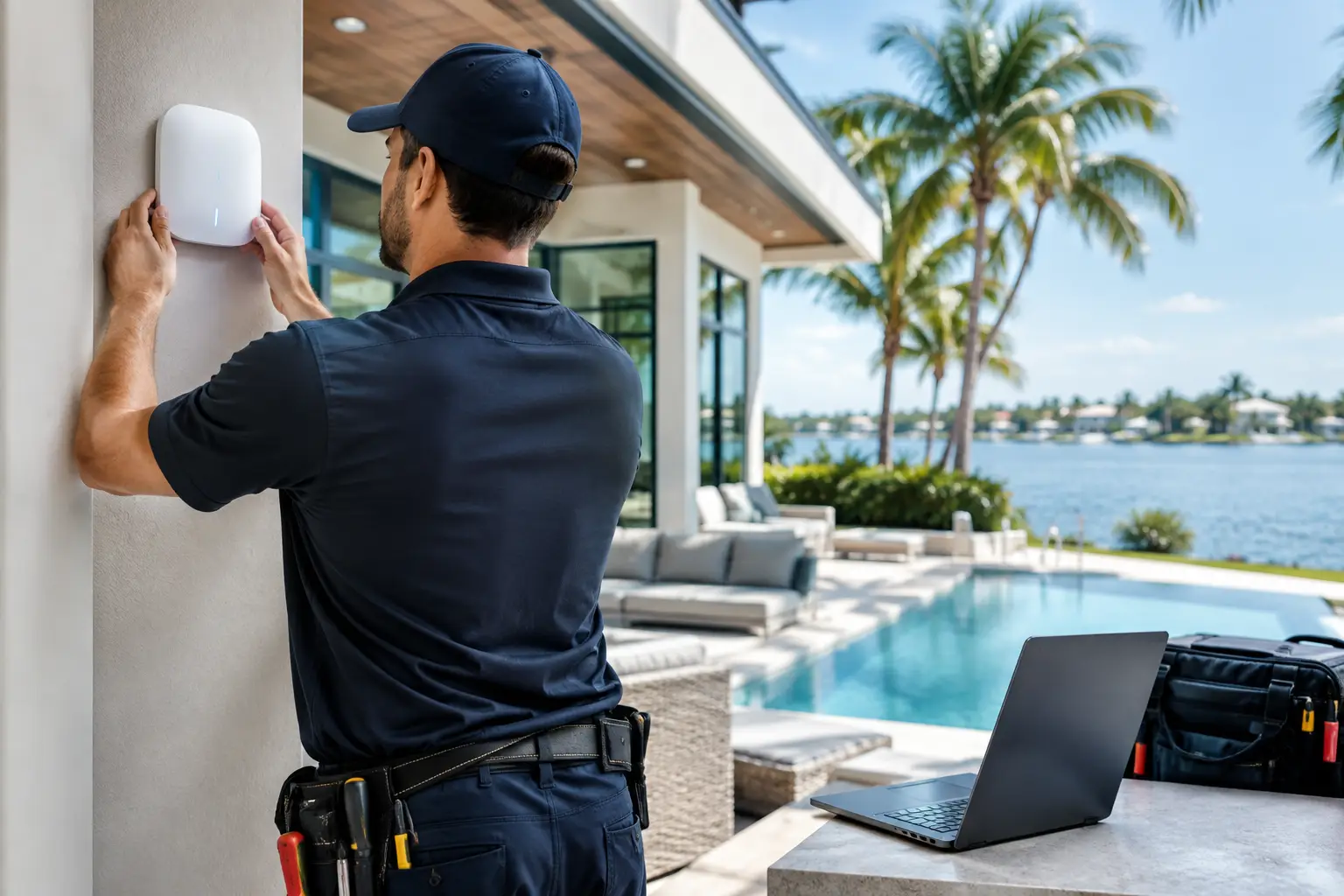
A luxury estate Wi-Fi installation in Wellington, FL is not a matter of placing a few wireless access points around the main residence. On an expansive property, dependable connectivity has to reach the gate, guest quarters, pool terrace, office, stable area, and every room where work, entertainment, security, and automation take place. The difference is in the design: a professionally engineered network is planned around how the estate operates, not around the limits of a standard wireless setup.
For homeowners investing in a premier property, Wi-Fi should feel invisible. Video calls should remain clear as you move through the home. Outdoor music and entertainment controls should respond without delay. Cameras, access control, motorized shades, and smart-home systems should have the stable connection they need to perform when called upon. That level of performance begins long before equipment is mounted.
Why Luxury Estate Wi-Fi Installation in Wellington, FL Requires Planning
Wellington estates often present network challenges that are easy to underestimate. The main home may have dense construction materials, stone finishes, metal framing, large expanses of glass, or carefully designed outdoor spaces that affect wireless signal behavior. A detached guest house, barn, gatehouse, or pool pavilion can add distance and structural barriers that make a single-network approach unreliable.
Square footage alone does not define the job. The number of users, the placement of smart systems, the need for outdoor coverage, and the location of internet service entry all shape the design. A home with 10,000 square feet and a few connected devices needs a different strategy than an estate where family members, staff, guests, cameras, distributed audio, and automated systems are active at the same time.
A qualified integrator starts by understanding the property and its intended use. That includes reviewing floor plans, construction details, equipment locations, low-voltage pathways, and coverage expectations. For new construction and significant renovations, this planning stage is the right time to create the structured cabling foundation that a high-performance network depends on.
Coverage Is Only One Part of the Network
Strong signal bars do not always mean strong Wi-Fi. A network can appear connected while struggling with slow response times, dropped video calls, buffering, or intermittent smart-home control. Those issues often come from poor access point placement, overloaded wireless channels, inadequate wiring, or network hardware that cannot manage the number of connected devices.
A properly designed system separates the roles of the network. Wired connections serve fixed, performance-critical equipment where practical, including media components, security recorders, automation controllers, and office workstations. Professionally placed wireless access points provide consistent mobile coverage throughout the home and outdoor living areas. Network switches, routers, and wireless management are selected and configured as one coordinated system.
This approach matters because a luxury residence is rarely using Wi-Fi for one purpose. It may support streaming in multiple zones, remote work, video surveillance, intercom communication, access control, whole-house audio, and visiting guests. Each service has different demands. The goal is not simply broad coverage, but reliable performance under real estate-wide use.
Wired Infrastructure Protects Long-Term Performance
Wireless technology is essential, but cabling remains the backbone of a serious installation. Hardwired access points receive consistent data and power through a single structured cable connection, allowing them to be positioned where coverage is needed rather than where an outlet happens to be available.
Cabling also gives the property room to evolve. A network designed during construction can support future audio/video upgrades, additional cameras, new automation zones, and changing work-from-home needs without forcing visible work around finished interiors. Clean installation practices preserve the estate’s architectural details while preparing the technology infrastructure for years of use.
For detached structures, the right connection method depends on distance, available pathways, and performance requirements. In many cases, fiber or purpose-built point-to-point wireless links can extend the network between buildings. The correct choice should be made after evaluating the property rather than assuming every outbuilding needs the same solution.
Outdoor Wi-Fi Deserves Its Own Design
A patio access point placed behind a wall is not an outdoor network plan. Pool decks, kitchens, cabanas, driveways, and entry gates have unique coverage demands and exposure to South Florida weather. Equipment needs appropriate protection, and placement should balance signal quality with a clean, unobtrusive appearance.
Outdoor connectivity also supports the systems homeowners rely on beyond the main residence. This may include surveillance cameras, gate communication, landscape-area audio controls, and entertainment zones. When outdoor coverage is planned alongside the indoor network, the property works as a unified environment rather than a series of disconnected areas.
Security and Privacy Need Network Segmentation
An estate network should protect privacy without making everyday use complicated. One of the most valuable design practices is segmentation: separating network traffic so that personal devices, guest access, security systems, and property-management equipment do not all operate on the same unrestricted network.
Guests can receive convenient internet access without gaining visibility into private devices or connected security equipment. Cameras and access control can be isolated from general traffic. Staff devices can be assigned the access needed for their responsibilities without exposing the entire network. These distinctions are configured behind the scenes, allowing the household to use the network naturally while maintaining a more controlled environment.
Remote access also requires care. Homeowners may want to review cameras, manage the property while traveling, or support a family member from another location. Those capabilities should be set up with secure credentials, appropriate permissions, and network equipment configured for dependable remote management. Convenience should never come at the expense of property security.
The Value of One Integrated Technology Partner
Wi-Fi touches nearly every connected system in a luxury home. When the network, surveillance, audio/video, shades, and automation are planned by separate providers, diagnosing an issue can become unnecessarily difficult. One company may point to another, while the homeowner is left without a clear answer.
An experienced technology integrator takes ownership of the complete system. Sentry Audio Video designs network infrastructure with the connected home in mind, coordinating equipment, cabling, wireless coverage, and control systems so they perform together. That broader perspective is especially valuable on an estate, where a network concern may actually originate with wiring, device placement, power management, or a system configuration elsewhere on the property.
Professional installation also means the finished result should respect the residence. Equipment racks can be organized and labeled for future service. Access points can be placed for coverage while minimizing visual impact. Cables should be routed cleanly through intentional pathways. These details may not be visible day to day, but they make maintenance and future changes far more efficient.
What to Expect From the Design Process
A thoughtful installation begins with a conversation about how the property is used. The design team should ask where family members work, where guests spend time, which outdoor areas need coverage, and what connected systems are currently in place or planned. Floor plans and site conditions then inform access point locations, cabling routes, equipment capacity, and coverage for detached structures.
After installation, the network should be tested in the areas that matter most, not only from an equipment room. Performance should be verified in bedrooms, offices, entertainment spaces, outdoor areas, and remote structures. Configuration, device onboarding, and homeowner orientation complete the process. Ongoing support is equally valuable because estate technology changes over time, whether that means adding a new outdoor zone, upgrading security coverage, or accommodating a growing number of connected devices.
A well-designed network gives a Wellington estate the quiet confidence its owners expect: technology that supports daily life without demanding attention. If your property deserves coverage that extends beyond the main house and performance that holds up when every system is active, start with a professional site assessment and a plan built specifically for the way you live.