The first decision a visitor makes at an estate is often made before anyone reaches the front door: where to stop, whom to call, and whether they have permission to enter. Well-planned estate entrance security features turn that moment into a controlled, welcoming experience rather than a weak point in the property’s perimeter.
For luxury homes, gated communities, and waterfront properties, an entrance system must do more than open a gate. It needs to verify visitors clearly, operate reliably in changing weather, support household routines, and give the owner confidence whether they are home, traveling, or managing the property remotely. That requires thoughtful integration, not a collection of disconnected devices.
Estate Entrance Security Features Start With Access Control
Access control establishes who can enter, when they can enter, and how that activity is recorded. The right approach depends on the property, the number of regular users, and how the entrance is used throughout the day.
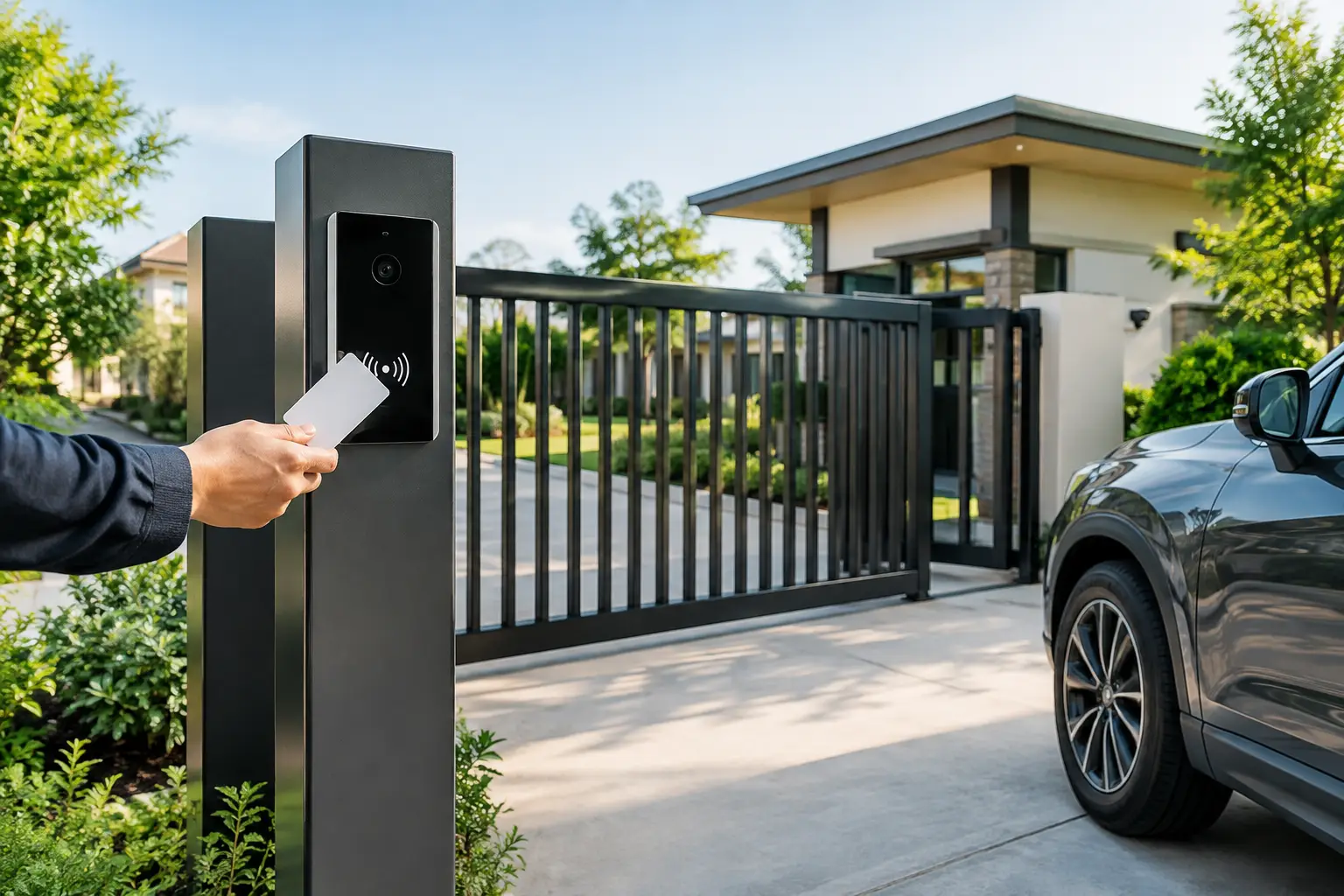
A family estate may need a combination of personalized keypad codes, mobile credentials, vehicle remotes, and controlled access for household staff. A property with frequent vendors, landscapers, deliveries, or service appointments may benefit from time-limited credentials that can be issued and removed without rekeying locks or distributing physical remotes.
For many owners, the value is not simply convenience. It is accountability. A properly configured system can distinguish between a family member arriving after school, a house manager entering in the morning, and a vendor whose access window has expired. That level of visibility is particularly valuable for seasonal residences and properties with multiple structures.
Credentials Should Match the Household
No single credential is right for every person or situation. Vehicle remotes remain useful for daily arrivals, while mobile access can be practical for owners and trusted staff. Keypads provide a dependable option for drivers, guests, and vendors, especially when each person receives a unique code.
Biometric entry can also make sense at pedestrian gates or private secondary entrances, but it should not be treated as a replacement for all other methods. Every estate needs a reliable way to grant access when a phone battery is depleted, a vehicle is being serviced, or a guest arrives unexpectedly. The strongest designs include practical fallback options without compromising control.
Video Verification Is the Difference Between Seeing and Knowing
A camera at the gate is useful. A camera system designed to provide a clear, actionable view is far more valuable.
Entrance cameras should be selected and positioned based on what the owner or property manager actually needs to verify. That may include a driver’s face at an intercom pedestal, a vehicle’s approach from the street, the condition of a package left at a call box, or a pedestrian entering through a side gate. One wide-angle camera rarely captures all of these details well.
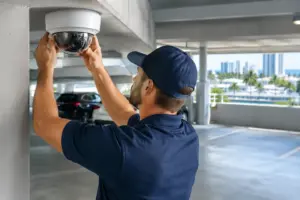
A professional design often uses overlapping views: one camera for the approach, one for the visitor interaction point, and one for the gate lane or pedestrian path. Proper lighting, mounting height, lens selection, and recording settings all affect whether footage is useful after dark or during a fast-moving event.
License plate recognition can add another layer of intelligence at vehicle entrances. It is most effective when camera placement, angle, lighting, and vehicle speed have been considered from the start. On a long or curved driveway, a plate camera may need a different location than the general surveillance camera. That is a design decision, not an afterthought.
Two-Way Communication at the Gate
Video intercoms allow residents to speak with visitors and grant access from an indoor touch panel, smartphone, or other authorized control interface. For a large property, this creates a more polished arrival experience than asking guests to call or wait at a closed gate.
Audio quality matters as much as video quality. Wind, road noise, nearby water features, and distance from the residence can all affect intelligibility. Equipment should be chosen and installed with the environment in mind, so a conversation at the gate remains clear when conditions are less than ideal.
The system should also define how calls are handled. A visitor call might ring designated family members during certain hours, route to a house manager during the day, or follow an after-hours protocol. Thoughtful programming prevents every alert from reaching every person while ensuring a legitimate visitor is not ignored.
Gate Automation Needs Safety and Security to Work Together
A motorized gate is a moving access point, not merely an architectural statement. Its operation must protect people and vehicles while resisting unauthorized entry and performing consistently day after day.
Safety devices such as photo eyes, monitored edge sensors, vehicle loops, and carefully designed gate travel paths are essential. These components should be selected and calibrated for the specific gate style, driveway layout, and anticipated traffic. A heavy sliding gate has different operating requirements than a pair of swinging gates, and a frequently used service entrance may need a different control strategy than a formal front entry.
Security also depends on what happens when the gate is closed. Gate hardware, locking methods, fencing transitions, and pedestrian access points should work as one perimeter system. An impressive vehicle gate offers limited protection if an adjacent walk-through gate can be opened easily or if a visitor can bypass the call station entirely.
Power planning deserves equal attention. Florida weather can create outages, surges, and demanding outdoor conditions. A dependable entrance design considers surge protection, battery backup where appropriate, protected low-voltage pathways, and service access for future maintenance. The goal is not to promise that every component will operate indefinitely in every circumstance. It is to build a system with sensible layers of reliability and a clear recovery plan.
Lighting Makes Entrance Security More Effective
Well-designed entrance lighting improves identification, deters unwanted activity, and helps guests navigate safely. It should support the cameras rather than overpower them with glare or leave faces in deep shadow.
Lighting zones can be programmed around the property’s schedule. The call box and pedestrian gate may remain gently illuminated after sunset, while driveway lighting responds to an approved vehicle arrival or motion in a defined area. During a visitor interaction, lighting can increase temporarily to improve camera visibility and make the entrance easier to navigate.
The trade-off is discretion. A brightly lit entrance may improve visibility but can affect the home’s exterior appearance, neighboring properties, and nighttime comfort. The most successful systems balance security needs with the architectural character of the estate.
Intelligent Alerts Need Clear Priorities
An entrance system should provide useful information, not a constant stream of interruptions. Motion alerts without thoughtful detection zones can become meaningless when they are triggered by passing traffic, landscaping movement, or wildlife.
Modern analytics can distinguish people, vehicles, and other events, but configuration remains critical. Owners may want immediate notification when a person approaches a pedestrian gate, while a vehicle entering the front drive may only need to be logged if it is recognized. Unusual activity at a service entrance after hours may warrant a higher-priority alert and automatic lighting response.
This is where integration creates real value. A verified visitor can trigger a gate release and notify the appropriate person. An after-hours approach can activate selected lights, display camera views on designated touch panels, and preserve recorded video for review. The system’s response should reflect the event, the time of day, and the household’s preferences.
Design for the Entire Arrival Experience
The strongest entrance systems feel intentional from the street to the front door. They account for guests, deliveries, staff, family members, and emergency responders without giving every person the same level of access.
Consider the full path of entry. Where does a delivery driver stop? Can a guest find and use the intercom without confusion? Does a house manager have a separate route? Is there an appropriate way to admit a contractor without opening the entire property? These questions often reveal opportunities to improve both convenience and protection.
For properties in Boca Raton, Fort Lauderdale, and surrounding South Florida communities, the outdoor environment adds practical considerations. Salt air, humidity, intense sun, rain, and landscaping growth can affect camera housings, intercom stations, gate controls, and wiring over time. Equipment selection and clean installation practices matter because an entrance system is exposed every day.
Sentry Audio Video approaches estate entrances as part of a complete security and property-control strategy, coordinating surveillance, intercoms, gate access, automation, structured cabling, and ongoing support into one professionally managed system.
When to Plan Entrance Security Features
The ideal time to plan estate entrance security features is before driveway work, gate fabrication, landscaping, or exterior finishing is complete. Early planning allows conduits, cabling, network connections, camera locations, and control equipment to be placed cleanly and protected properly.
However, an existing property can still be improved significantly. A site assessment can identify gaps in visitor verification, camera coverage, gate safety, lighting, wireless performance, and remote control. The solution may be a targeted upgrade or a phased plan that aligns with a larger renovation.
A well-executed estate entrance does not need to feel imposing. It should make authorized arrivals simple, give owners a clear view of activity at the perimeter, and quietly reinforce the sense that the property is cared for from the moment someone reaches the gate.