A Palm Beach estate can have a front gate, guest house, pool pavilion, dock access, service entrance, multiple outdoor living areas, and staff traffic all in one property. That is why the answer to How Much Does an Alarm and Security Camera System Cost for a Palm Beach Estate in 2026? is rarely a single number. A professionally designed system commonly begins around $25,000 to $40,000 for a well-appointed property and can exceed $100,000 for a large estate requiring extensive coverage, gate integration, central control, and premium infrastructure.
The right investment is determined less by the number of devices than by how reliably the system protects the property, records meaningful events, and fits the way the household operates.
What a Palm Beach Estate Security System Typically Costs
For planning purposes, many estate security projects fall into three broad investment ranges. A focused alarm and surveillance installation for a primary residence may land between $25,000 and $50,000. This generally includes professionally installed intrusion detection, several high-resolution cameras, recording equipment, mobile access, and the structured cabling needed for dependable performance.
A more comprehensive estate system often ranges from $50,000 to $100,000. At this level, coverage may extend to detached structures, perimeter approaches, pool and patio areas, driveways, service entries, and gate locations. It may also include access control, video intercoms, monitored alarm communications, battery backup, and integration with a centralized control platform.
For waterfront compounds, multi-building properties, or residences with complex perimeter requirements, $100,000 to $200,000 or more is realistic. These projects can involve dozens of cameras, long cable pathways, network enclosures, redundant recording, gate operators, multiple touchpoints for staff and family, and careful coordination with renovation or landscape work.
Those figures include more than equipment. They reflect system design, installation labor, concealment of wiring, programming, commissioning, and the accountability of a professional integrator standing behind the finished system.
How Much Does an Alarm and Security Camera System Cost for a Palm Beach Estate in 2026?
The largest cost driver is coverage. A security plan for a 6,000-square-foot home on a contained lot is fundamentally different from one for a 20,000-square-foot residence with a guest house, perimeter landscaping, dock, and multiple vehicle entrances.
An alarm system may include door and window contacts, glass-break detection, motion sensors, keypads, panic devices, environmental alerts, and cellular communication. In an estate setting, the alarm design should account for how the home is actually used. Families may want separate arming areas for the main house, staff quarters, garage, guest house, or outdoor structures. That added flexibility requires more planning and programming, but it avoids an overly complicated daily routine.
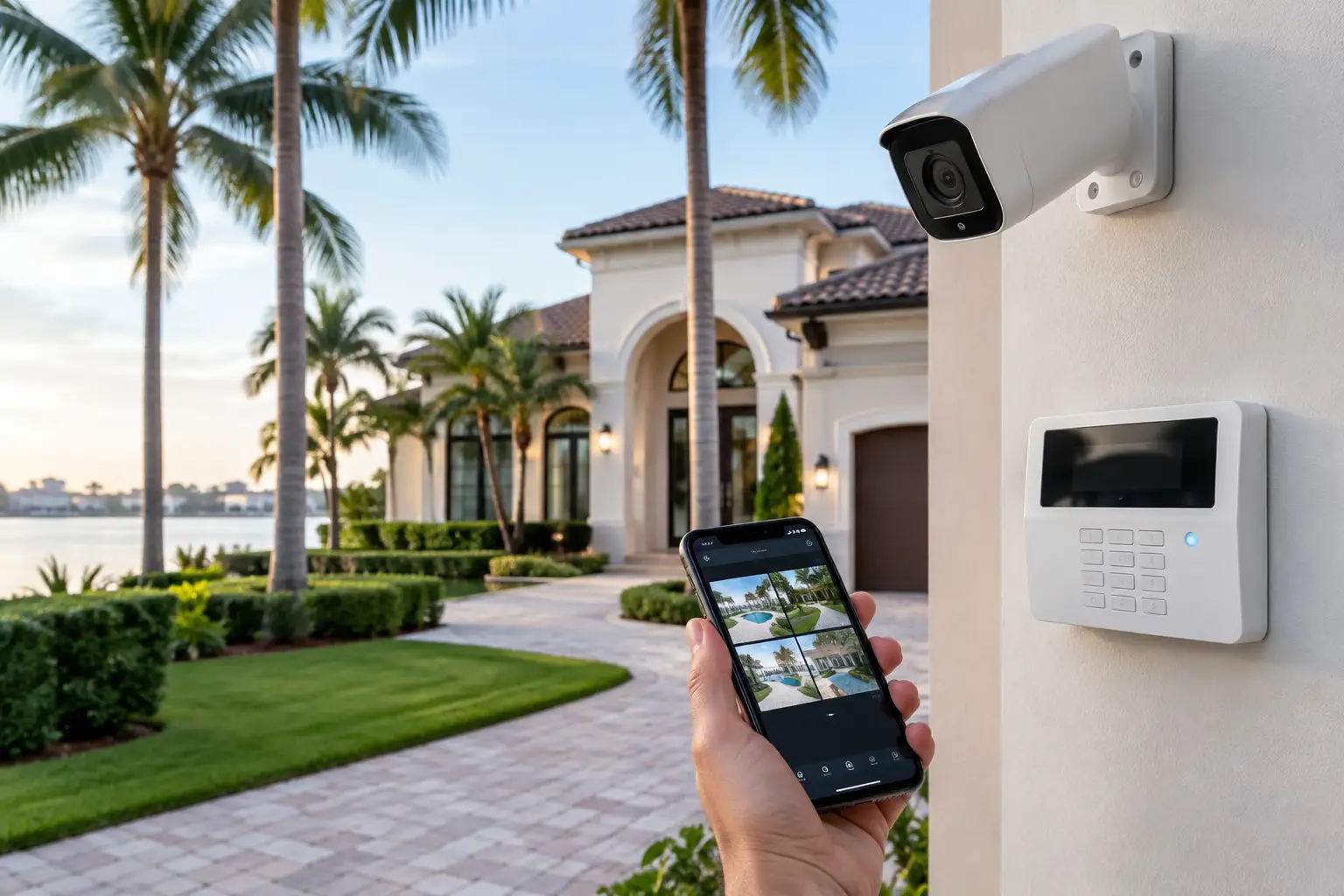
Camera costs vary with location and purpose. A camera covering a driveway entrance has different requirements than one watching a dark side yard, a waterfront edge, or a package delivery area. Premium cameras may offer higher resolution, low-light performance, optical zoom, wide dynamic range, and intelligent analytics that distinguish people, vehicles, and relevant activity from routine motion.
For many properties, 12 to 24 carefully positioned cameras provide strong coverage. Larger estates may require 30, 50, or more. More cameras also increase recording storage, network capacity, mounting work, cable runs, and the time needed to organize a useful viewing experience.
Professional installation is a major part of the value
A polished installation protects both performance and aesthetics. On a high-value property, exposed wiring, poorly placed cameras, cluttered equipment closets, and inconsistent wireless coverage are not acceptable outcomes.
Labor costs rise when cable pathways are difficult to access, finished walls must remain untouched, equipment needs to be concealed, or cameras are mounted on stone, masonry, tall exterior elevations, or detached structures. Existing homes can require more investigative work than new construction, where security wiring can be planned before walls are closed.
Palm Beach conditions also matter. Salt air, humidity, heat, intense rain, and direct sun affect exterior equipment selection and placement. The lowest initial equipment price is not always the lower long-term cost if it produces poor night images, corrodes prematurely, or requires frequent service.
The Infrastructure Behind Reliable Protection
An estate camera system is only as dependable as the network and power supporting it. Professional projects often include dedicated network switches, secure equipment racks, battery backup, surge protection, and properly labeled structured cabling. Depending on the property, fiber links or point-to-point wireless bridges may be needed to connect distant buildings, gates, or waterfront structures.
Recording capacity is another meaningful variable. Some owners want a short retention period for routine review. Others prefer several weeks or more of high-resolution footage from every camera. Higher image quality and longer retention demand more storage, which affects the cost of network video recorders and hard drives.
Remote access should also be designed with care. The goal is not merely to view cameras from a phone. It is to give the homeowner a clear, secure interface for checking entries, receiving meaningful alerts, reviewing recorded activity, and managing the alarm while away. When the system is integrated with home automation, security events can also trigger lighting, notifications, or camera views on in-home touchscreens.
Gate, Entry, and Guest Management Add Scope
For many Palm Beach estates, the front gate is the most important security point. A gate station with video intercom, access credentials, remote release, camera coverage, and clear communications can add several thousand dollars to the project. A more involved entry design with multiple gates, service access, delivery procedures, and integration with existing operators can add substantially more.
This is where a complete site assessment matters. A camera system should not simply record someone approaching a gate. It should help the household identify visitors, communicate clearly, control access appropriately, and retain a record when needed.
Guest houses and staff areas deserve similar attention. Separate access rules and alarm partitions can offer privacy without sacrificing oversight. The design should be practical for the people using it every day, not just impressive on a proposal.
Ongoing Costs to Plan For
The installed system is the main investment, but estate owners should also account for ongoing services. Professional monitoring commonly carries a monthly fee, often ranging from approximately $60 to $250 or more depending on alarm communication methods, supervision, and the level of service selected.
Remote recording, cloud services, cellular backup, and maintenance agreements may create additional recurring costs. These services can be worthwhile when they provide proactive support, software updates, system health checks, and a trusted point of contact if a device needs attention.
Maintenance is especially valuable for properties that are vacant part of the year. Cameras can become obstructed, networks can need updates, batteries age, and landscape growth can gradually compromise a once-perfect camera view. Periodic inspection helps preserve the system’s intended coverage.
Where Estate Owners Should Be Careful About Cutting Scope
The most common mistake is treating cameras as isolated devices rather than part of a complete security design. A camera placed without adequate lighting, the right lens, stable network connectivity, or a practical recording plan may look adequate until an incident occurs.
Another mistake is underestimating perimeter and approach coverage. Interior cameras may document activity after someone enters the property, but gate, driveway, exterior door, and side-yard coverage can provide earlier awareness. The proper balance depends on the property layout, privacy expectations, occupancy patterns, and whether the home is staffed or seasonally occupied.
Finally, make sure the system is easy to operate. A sophisticated security installation should simplify decision-making for homeowners, family members, and approved staff. Clear controls, well-named cameras, reliable notifications, and professional training are part of a successful project.
A site visit and detailed security plan are the most reliable way to establish a precise number. Sentry Audio Video can evaluate the property, identify coverage priorities, and develop an integrated solution that protects the estate without compromising its architecture, comfort, or daily rhythm.