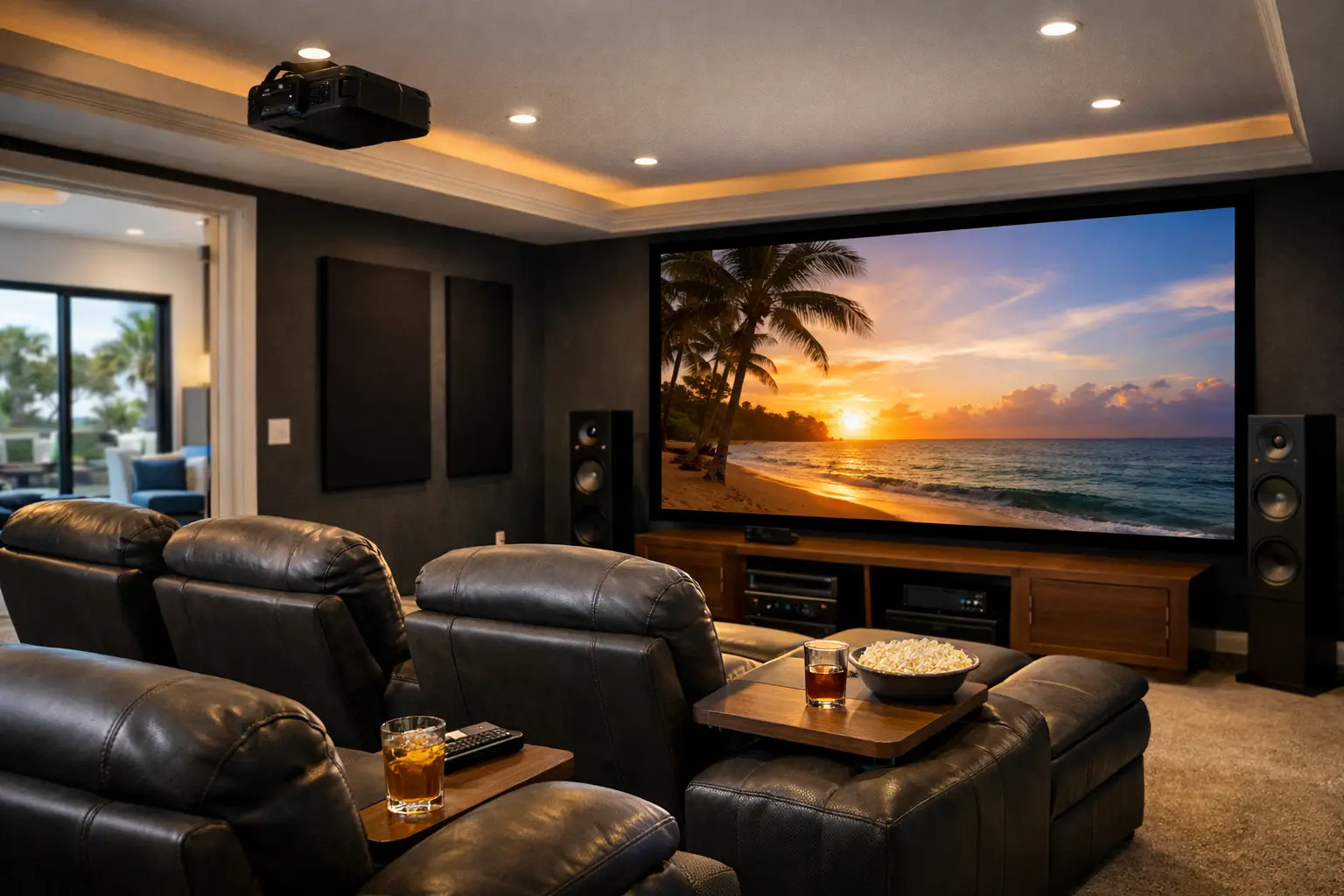
A home theater Delray Beach homeowners can rely on is not defined by a large screen alone. It is defined by the moment the lights lower, the room becomes quiet, and every image, voice, and musical score arrives with clarity and impact. That experience only happens when the room, equipment, controls, and installation are planned as one complete system.
For a dedicated theater, a media room, or a refined multipurpose living space, professional integration protects the investment in your home while making entertainment easy to enjoy. The goal is not to fill a room with visible components. The goal is to create a polished environment where technology performs beautifully without demanding attention.
What a Home Theater in Delray Beach Should Solve
A well-designed home theater should feel intuitive for every member of the household. One control should start the system, select a source, set the appropriate lighting scene, and bring the room to life. At the same time, the underlying technology needs to be engineered for consistent performance, not simply installed where space happens to be available.
That starts with understanding how the room will be used. A dedicated cinema room can prioritize projection, controlled lighting, acoustics, and tiered seating. A family room may call for a large display, discreet speakers, and motorized shades that manage the South Florida sunlight without changing the character of the space. An outdoor viewing area requires a different strategy altogether, with equipment selected and placed for the environment.
There is no single system that fits every property. The right design depends on room dimensions, ceiling height, window placement, furnishings, viewing distance, architectural finishes, and the number of people who will use the space. A thoughtful consultation turns those details into a system that is comfortable, visually clean, and satisfying to use for years.
Sound Is What Makes the Room Feel Complete
Many homeowners focus first on screen size, then discover that sound has the greater effect on immersion. Dialogue needs to remain clear at normal listening levels. Music should feel full without overwhelming conversation. Effects should have weight and direction without creating rattles, harshness, or distracting hot spots around the room.
Speaker placement is central to that result. In-wall and in-ceiling speakers can preserve a clean interior design, but their locations must be coordinated with seating, framing, lighting, and room acoustics. Freestanding speakers may be appropriate in certain rooms, especially when the design calls for a more traditional listening environment. Neither option is automatically superior. It depends on performance expectations and the architecture of the space.
Subwoofers deserve the same attention. Their placement affects how evenly low-frequency sound carries across the seating area. A theater that sounds impressive in one chair but uneven in the next is not finished. Professional calibration helps balance the system so the room performs for the whole family and for guests.
Picture Quality Begins Before the Display Is Installed
A projector and screen can create a true cinema experience, particularly in a room with controlled light. In brighter, more flexible spaces, a premium display may be the better fit. The choice should be based on actual conditions rather than a showroom impression.
Natural light is a significant consideration in Delray Beach homes. Windows, glass doors, and open-concept layouts can affect contrast and visibility throughout the day. Motorized shades can be integrated into the theater design to improve viewing conditions while giving homeowners convenient control over privacy and light. For rooms that transition from daytime gathering spaces to evening entertainment areas, this can make a meaningful difference.
Viewing distance also matters. A screen that is too small can make a theater feel underwhelming, while one that is oversized for the room may become tiring to watch. A proper design accounts for seating location, screen height, sightlines, and the visual impact of surrounding finishes. The finished result should feel intentional from every seat.
Clean Installation Protects the Experience
Premium equipment can still disappoint when wiring, ventilation, network performance, and control are treated as afterthoughts. A clean installation means more than hiding cables. It means building a dependable infrastructure behind the walls and inside the equipment rack so the system can operate properly and be serviced efficiently.
Structured wiring provides the foundation for reliable distribution of video, audio, networking, and control signals. Equipment should have adequate ventilation, organized connections, and clear labeling. These details are rarely seen after the project is complete, but they are often the difference between a system that remains dependable and one that becomes frustrating to manage.
A professionally designed rack also helps keep technology out of sight. Rather than placing multiple components in the theater room, equipment can often be centralized in a dedicated location. This preserves the look of the room, reduces audible fan noise, and provides a logical place for maintenance and future system updates.
Control Should Be Simple, Not Limited
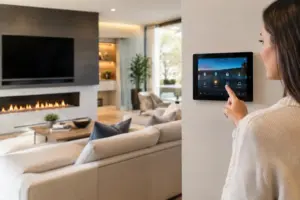
The most advanced theater system is only valuable if it is easy to operate. Homeowners should not need to manage several remotes or remember a sequence of inputs before enjoying a movie. Centralized control brings the theater, lighting, shades, climate settings, and whole-home audio into a more natural experience.
A dedicated touch panel, elegant remote, or mobile interface can be configured around the way the household actually uses the system. For example, a single “Movie Night” command can activate the theater, lower the shades, adjust lighting, and select the preferred source. A separate scene can prepare the room for entertaining, with music playing indoors and outdoors while the theater display remains off.
The right level of control depends on the property. Some homeowners want a refined theater interface only. Others prefer a unified system that extends into security, surveillance, pool areas, outdoor entertainment, and other connected spaces. The advantage of working with a full-service integrator is that these decisions can be made with the entire property in mind.
Plan the Theater Around the Home, Not Around a Product
A home theater project is most successful when it is considered early in construction or renovation. Early planning allows speaker locations, wiring paths, equipment storage, lighting control, and architectural details to be coordinated before finishes are complete. It also helps avoid visual compromises that can be difficult to correct later.
That said, an existing home can still be transformed with careful design. The approach may be different, with more attention given to discreet wire routing, equipment placement, and solutions that respect completed interiors. A skilled team evaluates what is possible and recommends a path that makes sense for the home rather than forcing a standard package into the room.
At Sentry Audio Video, the process is built around that level of accountability. From proposal and system design through installation, calibration, and ongoing support, each phase should serve the same outcome: a theater that performs as promised and feels effortless to enjoy.
Questions to Ask Before Starting Your Theater Project
Before selecting equipment, consider how the room needs to function beyond movie nights. Will it host family gatherings? Is it a dedicated retreat for immersive viewing? Does the space need to transition from bright daytime use to nighttime cinema? Are there design elements, such as custom millwork, stone, or expansive glass, that require careful coordination?
Also ask who will support the system after installation. Technology is not static, and a trusted integration partner should be available to help with adjustments, service needs, and future expansion. That ongoing relationship matters, particularly when the theater is part of a larger connected home.
A theater should make staying home feel like a special occasion, whether the room is hosting a quiet weeknight film or a full house of family and friends. Start with a design conversation that respects your home, your expectations, and the experience you want every time the lights go down.