A strong Wi-Fi signal in one room is not the same thing as dependable coverage across an entire estate. The project, How We Upgraded Wi-Fi Coverage Across a 10,000-Square-Foot Boca Raton Estate, began with a familiar problem: the property had internet service, networking equipment, and wireless access points, yet coverage became inconsistent as residents moved from the main living areas to bedroom suites, outdoor spaces, and the far ends of the home.
For a property of this scale, the answer is never simply adding another wireless device. Reliable performance requires a complete plan that accounts for construction materials, room use, connected systems, network capacity, and the way the family actually lives in the home.
The Challenge: A Large Home Has More Than One Coverage Zone
A 10,000-square-foot estate is not one open wireless environment. It is a series of distinct coverage zones separated by walls, floors, architectural details, glass, stone, cabinetry, and exterior construction. In Boca Raton, expansive outdoor living areas, pool patios, guest spaces, and detached structures can make that footprint even more demanding.
The original network showed the symptoms homeowners notice first: slower connections in certain rooms, devices holding onto a distant access point, interrupted video calls, and unreliable performance outdoors. Those issues are often blamed on internet service, but the service entering the home is only one part of the experience. A strong incoming connection cannot overcome poor access point placement, limited wired backhaul, or an overloaded wireless design.
The estate also depended on its network for more than browsing. Streaming, whole-home audio, surveillance cameras, smart lighting, automated shades, access control, and mobile control apps all place demands on the same infrastructure. The goal was to build coverage that supported the property as an integrated system, not just provide a stronger signal near the main router.
We Started With a Site Survey, Not Equipment Selection
Before recommending hardware, we evaluated the home room by room. That process included reviewing the floor plan, identifying existing network pathways, locating communication closets, and understanding how the family used indoor and outdoor spaces.
Construction details mattered. Dense interior walls can reduce signal strength, while stone finishes, metal framing, mirrors, and low-emissivity glass can create unexpected dead zones. A wireless design based only on square footage would have missed those variables.
We also assessed the number and types of connected devices. A home may have dozens of phones, tablets, displays, speakers, cameras, control processors, and smart devices active at once. Some need high throughput. Others need a stable, low-latency connection. Security and automation components may use very little bandwidth, but they still require consistent connectivity to remain responsive.
This assessment gave us a practical map of where coverage was needed, where access points could be installed discreetly, and where new cabling would deliver the greatest long-term value.
How We Upgraded Wi-Fi Coverage Across the Estate
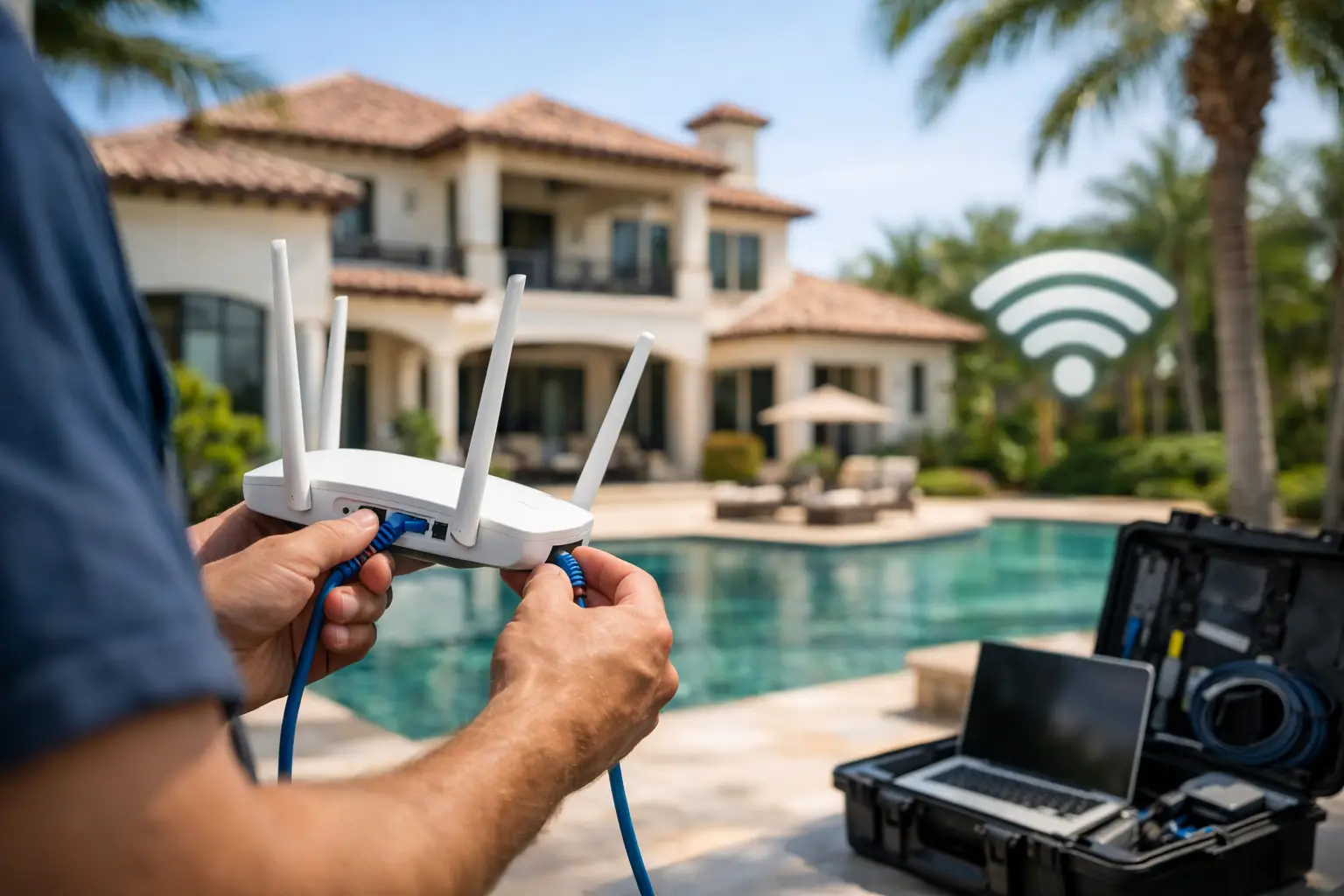
The central improvement was a professionally designed wireless network built around multiple wired access points. Rather than asking one centrally placed unit to carry coverage through thousands of square feet and multiple barriers, we distributed access points throughout the home based on real coverage requirements.
Each access point received a wired network connection back to the central network infrastructure. This is known as wired backhaul, and it is a major difference between an estate-grade network and a system that relies on one wireless device passing traffic to another. Wired backhaul preserves capacity, improves consistency, and gives each access point a dependable path back to the network.
Placement was intentional. Access points were positioned to serve primary living spaces, private suites, transitional areas, and exterior entertainment zones without compromising the home’s design. A clean installation matters in a luxury residence. Equipment should perform exceptionally well without becoming a visible distraction on the ceiling, wall, or countertop.
For outdoor coverage, we accounted for the pool area, patio, and areas where residents and guests spend time. Exterior access points were selected and installed for the environment rather than extending an indoor signal beyond the wall and hoping it would reach. That distinction is especially valuable in South Florida, where outdoor entertaining is part of daily life.
A Stronger Signal Is Only Part of the Solution
Once the physical network was in place, configuration became just as important as placement. We designed the wireless environment so compatible devices could move between access points more effectively as users traveled through the home. The objective was to reduce the frustrating experience of a device staying connected to a weak signal when a stronger access point is nearby.
We also tuned wireless channels and transmission levels to limit overlap and interference. More power is not always better. If every access point broadcasts at maximum strength, devices can struggle to select the appropriate connection and neighboring access points can compete with each other. Proper tuning creates purposeful coverage zones rather than a noisy, overlapping wireless field.
Where appropriate, the network was segmented to separate primary household devices from guests and certain connected systems. Segmentation improves organization and can reduce the chance that a guest device affects the performance or accessibility of critical home technology. It also gives the property owner greater control as new systems are added over time.
The design supported modern wireless standards while maintaining practical compatibility for existing devices. Not every connected product uses the same wireless band or behaves the same way on a network. Older smart devices may require more deliberate configuration than newer phones, streaming equipment, or control interfaces. A quality installation accommodates those realities instead of forcing every device into a one-size-fits-all setup.
Integrating the Network With the Home’s Technology Systems
In an estate environment, Wi-Fi is foundational infrastructure. It supports the systems residents see and use every day, but it also supports the systems working quietly in the background.
The upgraded network was organized around a centralized equipment location with managed networking components, clean cable management, and clear labeling. This provides a more professional service experience when adjustments, maintenance, or future additions are needed. Technicians can identify connections quickly, diagnose issues efficiently, and protect the integrity of the overall installation.
The network design also considered wired connections for equipment that benefits from the highest possible stability. Fixed devices such as media components, surveillance recorders, control processors, and certain access points should not compete for wireless capacity when a physical network connection is available. Reserving Wi-Fi for truly mobile and wireless-dependent devices helps maintain performance across the property.
Testing Coverage Where It Actually Matters
Installation is not complete when the equipment powers on. We validated coverage and performance throughout the spaces that mattered to the homeowner, including bedrooms, living areas, office locations, exterior gathering spaces, and transitional zones between floors.
Testing included signal strength, connection quality, roaming behavior, and practical use cases. A network can show a signal in a room while still delivering an inconsistent experience under real demand. By testing the finished environment, we could refine access point settings and confirm that the system performed as designed.
This stage is where custom integration earns its value. Floor plans are useful, but finished materials, furniture placement, and surrounding wireless activity can affect results. Field validation ensures the design responds to the actual property, not just the original drawings.
Planning for Growth and Ongoing Support
A home network should not be designed only for the devices installed on day one. Families add new streaming services, surveillance coverage, smart-home features, and personal devices over time. A properly structured network gives the property a better path for growth without requiring a complete redesign whenever technology needs change.
At Sentry Audio Video, we approach Wi-Fi as part of the larger technology ecosystem. That means coordinating the network with entertainment, security, automation, and communications systems while maintaining the clean workmanship expected in a premium residence.
For homeowners considering a network upgrade, the most useful first step is a professional evaluation of the home’s layout, existing infrastructure, and daily technology demands. The right plan does more than remove dead zones. It gives every connected part of the property a dependable foundation to perform the way it should.