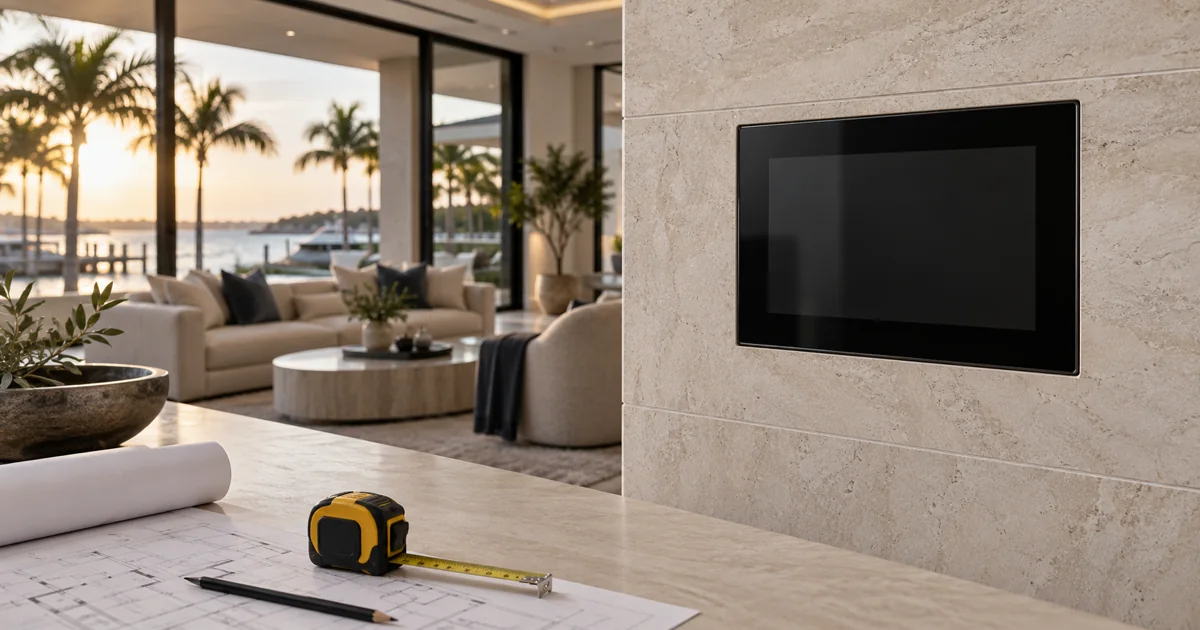
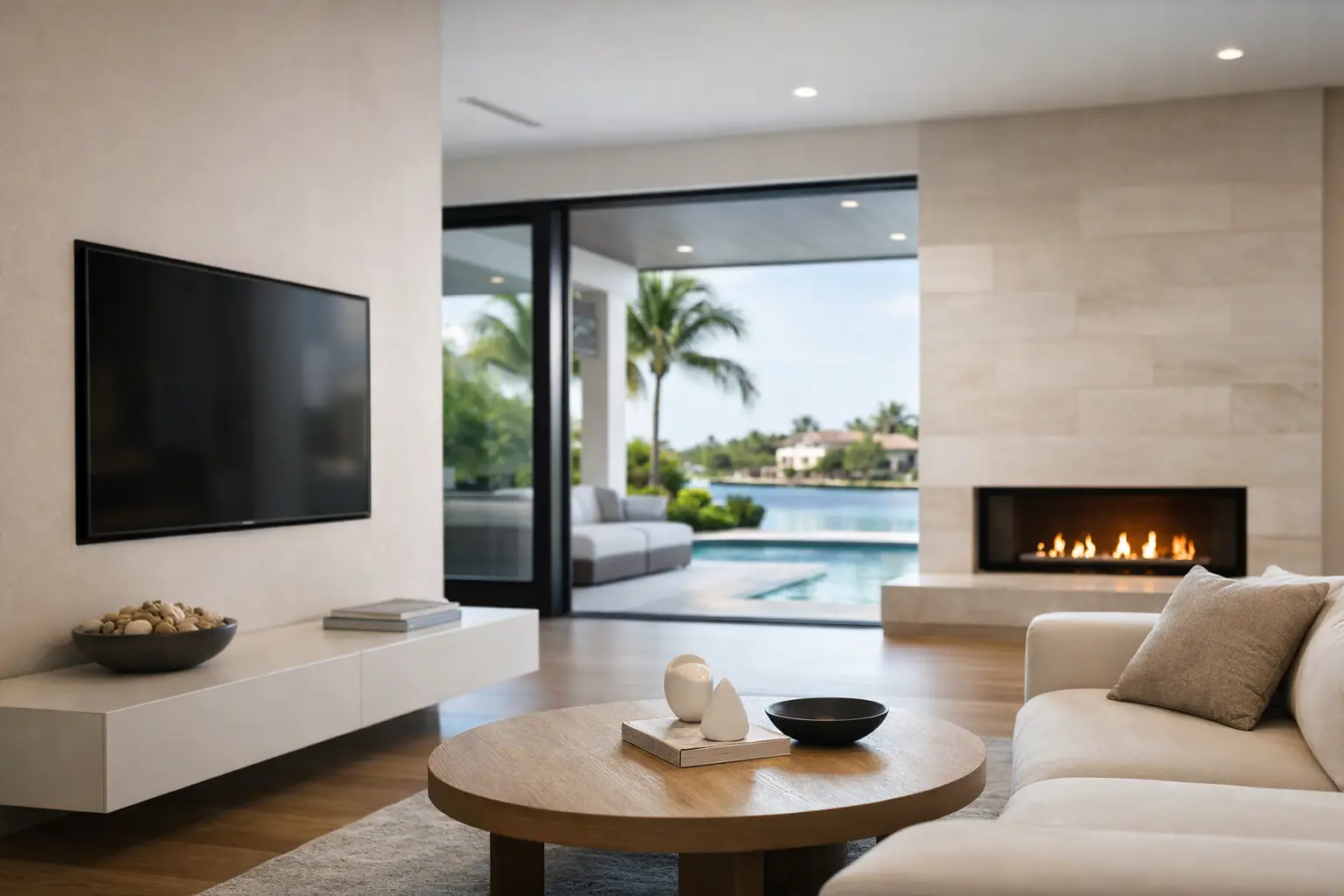
A beautifully finished room can lose its impact quickly when large speaker grilles interrupt millwork, stone, wallpaper, or a carefully planned ceiling. Invisible Speakers Boca Raton homeowners choose solve that design conflict by placing high-performance audio behind the finished surface, leaving the room visually intact while music, television, and distributed audio remain fully present.
This is not simply a matter of hiding equipment. An invisible speaker system must be designed around the room, its construction, the desired listening experience, and the finish materials that will cover the speakers. When those details are handled correctly, the result is sound that feels integrated into the architecture rather than added after the fact.
What Makes Invisible Speakers Different?
Invisible speakers are installed within walls or ceilings, then covered with a compatible plaster, drywall compound, veneer plaster, or other approved finish. Instead of a visible grille, the speaker uses a flat radiating surface that transfers sound through the finished plane. The room retains clean lines, while the audio system remains available wherever it is needed.
For a Boca Raton residence with open living areas, contemporary interiors, extensive glass, or custom ceiling details, that visual restraint can be a major advantage. Speakers can be located in places where conventional in-ceiling or wall-mounted models would be distracting, including formal living rooms, dining rooms, galleries, hallways, wellness spaces, and bedrooms with carefully considered finishes.
The experience is also different from placing a single portable audio source in a room. A properly engineered architectural audio system distributes sound more evenly and supports centralized control. Music can follow the household from room to room, while each space retains independent volume and source selection.
Where Invisible Speakers Perform Their Best
Invisible speakers are particularly compelling in rooms where visual design carries equal weight with performance. They work well in spaces intended for relaxed background music, entertaining, and whole-home audio, especially when the goal is broad, even coverage rather than a visible focal point.
A formal dining room is a strong example. Conventional speakers may compete with decorative lighting, artwork, or a detailed ceiling. Invisible speakers can provide an elegant musical backdrop without adding another visual element. In a primary suite, they preserve a calm, uncluttered environment while supporting music, television audio, or a complete smart home scene.
They are also effective in rooms with specialty wall finishes that homeowners do not want interrupted by grilles. However, the finish itself must be evaluated before installation. Dense materials, unusual textures, and certain decorative applications can affect how sound transfers from the speaker to the room. A professional system design accounts for this before the walls are closed or the final finish is applied.
Outdoor areas, high-output entertainment zones, and dedicated theater rooms often call for a different approach. Those environments may benefit from weather-rated speakers, visible architectural speakers, purpose-built subwoofers, or a combination of technologies. The right solution is not always an all-invisible system. It is a system selected for the performance expectations of each space.
The Design Decisions That Determine Sound Quality
Invisible audio depends on more than speaker placement. The equipment behind the finished surface, the wall or ceiling cavity, the amplifier channel, and the room acoustics all influence the final result.
Speaker Placement Must Follow the Room
A speaker plan begins with how the room will be used. In an open-concept kitchen and living area, for example, a designer considers conversation zones, seating, ceiling height, adjacent glass, and the way people move through the space. The objective is consistent coverage, not simply placing speakers at equal distances on a drawing.
For television areas, invisible speakers can be part of a refined audio solution, but their application requires careful discussion. Some homeowners want sound that appears to come directly from the display wall without visible left, center, and right speakers. Others prioritize the scale and dynamics of a dedicated cinematic presentation. Both goals are valid, but they may lead to different speaker choices and placement strategies.
Amplification Is Not an Afterthought
Invisible speakers require amplification matched to their performance requirements. Underpowered or improperly configured amplification can limit clarity, impact, and long-term reliability. Correct channel assignment, signal processing, and calibration give the system the control needed to play comfortably at normal listening levels and perform confidently when entertaining.
Subwoofers also deserve early consideration. Invisible speakers can deliver remarkably full sound, yet low-frequency performance is governed by room volume and expectations. In larger rooms or spaces where music is meant to have more depth and authority, discreetly located subwoofers can complete the system. They may be concealed in cabinetry, furniture, millwork, or other planned locations when the project allows.
Construction Coordination Protects the Finish
The best time to plan invisible speakers is before drywall and final finishes are complete. That creates room to coordinate framing, cable paths, back boxes where appropriate, speaker locations, lighting layouts, motorized shades, air registers, and access requirements.
Retrofitting is possible in many homes, but it requires a more detailed site evaluation. Existing wiring routes, wall construction, structural elements, and the risk to finished surfaces must be understood before work begins. A responsible integrator will explain what is practical, what requires compromise, and what should be addressed during a future renovation phase.
Invisible Speakers Boca Raton Projects Need Local Awareness
Boca Raton homes often combine expansive interiors with hard, reflective surfaces such as glass, stone, porcelain, and polished architectural details. These finishes look exceptional, but they can also make a room feel acoustically lively. Adding speakers without considering the room can lead to sound that feels harsh, uneven, or difficult to enjoy at higher volumes.
A professional assessment considers more than the speaker specification. It considers where sound will reflect, whether furnishings will soften the room, how open the floor plan is, and whether nearby areas need separate audio control. In certain rooms, acoustic treatment may be appropriate, but it does not need to dominate the design. Thoughtful furnishings, drapery, rugs, and placement decisions can make a meaningful difference.
South Florida construction also places a premium on disciplined project coordination. Condominiums, waterfront homes, and major renovations may involve building requirements, strict access schedules, multiple trades, and finishes with little margin for error. A clean installation process helps protect both the technology investment and the property itself.
What to Expect From a Professional Installation
An invisible speaker project should begin with a conversation about priorities. Is the primary goal distributed music, television sound, entertaining, a visually quiet interior, or a combination of all four? The answer shapes the design.
From there, the integrator reviews drawings or performs an on-site walkthrough, identifies speaker zones, confirms suitable mounting locations, and plans the supporting infrastructure. Wiring is installed and documented before the speakers are fitted. Once the finished surface is applied and fully cured, the system is connected, programmed, tested, and tuned.
The finishing stage deserves particular care. Invisible speakers must be installed according to the manufacturer’s specifications and finished using compatible materials and methods. Rushing this phase or treating it like ordinary drywall work can compromise both appearance and acoustic performance. Experienced coordination between the audio team and finishing trade is central to a polished outcome.
After installation, the system should be simple to operate. A unified control platform can place music, television audio, lighting, shades, climate settings, pool features, and security functions within an organized interface. The technology should support the home without requiring the homeowner to think about the technology every time they want to enjoy it.
Questions to Ask Before Choosing Invisible Audio
Before moving forward, ask whether the proposed speaker model is appropriate for the intended room and use case. Ask how the design handles bass, what amplification will be used, and whether the finish material has been approved for the system. It is also wise to ask how the installation team will coordinate with the general contractor, designer, drywall crew, and millwork provider.
Homeowners should also discuss service after the project is complete. An integrated audio system benefits from clear documentation, labeled infrastructure, responsive support, and a team that understands the entire installation. That continuity matters when a home includes interconnected entertainment, automation, surveillance, and communications systems.
Sentry Audio Video designs invisible speaker systems as part of a complete technology plan, with attention to architectural detail, sound performance, and long-term reliability. The right design preserves the room you envisioned while making exceptional audio feel like it was always meant to be there.