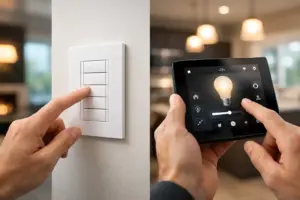
A lighting system should do more than turn fixtures on and off. It should make an arrival feel welcoming, a dinner feel considered, a presentation feel polished, and a home feel secure after dark. Lutron lighting gives property owners that level of control by bringing fixtures, shades, keypads, sensors, and smart-home controls into one professionally designed experience.
For a high-end residence or a client-facing business, the difference is immediate. Instead of a wall crowded with switches, the space can be managed through elegant keypads, programmed scenes, occupancy controls, and centralized interfaces. The result is a property that looks more refined, operates more intuitively, and supports the way people actually live and work.
Why Lutron Lighting Is Different
Lutron is built around lighting as part of the architecture, not as an afterthought. The system can coordinate dimming, shading, daylight response, and automated schedules so the environment changes naturally throughout the day. A single command can set the lighting in a great room, lower motorized shades, and prepare the space for entertaining. Another can secure a commercial property at closing with a consistent, repeatable sequence.
That degree of control matters because lighting is highly visible. Beautiful finishes and furnishings lose impact when the room is overlit, unevenly lit, or controlled by mismatched devices. Conversely, layered lighting can give artwork, architectural details, and outdoor living areas the attention they deserve without making the space feel theatrical or complicated.
Lutron systems are also designed for dependable performance at scale. A condominium, waterfront estate, restaurant, office, or multiroom residence may have dozens or hundreds of loads to manage. A professionally engineered system creates an organized framework for those loads, with controls placed where they are useful and scenes tailored to each zone.
Start With How the Property Is Used
The strongest lighting design begins with behavior, not equipment. Before selecting keypads, dimming modules, or shade fabrics, consider what happens in each room and at different times of day. A kitchen needs practical task lighting, but it may also serve as the center of evening entertaining. A primary suite may need soft nighttime navigation, private shade control, and brighter illumination for morning routines. A conference room must support meetings, video calls, and presentations without forcing staff to adjust multiple controls every time.
This is where scene design earns its value. Rather than controlling every fixture individually, a scene combines lighting levels into a purposeful setting. “Welcome Home” might illuminate the entry, kitchen, and main pathways while keeping the rest of the home calm. “Entertain” can provide warmer accent lighting and reduce glare near windows. “Goodnight” can turn off common-area lights, lower selected shades, and leave carefully chosen pathway lights active.
The goal is not to automate every moment. It is to eliminate repetitive actions while preserving easy, direct control when someone wants it. For many clients, the right answer is a mix of wall keypads, app access, voice integration where appropriate, and automation that runs quietly in the background.
Keypads Create a Cleaner Experience
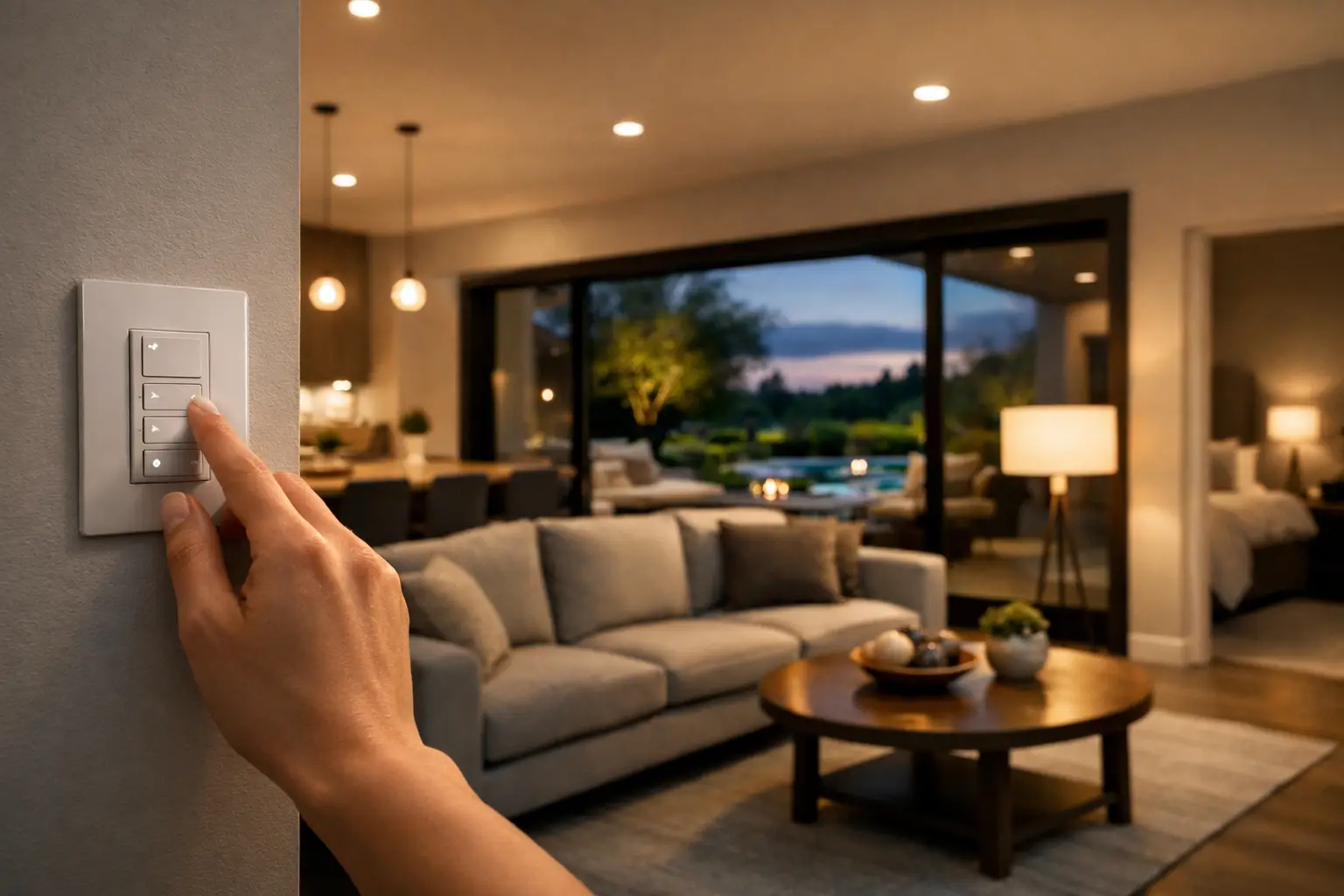
A keypad replaces a cluster of individual switches with a consistent, labeled control point. This is especially valuable in open-concept homes, large rooms with several lighting zones, and commercial spaces where employees or guests need simple controls without extensive training.
The finish and engraving matter as much as the function. Keypads can be selected to complement the interior design, while custom labels make each command clear. Thoughtful placement also reduces confusion at doors, hallways, bedside locations, and outdoor transitions. The installation should feel intentional from every angle, including the details guests may never consciously notice.
Shades Are Part of the Lighting Plan
Natural light is one of the most powerful elements in a property, but unmanaged sunlight can create glare, heat gain, fading, and privacy concerns. Integrating motorized shades with Lutron lighting allows electric light and daylight to work together.
For example, shades can lower during intense afternoon sun in a west-facing room while lighting adjusts to maintain a comfortable brightness level. In a media room, shades can close before a movie begins. In a business setting, automated shading can help maintain a professional presentation environment without requiring a staff member to walk the space adjusting window treatments.
The right fabric openness, color, and shade style depend on the view, orientation, privacy needs, and interior palette. A design professional should treat these decisions as part of the overall visual plan, not a last-minute add-on.
What a Professional Lutron Lighting Design Includes
The system behind a polished lighting experience is more involved than a set of dimmers. It requires an assessment of the property, fixture compatibility, lighting loads, wallbox locations, wiring conditions, network requirements, shade locations, and future expansion goals. Decisions made early in construction or renovation often determine how cleanly the finished system can be implemented.
A complete design typically addresses four priorities: the lighting layers in each room, the controls people will use, the automation that should happen without intervention, and the infrastructure required for long-term performance. For new construction, this planning can be coordinated with architectural drawings and interior selections. For existing properties, the design must account for current wiring and identify the most effective path to enhanced control with minimal disruption.
Compatibility deserves special attention. Not every LED fixture dims the same way, and a sophisticated control system cannot compensate for poorly matched fixtures, drivers, or transformers. Proper load evaluation helps prevent flickering, limited dimming range, audible noise, and inconsistent color appearance. This is one of the reasons premium lighting control should be planned and tested as an integrated system rather than assembled from unrelated components.
Residential Benefits Beyond Convenience
In luxury homes, Lutron lighting supports comfort, security, and the architectural character of the property. A vacation home can be programmed with an away mode that gives the appearance of natural occupancy. Exterior and landscape lighting can follow sunset-based schedules. Pathway lighting can activate gently at night, making the home easier to navigate without disturbing others.
For South Florida homes, shade integration is particularly valuable. Bright sun, expansive glass, waterfront views, and outdoor-oriented floor plans create exceptional design opportunities, but they also demand more precise light management. The right system protects views while helping residents manage glare and privacy throughout the day.
Lighting control also improves the transition between indoor and outdoor spaces. A patio, pool deck, outdoor kitchen, or covered lounge should not feel like a separate system with unfamiliar switches. Coordinated scenes create a more cohesive experience from the living room to the backyard, particularly when entertaining extends well past sunset.
Commercial Lighting That Supports the Brand Experience
For businesses, lighting control has both operational and customer-facing benefits. Restaurants, offices, retail environments, hospitality spaces, and professional service firms all rely on consistent ambiance. A poorly lit space can look unprepared even when every other detail is handled well.
Lutron controls can simplify opening, daytime, presentation, and closing routines. Staff can select a single scene rather than manage multiple zones manually. Managers can retain appropriate oversight of schedules and access. In the right application, occupancy sensing and daylight response can also reduce unnecessary energy use while maintaining the intended visual environment.
The design should reflect the business’s priorities. A restaurant may prioritize mood and zone-by-zone flexibility. An office may focus on glare control, presentation modes, and staff usability. A luxury retail space may require precise accent lighting that elevates merchandise while preserving consistent color and visual comfort.
The Value of One Accountable Integration Partner
Lighting performs at its highest level when it is considered alongside audio, video, security, shading, networking, and control. A scene that prepares a home for a movie, for instance, may involve lighting, shades, audio, and display control. A closing sequence for a business may coordinate lights, shades, surveillance, and access procedures.
Working with one experienced integration partner reduces the risk of fragmented systems and unclear responsibility. Sentry Audio Video designs each project around the property, the client’s preferences, and the performance expected after installation. That includes clean workmanship, careful programming, thorough testing, and a support relationship that continues after the project is complete.
A well-designed Lutron lighting system is rarely defined by the technology people see. Its real value is felt when a room is exactly right without anyone stopping to think about why. Begin with the spaces that matter most, define how you want them to feel and function, and let the control system make that experience dependable every day.