A smart building is not defined by the number of devices installed. It is defined by how reliably its systems work together when people need them. For a luxury residence, office, hospitality space, or multi-use property, that means security, communications, entertainment, lighting, shades, climate control, and network infrastructure should feel coordinated rather than pieced together.
That distinction matters. A property can have premium displays, cameras, access control, and automated shades, yet still create daily frustration if each system requires a separate app, remote, login, or service provider. Proper integration turns those individual investments into an environment that is easier to manage, more comfortable to occupy, and better prepared for change.
What Smart Buildings Are Designed to Do
Smart buildings use connected systems, sensors, controls, and a dependable network to respond intelligently to the people and activity inside them. The goal is not automation for its own sake. The goal is to give owners, managers, and occupants meaningful control over the environment while reducing unnecessary effort.
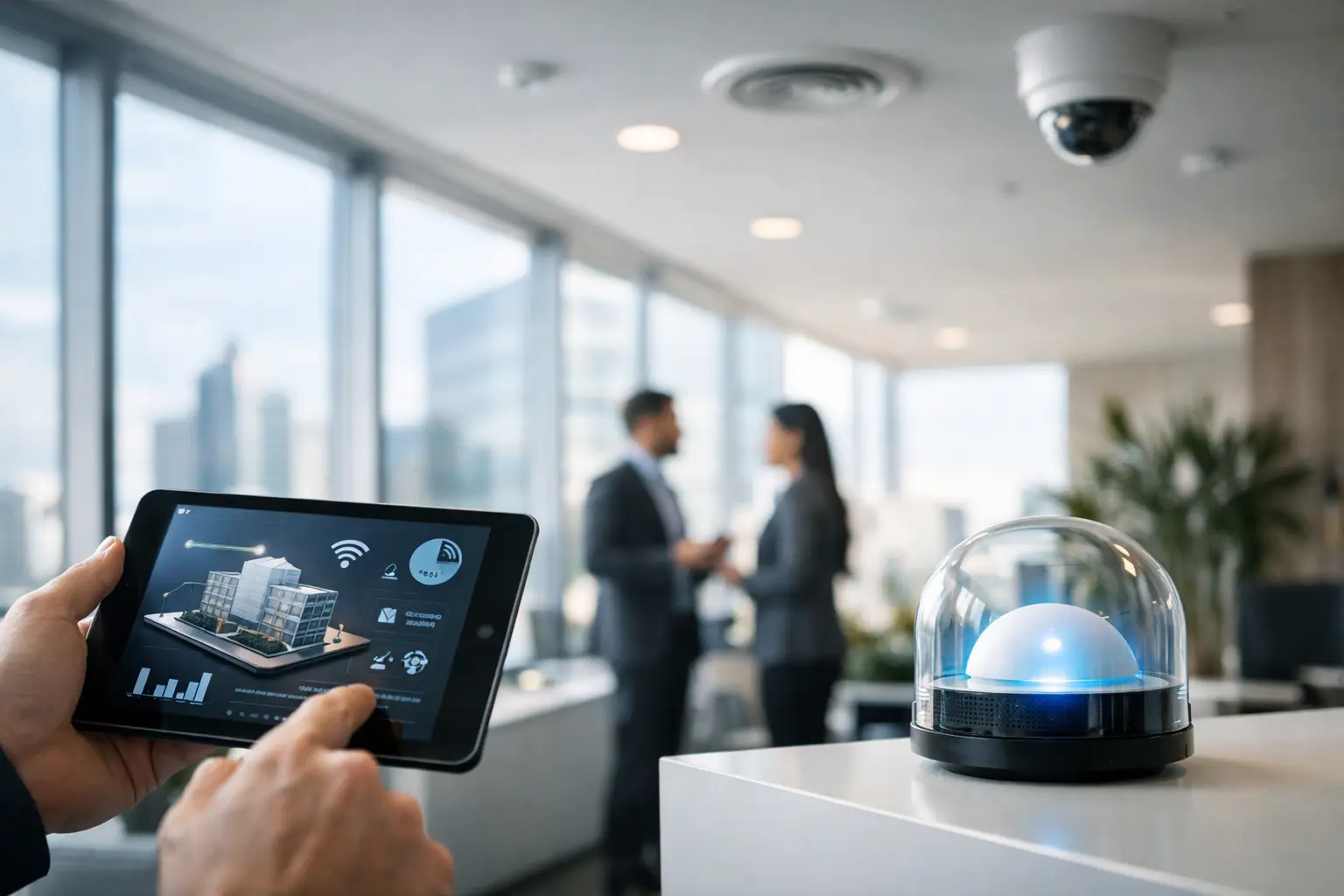
In a commercial setting, a scheduled opening sequence may prepare shared spaces before staff or guests arrive. Displays can power on, shades can adjust, background audio can start at an appropriate level, and entry points can follow the property’s access schedule. At closing, a single command can secure designated areas, turn off systems that are no longer needed, and provide confirmation that the property is in the intended state.
In a residence, the same principle can support a different lifestyle. A single keypad, touchscreen, or mobile interface can set the mood for entertaining, lower shades for a movie, distribute music to outdoor areas, or place the home in a secure evening mode. The experience should remain simple for family members and guests, even when the infrastructure behind it is sophisticated.
The strongest systems also provide useful visibility. If an event occurs at an entry point, for example, the right camera view can appear where it is helpful, and the owner or manager can receive an appropriate notification. That is more valuable than a stream of alerts that no one has time to review.
The Systems That Make Smart Buildings Work
A smart building performs only as well as its foundation. Professional design begins with the infrastructure that supports every connected service, then builds the user experience around the way the property will actually be used.
A reliable network and structured cabling plan
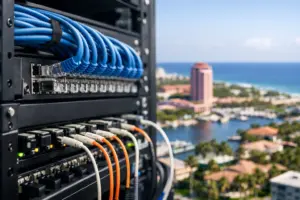
The network is the operational backbone of the property. Cameras, access control, audio/video distribution, wireless controls, communications, and remote management all depend on stable connectivity. In larger homes and commercial spaces, coverage must be planned room by room, not assumed from a single wireless access point.
Structured cabling is equally important because it gives the installation a clean, serviceable framework. Wired connections can support high-demand systems and provide dependable paths for equipment that should not rely solely on wireless signals. They also make future changes more manageable, whether the property adds cameras, conference capabilities, displays, or new control zones.
This is one area where planning early has a measurable advantage. During construction or a major renovation, cable routes, equipment locations, rack space, power requirements, and access panels can be coordinated before finishes are complete. Retrofitting is possible, but it often involves more limitations and more compromises in placement.
Centralized control that people will use
Control should reduce complexity, not introduce another layer of it. A well-designed interface presents the controls that matter in a particular room or situation. A conference room user may need a clear choice between starting a presentation, joining a meeting, and adjusting the room. A homeowner may want simple scenes such as Entertain, Relax, Goodnight, or Away.
The right level of control depends on the property. Some clients prefer elegant wall keypads for frequent actions, while others want touchscreens in key locations and secure remote access when they are away. Most benefit from a combination. What matters is consistency: the same command should produce the expected response every time.
Security and access with practical context
Surveillance, access control, intercoms, and alarm systems can operate as isolated layers, but they become more useful when they are coordinated. A door event can be paired with video verification. Designated personnel can receive access notifications without exposing sensitive information to everyone. A property manager can review activity across key areas without moving between unrelated platforms.
Privacy and policy deserve serious attention. Camera placement, retention settings, user permissions, and notification rules should reflect the property’s purpose and the people who occupy it. More monitoring is not automatically better. The appropriate design provides awareness while respecting privacy expectations and limiting access to authorized users.
Audio, video, and communications that support the space
In commercial environments, integrated audio/video can improve presentations, communication, wayfinding, training, and guest experience. The design should account for sightlines, acoustics, ambient light, room size, and how often the space changes use. A system built for a boardroom will not necessarily suit a restaurant, fitness studio, retail setting, or amenity area.
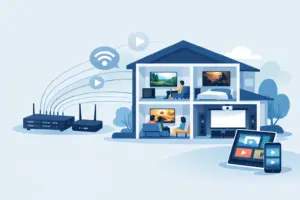
For residences, whole-home audio, distributed video, outdoor entertainment, and a dedicated theater can create a more refined experience when controls and equipment are thoughtfully located. Clean installation matters here. Equipment should be accessible for service, while displays, speakers, controls, and cabling should complement the property rather than compete with its architecture.
Why Integration Is Different From Adding Devices
The difference between connected equipment and a truly integrated property becomes most obvious when something goes wrong. If a camera drops offline, a room will not start correctly, or a control command fails, owners need a clear path to resolution. Multiple standalone systems can create confusion over who is responsible. An integrated design establishes the relationship between systems before the property is occupied.
It also creates better operational logic. Consider a business with event spaces that are used differently throughout the week. Rather than asking staff to manually configure multiple systems for every event, controls can be organized into simple presets that match the room’s real operating needs. The technology remains capable, but the day-to-day workflow becomes easier to repeat.
There are trade-offs. A highly customized control environment offers a tailored experience, but it should be designed with future service and staffing changes in mind. An owner-managed property may prioritize direct control and simple alerts, while a larger commercial property may need role-based permissions, documented procedures, and ongoing system monitoring. There is no one-size-fits-all package because the right design begins with the property’s use, risks, and priorities.
Planning a Smart Building Before Work Begins
The most successful projects start with questions that reach beyond equipment selection. How will people enter the property? Which rooms need the same experience every day, and which are flexible? Where should staff, family members, guests, or vendors have different levels of access? What must continue functioning during an internet interruption? Which areas need discreet technology, and which should make a visual statement?
A qualified integrator translates those answers into a coordinated design. That includes equipment specifications, wiring plans, control locations, rack layouts, network coverage, system testing, and a clear handoff process. Coordination with the architect, designer, builder, and other trades is essential, particularly in high-end properties where aesthetics and performance carry equal weight.
For property owners in South Florida, weather exposure can also influence outdoor equipment selection, enclosure design, speaker placement, and camera coverage. Coastal conditions, heat, moisture, and intense sunlight should be considered early, not after an outdoor system has already been installed.
Long-Term Performance Requires Ongoing Support
A smart building is not a set-it-and-forget-it project. Users change, spaces evolve, software is updated, and operating needs shift. Ongoing support keeps the system aligned with the property rather than allowing small issues to become daily workarounds.
This is where an experienced integration partner adds lasting value. Sentry Audio Video approaches technology as a complete system, from proposal and design through installation, programming, testing, and continued service. That single point of accountability is especially valuable when security, entertainment, communications, and infrastructure need to perform together.
The right starting point is not a product list. It is a clear conversation about how the property should operate on its busiest day, its quietest evening, and the moments when security and reliability matter most.