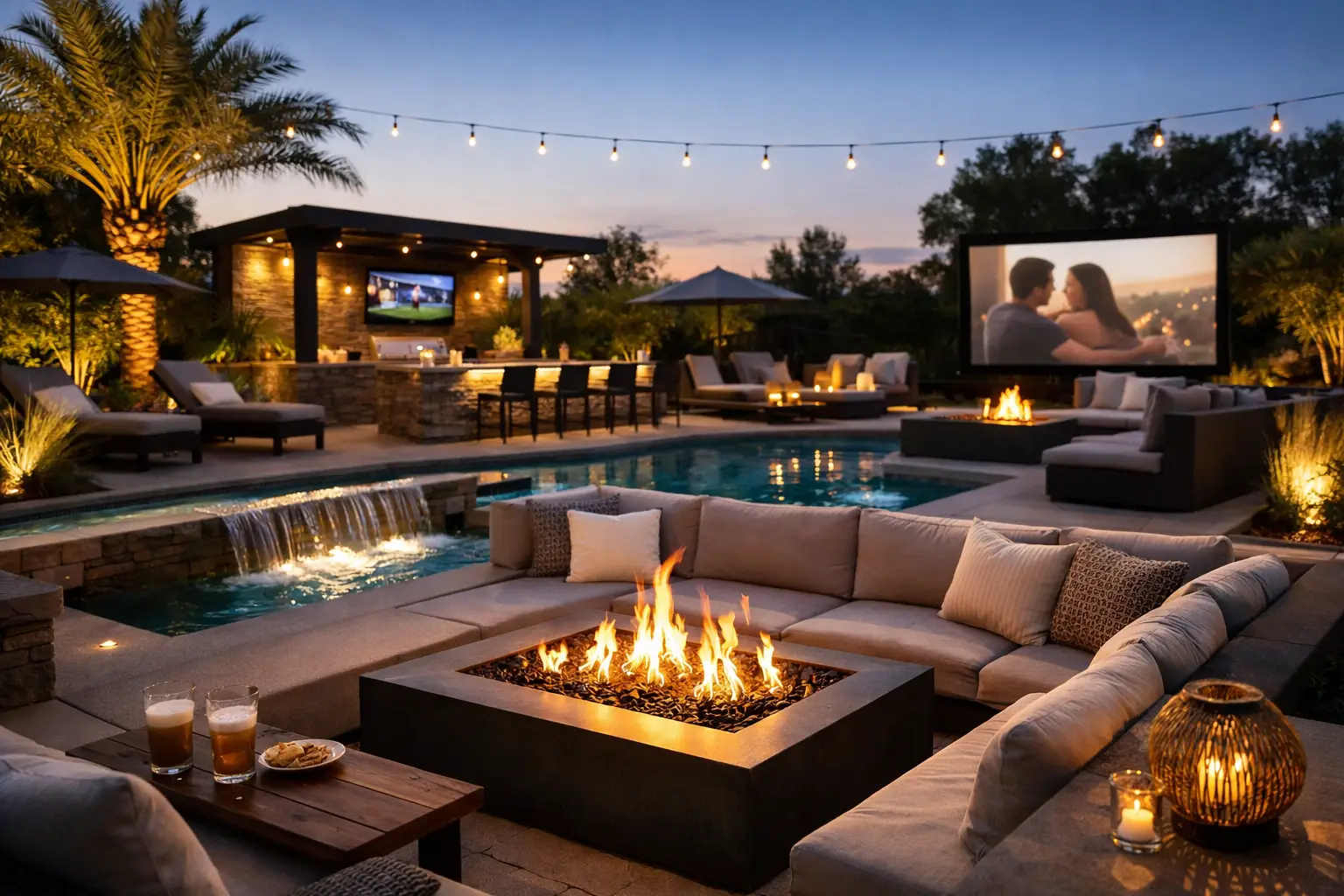
A backyard should not force you to choose between a beautiful outdoor setting and the performance you expect inside your home. Designing the Ultimate Backyard Entertainment Space: Outdoor TVs, Audio, and Lighting means planning these elements as one coordinated system – built to look refined in daylight, sound clear across the property, and operate reliably when guests arrive.
For South Florida homes, the details matter even more. Heat, humidity, salt air, hard rain, and intense sun can expose weaknesses in equipment and installation methods quickly. A professionally designed outdoor entertainment system accounts for those conditions from the beginning, protecting the investment while keeping the experience simple for your family and guests.
Start With How the Space Will Be Used
The strongest backyard systems begin with lifestyle, not equipment. A covered patio used for relaxed family evenings needs a different design than a pool deck meant for larger gatherings. An outdoor kitchen, lounge area, fire feature, dining terrace, and dockside seating may each need their own level of audio, lighting, and video visibility.
Think through where people naturally sit, stand, cook, and circulate. The viewing position for an outdoor TV should be comfortable without dominating the architecture. Speakers should cover the areas where people gather, not send excess sound toward bedrooms, neighboring properties, or the street. Lighting should help people move safely while preserving the atmosphere after dark.
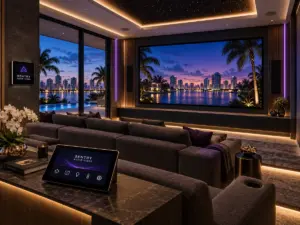
This planning stage also identifies opportunities for control. Instead of managing a television, music source, landscape lights, pool features, and shades through separate apps and remotes, a centralized system can bring daily use down to a few intuitive commands. A single “Patio Evening” scene, for example, can turn on selected lights, start music at an appropriate level, and prepare the display for viewing.
Outdoor TVs Need More Than a Protected Location
An indoor display under a covered patio may appear convenient, but coverage from direct rain is only one part of the equation. Outdoor-rated TVs are engineered to handle changing temperatures, moisture, airborne debris, and higher ambient light. Their brighter panels remain visible when daylight reaches the patio, while purpose-built enclosures and components help protect long-term performance.
Placement is equally important. Mounting a TV directly opposite the western sun may create glare that no screen setting can fully overcome. Viewing angles, reflections from pools or windows, and the height of the installation all influence whether the picture feels enjoyable or compromised. In many homes, locating the display beneath a shaded structure or using a motorized outdoor shade can dramatically improve visibility.
A professional installation also considers what remains behind the screen. Clean cable management, weather-rated connections, properly planned power, and secure mounting are essential. The goal is not simply to put a television outside. It is to create a polished viewing area with no exposed wires, improvised boxes, or equipment that distracts from the design of the home.
For larger properties, outdoor video can extend beyond one main patio display. A pool pavilion, outdoor kitchen, or covered lounge can each receive video access, with sources distributed from a central location. This keeps the system organized and allows the homeowner to select content in each area without creating clutter around the entertaining space.
Design Outdoor Audio for Coverage, Not Volume
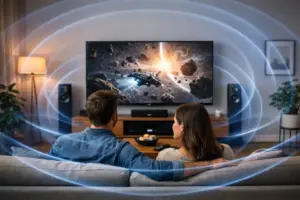
Outdoor sound behaves differently than indoor sound. Walls and ceilings inside a home contain and reflect audio. Outside, sound disperses quickly, competing with wind, water features, conversation, and ambient neighborhood noise. Turning up a pair of speakers rarely solves the problem. It often makes the area closest to them uncomfortable while leaving the rest of the yard underpowered.
The better approach is distributed audio. Several carefully placed landscape speakers can deliver even coverage at a more comfortable listening level. Rather than hearing sound from one obvious source, guests experience music naturally throughout the lounge, dining, and pool areas. Subwoofers designed for outdoor placement can add depth without requiring excessive volume from the main speakers.
Speaker selection and placement should reflect the landscape plan. Some systems use discreet satellite speakers tucked into planting beds, while others incorporate architectural speakers into a patio ceiling or pavilion. The right approach depends on the property, the desired aesthetic, and how much coverage is required.
Audio zoning adds another level of control. The dining terrace may need low background music while the pool area has a more energetic playlist. A separate zone can allow one area to remain quiet while another is in use. This flexibility is especially valuable for families and hosts who use their outdoor space in different ways throughout the week.
The equipment that powers and distributes audio should be protected and accessible for service. Centralizing components in an appropriate indoor location or a properly designed weather-protected equipment area supports dependable performance and keeps the outdoor environment clean.
Layer Lighting for Safety, Architecture, and Mood
Lighting is what turns a backyard from usable to inviting after sunset. The mistake is treating every fixture as a source of maximum brightness. Outdoor entertaining benefits from layers of light, each with a specific role.
Path and step lighting improves safe movement through the property. Soft accent lighting can highlight palms, specimen trees, stonework, and water features. Downlighting from pergolas or covered patios provides useful illumination for dining and conversation. Decorative fixtures near a bar or outdoor kitchen add personality and warmth.
Color temperature deserves careful attention. Very cool white light can feel harsh against warm stone, wood, and tropical landscaping. Warmer tones typically create a more welcoming setting, though the right balance depends on the home’s architecture and existing exterior lighting. The aim is visual comfort, not a collection of competing bright spots.
Scene-based lighting makes the system more practical. A “Dinner” scene may favor warm patio and landscape lighting with low-level path lights. A “Pool Night” scene can place more emphasis on circulation paths and water features. A “Late Night” setting can reduce unnecessary lighting while preserving safe access to doors, gates, and walkways.
When lighting is integrated with automation, those scenes can be activated from a wall keypad, touch panel, handheld remote, or mobile device. Schedules can also ensure the property looks welcoming at dusk without requiring someone to adjust each area manually.
Plan the Infrastructure Before Finishes Are Complete
A premium outdoor system depends on what is hidden behind the finished surfaces. Conduit routes, low-voltage wiring, network coverage, equipment locations, and drainage considerations should be addressed early – ideally during new construction, a major renovation, or landscape work. Waiting until a patio is complete can limit placement options and create avoidable disruption.
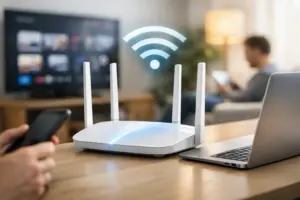
Reliable network coverage is particularly important when outdoor equipment and control interfaces depend on connectivity. A properly designed wireless network extends dependable access to the patio, pool, guest areas, and other outdoor zones without relying on a single indoor signal trying to reach through exterior walls.
Integration should also account for the rest of the property. Outdoor entertainment may work alongside motorized shades, climate-controlled interior spaces, surveillance cameras, gate access, pool controls, and whole-home audio. When these systems are planned by one experienced technology partner, controls are easier to understand and service responsibilities remain clear.
Build for South Florida Conditions
In Boca Raton, Fort Lauderdale, and nearby coastal communities, weather resistance is a system-wide consideration. It applies to displays, speakers, mounts, connections, control locations, and the way cables are routed and protected. Even the most capable equipment can have a shortened service life if it is installed without attention to moisture, corrosion, ventilation, and exposure.
This is where custom design earns its value. There is no single equipment package that fits every backyard. A waterfront property may need additional consideration for salt air. A courtyard with hard surfaces may require a different audio approach than a large landscaped yard. A covered loggia may support recessed speakers and a more sheltered display, while an open pool deck may call for purpose-built landscape audio and a high-brightness outdoor TV.
Sentry Audio Video designs and installs integrated backyard entertainment environments with clean workmanship, premium equipment, and ongoing support. From the first proposal through final programming, the focus is on creating a system that performs as intended and feels natural to use.
The right backyard technology should fade into the experience. When the picture remains clear, the music reaches every guest comfortably, and the lighting shifts with the evening, the space is ready whenever your home is ready to host.