
Sentry Audio Video designs and installs network wiring, managed Wi-Fi, cameras, access control, phone and audio/video systems for medical offices in Boca Raton, Fort Lauderdale, Miami Beach, Palm Beach County and Orlando. Call (561) 717-3280 to schedule a commercial technology site survey.
Updated October 25, 2026.
For a new practice, expansion, renovation, or high-end specialty office, the goal is not to fill rooms with equipment. It is to create an environment that communicates professionalism, protects privacy, supports clinical workflows, and remains dependable when the office is busy. That requires a coordinated design rather than a collection of disconnected systems.
What Medical Office Technology Should Accomplish
A well-planned medical office has different needs than a standard corporate workplace. The environment must feel calm and welcoming while supporting fast communication behind the scenes. Staff members need to move patients through the office efficiently, providers need clear access to information and presentation tools, and management needs reliable visibility into the property.
The right technology plan generally supports four outcomes: a stronger patient experience, more efficient operations, better facility protection, and an infrastructure that can support future changes. Those priorities overlap. For example, a properly placed display can provide helpful patient education in the waiting area, reduce repetitive front-desk questions, and reinforce the practice’s standard of care.
Technology should also fit the office’s actual workflow. A concierge medical practice, dental office, med spa, outpatient clinic, and multi-provider specialty group may all need displays, security, communications, and networking. The placement, control, privacy requirements, and scale of those systems will be very different.
Build the Infrastructure Before the Finishes Go In
The most valuable work often happens behind the walls. Structured cabling, equipment locations, pathways, network capacity, electrical coordination, and rack design should be addressed early in the project. Waiting until millwork, paint, and final finishes are complete can limit system performance and create unnecessary visual disruption.
A professionally designed low-voltage infrastructure gives the office a stable foundation for Wi-Fi access points, cameras, access control, displays, phone systems, audio, and future devices. It also makes service more manageable. Clearly labeled cabling, organized equipment racks, and documented connections help technicians identify an issue without turning a small service call into a lengthy investigation.
This is especially important in offices with multiple exam rooms, consultation spaces, treatment rooms, private offices, and public areas. Each room may require different connectivity, but the system should be planned as one coordinated environment.
Plan for Growth, Not Guesswork
A medical office rarely stays static. A practice may add providers, introduce new patient-facing services, expand hours, or reconfigure rooms as demand changes. Installing adequate pathways and capacity during construction provides flexibility without requiring major demolition later.
That does not mean every room needs the same equipment. Overbuilding can complicate use and maintenance. The better approach is to identify where technology will deliver a real operational benefit now, then preserve a practical path for future additions.
Patient-Facing AV That Supports the Practice
Displays and audio systems can improve how patients perceive an office when they are used with restraint and intention. In a waiting room, a professionally installed display can present branded content, patient education, office updates, or calming visual programming. In a consultation room, a larger display can help a provider explain treatment options, review imaging, or walk through post-procedure instructions with greater clarity.
Placement matters as much as screen size. Displays should be mounted at a comfortable viewing height, with cables concealed and equipment selected for the room’s lighting conditions. A polished installation reinforces confidence. A screen that is difficult to see, poorly positioned, or surrounded by exposed wiring does the opposite.
Audio deserves the same consideration. Background audio may be appropriate in a reception area or med spa, while patient rooms and consultation spaces need thoughtful acoustic separation. The purpose is to support a composed atmosphere, not to create distractions or interfere with private conversations.
Simple Control Protects Staff Time
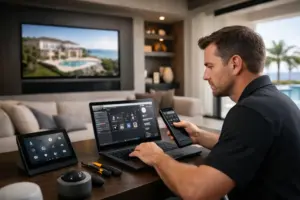
Front-desk employees and clinical staff should not need separate remotes, complicated instructions, or an IT call to use basic room technology. A centralized control interface can make common actions predictable: turn on a consultation display, select a presentation source, adjust audio, or power down a room at the end of the day.
The right level of control depends on the office. A single-practice suite may need straightforward room controls, while a larger facility may benefit from centrally managed audio, displays, shades, and common-area systems. The priority is consistency. If a system is difficult to operate under pressure, it will not deliver its intended value.
Security and Privacy Require a Layered Approach
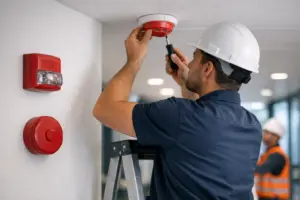
Medical offices manage sensitive information, valuable equipment, and a constant flow of patients, staff, vendors, and delivery personnel. Video surveillance and access control can provide accountability without making the office feel unwelcoming.
Common camera locations include entry points, reception areas, hallways, parking access, supply areas, and exterior approaches. Cameras should be designed around clear coverage objectives, appropriate lighting, and retention needs. They should not be placed where patients have a reasonable expectation of privacy, such as treatment areas where sensitive exams or procedures take place. Your legal and compliance advisors should guide policies for recording, retention, notice, and access to footage.
Access control can further protect staff-only zones, records areas, medication storage, IT closets, and executive offices. Credential-based entry also gives management more control than traditional keys, which can be copied, misplaced, or remain in circulation after staffing changes.
Security systems should not operate in isolation. A cohesive design can allow authorized personnel to view relevant cameras, manage entry points, and receive alerts through a defined operational process. Careful permissions are essential. More access is not always better access.
Communications That Keep the Office Moving
In a busy medical setting, communication failures create bottlenecks quickly. Reception needs a reliable way to reach staff. Providers may need discreet room-to-room communication. A facility may need paging for common areas, door stations at controlled entrances, or video intercoms for after-hours visitors.
The best solution depends on how the practice works. Some offices benefit from a simple receptionist-to-staff communication setup. Others need integrated paging, secure door release, call stations, and communications that support a larger team across multiple zones. The system should reduce unnecessary movement and interruptions without creating more noise in patient areas.
Coordination with the practice’s IT provider is critical here. Communications, network equipment, security, and cloud-based services can affect one another. Clear responsibility for design, installation, testing, and ongoing support prevents the familiar problem of multiple vendors pointing elsewhere when something stops working.
The Compliance Question: Technology Is Only One Part
A professionally designed system can support privacy-conscious operations, but equipment alone does not make a practice compliant with HIPAA or any other regulatory requirement. Compliance also depends on policies, user permissions, staff training, vendor agreements, cybersecurity practices, physical safeguards, and the way information is handled every day.
This distinction matters during planning. For example, a secure equipment rack, protected network design, controlled access to sensitive areas, and thoughtfully located screens can reduce exposure. But the practice must still establish appropriate administrative and technical safeguards with qualified legal, compliance, and IT professionals.
A capable integration partner should understand where physical technology intersects with privacy and operations, ask the right questions early, and coordinate with the appropriate stakeholders. That is more valuable than making broad compliance promises.
Why One Coordinated Partner Matters
Medical Office Technology can involve structured cabling, Wi-Fi infrastructure, audio/video, surveillance, access control, communications, and monitoring. When these elements are planned separately, the office can end up with overlapping equipment, inconsistent controls, visible wiring, and avoidable support gaps.
A full-service integrator brings those disciplines together from the proposal and design stage through installation, commissioning, and long-term service. Sentry Audio Video designs commercial environments with attention to clean workmanship, system reliability, and the real people using the space each day.
Before selecting equipment, begin with the patient journey and staff workflow. Consider what patients see when they enter, how information moves from reception to care teams, which rooms need presentation capabilities, where privacy matters most, and who will support the system after opening day. When those answers lead the design, the technology becomes a quiet but meaningful part of a medical office patients trust.
Plan the infrastructure: structured cabling, managed networks and Wi-Fi, business IT support, video surveillance, and access control. Request a medical-office site survey. Florida low-voltage license EF20001874 · Over 25 years of industry experience.