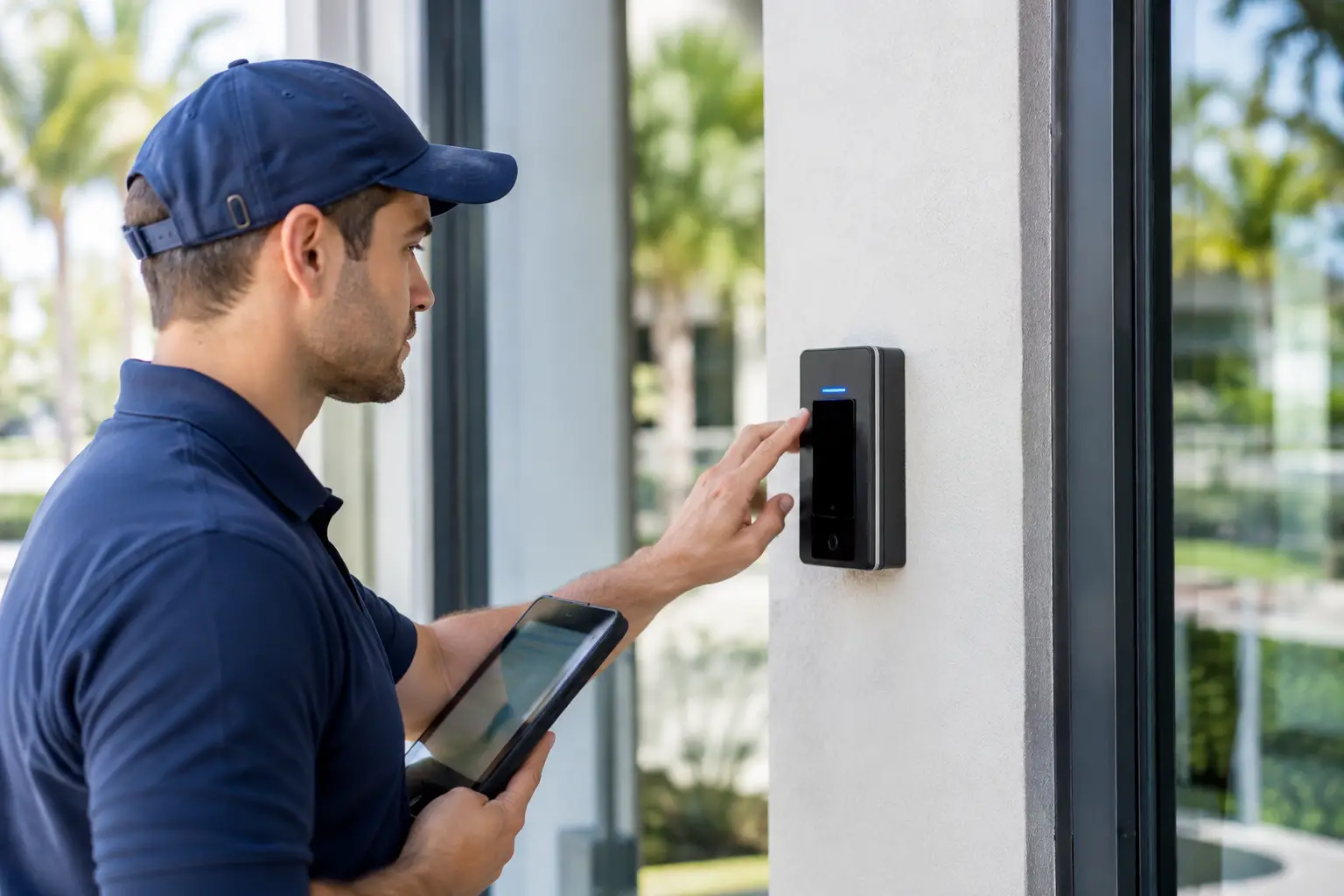
A Brivo access control installer Boca Raton property owners trust does more than mount readers beside a door. The work begins with understanding how people actually move through the property, which doors require different permissions, and what level of visibility management needs after the system is live. For a professional office, luxury residence, condominium amenity space, retail location, or multi-site operation, those details determine whether access control becomes a reliable operational asset or another system that causes daily friction.
Brivo provides cloud-managed access control built for organizations that want greater control without being tied to a single on-site management computer. Credentials, schedules, alerts, and activity can be managed through an authorized web portal or mobile application. The platform is powerful, but the finished experience depends heavily on system design, hardware selection, cabling, door condition, and commissioning.
What Brivo Access Control Solves
Traditional keys create an accountability problem. When a key changes hands, is copied, or is not returned when an employee leaves, there is no practical audit trail. Rekeying multiple doors is disruptive, and it rarely addresses every unknown copy in circulation.
Brivo replaces that uncertainty with controlled credentials. Authorized users may enter with a mobile credential, card, fob, keypad code, or a combination of methods based on the door and security policy. Administrators can add, remove, or adjust access privileges without collecting physical keys from every user.
For Boca Raton businesses, this is particularly valuable where staff schedules, vendors, cleaning crews, tenants, or service personnel need limited access. A credential can be assigned to a specific person, restricted to designated entrances, and scheduled for the hours it is needed. The system records activity so management can review events when questions arise.
The same approach can benefit residential properties with staffed gates, detached guest areas, wine rooms, side entries, pool access points, or service entrances. Residential access control should be designed with convenience and privacy in mind, not simply copied from an office configuration.
Why Professional Installation Matters
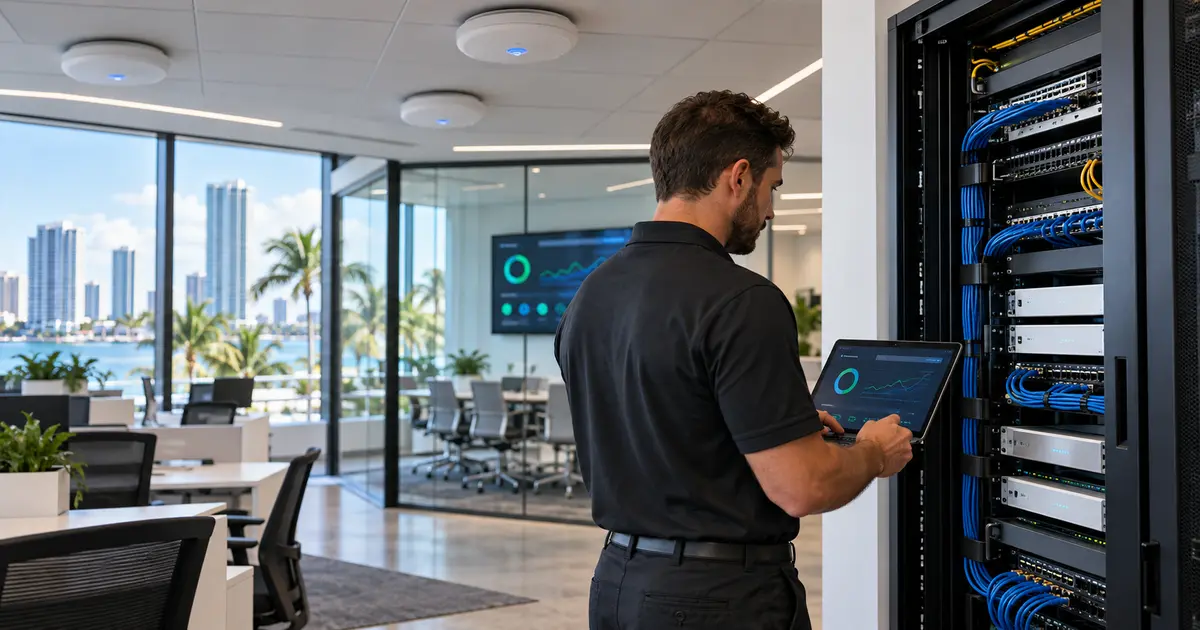
An access control system connects software, network infrastructure, controllers, readers, locks, door position switches, request-to-exit devices, power supplies, and often cameras or intercoms. Every component must operate correctly as a complete door package.
A well-planned installation considers the door itself first. A glass storefront door, aluminum frame, wood entry door, gate, fire-rated opening, and elevator entry all require different locking and mounting strategies. Hardware needs to suit the opening, the expected traffic, local life-safety requirements, and the desired behavior during a power interruption.
That last point deserves attention. Some openings need to fail safe, meaning the door releases when power is lost. Others need to fail secure, meaning the door remains secured. The appropriate choice depends on the application and applicable code requirements. A qualified installer coordinates the access control design with the door hardware and life-safety conditions rather than treating the lock as an afterthought.
Clean workmanship also matters. Exposed wiring, poorly located equipment, unfinished wall penetrations, and improvised power connections can undermine an otherwise premium property. A professional integration team plans cable routes, secures field wiring, labels equipment, protects controllers, and leaves the system serviceable for future maintenance.
Choosing a Brivo Access Control Installer in Boca Raton
The right partner should be able to discuss your property operations before recommending equipment. A productive consultation asks who needs access, where access is needed, when doors should be available, and how administrators will manage credentials. It also identifies existing infrastructure, including structured cabling, network capacity, surveillance, intercoms, gate systems, and backup power.
Experience across related systems is a meaningful advantage. Access control is often stronger when it works alongside video surveillance. For example, an access event can help a manager quickly find the related camera footage. At a front entry, an intercom or video door station can support visitor verification before a credential is issued or a door is released.
Ask prospective installers how they handle these essential project areas:
- Site evaluation and door-by-door design
- Appropriate locking hardware and code-aware installation practices
- Network planning, controller placement, and protected power
- Credential enrollment, schedules, permissions, and administrator training
- Documentation, testing, and support after turnover
The answer should be specific to your property. A single-door executive suite has different needs from a medical office, a high-rise amenity area, or a residence with gates and multiple exterior entries. Standardization can make management easier, but forcing every door into the same configuration can create inconvenience or exposure.
Look Beyond the Initial Installation
Cloud management does not eliminate the need for a service relationship. Doors are mechanical, users change, and property operations evolve. You may add a suite, hire staff, change hours, bring on a vendor, or need to investigate an event months after the original installation.
A dependable installer provides a clear path for support and understands the system they installed. That continuity is especially useful when access control is part of a larger environment that includes cameras, network equipment, audio/video, fire alarm coordination, or communications systems. One accountable technology partner can reduce finger-pointing when a door, network connection, or integrated device needs attention.
A Better Planning Process for Brivo Projects
The strongest projects start with a site walk and a written scope. During planning, each opening should be reviewed for its use, construction, traffic level, credential type, locking method, and required access schedule. Entry and exit behavior should be discussed in plain terms so the system supports normal routines instead of imposing unnecessary steps.
Next comes infrastructure planning. Controllers require reliable network connectivity and appropriately designed power. Cable pathways should be determined before finishes are complete whenever possible, particularly in renovations and new construction. Early coordination protects the design, preserves aesthetics, and avoids avoidable changes after walls, millwork, or glass are finished.
Configuration follows installation. This includes naming doors consistently, creating user groups, assigning schedules, enrolling credentials, and establishing administrative roles. A thoughtful naming convention may sound minor, but it makes reports and daily management far easier. “East Lobby Door” is more useful than a generic device label when reviewing activity across a busy property.
Testing should cover more than whether a credential opens a door. The installer should verify door status reporting, request-to-exit behavior, locking response, event history, emergency conditions as applicable, and communications with connected components. The final handoff should include administrator instruction so authorized staff can confidently manage common tasks without guessing.
Credentials, Convenience, and Security Trade-Offs
There is no single credential choice that suits every environment. Mobile credentials offer a polished, convenient experience for employees and residents who regularly use smartphones. Cards and fobs remain practical for shared facilities, service teams, or users who prefer a dedicated credential. Keypads can work well for temporary access, but shared codes reduce individual accountability unless they are managed carefully.
Higher-security areas may require two factors, such as a mobile credential plus a PIN. That adds protection, though it can slow entry and create more support needs. For most standard office entrances, a properly issued individual credential and disciplined offboarding process provide an effective balance between convenience and control.
Visitor access also requires a policy decision. Some organizations prefer staff to greet visitors and release doors through an intercom. Others need scheduled access for vendors or recurring guests. Brivo can support flexible approaches, but the rules should reflect how the property is operated, who is responsible for approvals, and how exceptions are handled.
When to Upgrade an Existing Access System
An upgrade may be appropriate when keys dominate daily operations, access changes require a service call, reporting is limited, doors lack reliable status monitoring, or the current system no longer supports the property’s growth. Recurring lock issues, inconsistent door behavior, and difficult credential management are also signs that the system deserves a professional assessment.
Not every project requires replacing every component at once. In some cases, existing doors or selected hardware can be incorporated after a careful evaluation. In others, legacy equipment creates limitations that cost more in service interruptions and administrative work than a planned replacement. The practical answer depends on condition, compatibility, security goals, and the importance of uninterrupted operation.
Sentry Audio Video approaches Brivo access control as part of the complete property technology environment, with attention to clean installation, dependable performance, and long-term service. The goal is not simply to secure a door. It is to give property owners and authorized managers confidence in who can enter, when they can enter, and how the system will perform when it matters.
Before selecting hardware, walk your property at the busiest and quietest times of day. The doors people prop open, the entrances vendors use, and the access requests that interrupt staff most often will reveal exactly where a properly designed Brivo system can deliver the greatest value.
Planning a Brivo project in South Florida? Explore Sentry’s complete Brivo access-control systems and Brivo installation and integration services for commercial, condominium and multi-site properties.
Need a Broader Access-Control Plan?
Brivo may be the right platform, but the complete design also includes door hardware, credential strategy, networking, permissions, and ongoing administration. Start with our Boca Raton access control systems planning page to compare the full system requirements before selecting a platform.