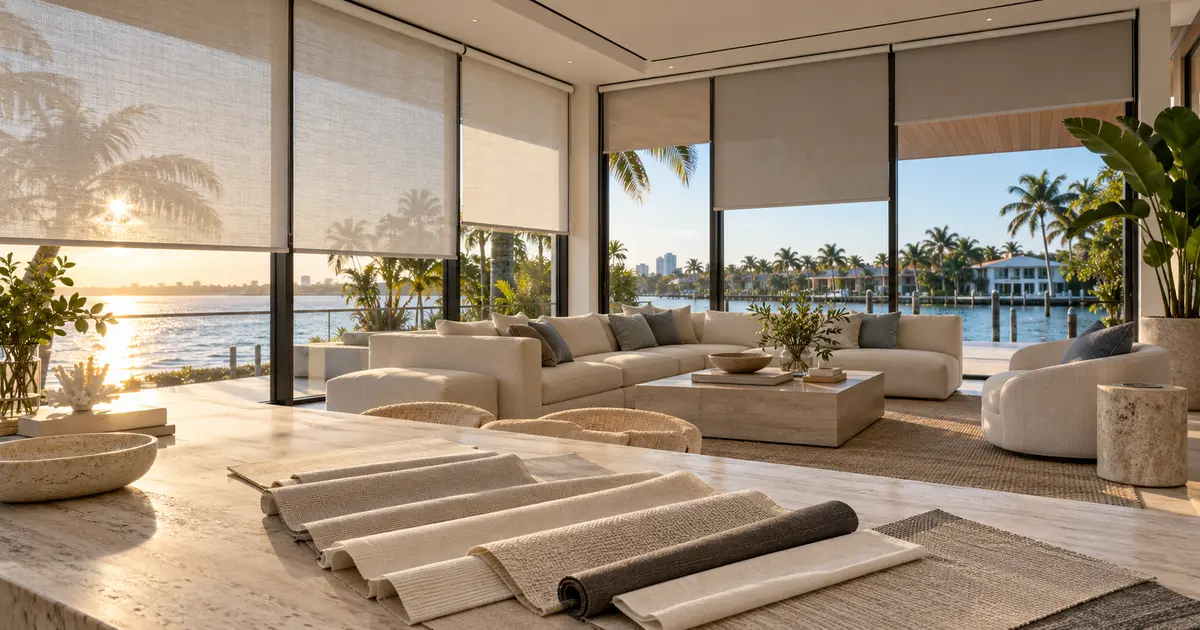
The fabric in a motorized shade determines far more than color. It affects glare, privacy, heat, daytime views and how a room feels after dark. In South Florida, strong sun, reflective water and large glass openings make fabric selection one of the most important decisions in a Lutron shade project.
A good specification starts with the room, exposure and desired experience—not with a sample that looked attractive under showroom lighting. For design and installation help, visit Sentry Audio Video’s Lutron motorized shades page or call (561) 717-3280.
Begin with the problem each window must solve
One home may need several fabric strategies. A waterfront great room may prioritize preserving the daytime view while reducing glare. A bedroom may need room darkening. A street-facing bath may require privacy throughout the day. An art-filled gallery may need stronger light control than an informal sitting area.
List the priority for every opening: view, privacy, glare reduction, heat management, room darkening or a combination. Note the direction the glass faces and when the problem occurs. Morning sun on an east elevation behaves differently from late-afternoon sun on west-facing glass.
Understand openness without treating it as a single answer
Solar shade fabrics are often described by an openness factor. More open fabrics generally preserve a clearer outward view and admit more visible light. Tighter fabrics generally reduce glare and improve daytime privacy, but they can make the view less distinct. Color, weave and lighting conditions also change the result, so the percentage alone is not enough.
Evaluate samples against the actual window at the time of day that causes the most discomfort. A fabric viewed on a table cannot reproduce the contrast between a bright exterior and a dim interior. For important rooms, compare larger samples rather than deciding from a small swatch.
Plan privacy for both day and night
Many solar fabrics provide useful daytime privacy because the exterior is brighter than the room. That relationship reverses at night when interior lights are on. A fabric that obscures the interior during the afternoon may allow silhouettes or clear views from outside after sunset.
Bedrooms, baths and street-level rooms may need a room-darkening shade, a dual-shade arrangement or another privacy layer. Discuss how the space is used, whether nearby properties overlook the glass and whether occupants want the shade to close automatically at sunset.
Separate glare control from total darkness
A television room does not always require blackout fabric. The objective may be to reduce reflections enough for comfortable daytime viewing while retaining some natural light. A dedicated theater or bedroom may have a different requirement. Match the fabric to the screen position, glass orientation and expected viewing hours.
Room-darkening material also requires attention to the sides, top and bottom of the opening. Light can leak around the fabric even when the material itself is opaque. Side channels, fascia, pockets and careful measurement can improve the result, but they must be coordinated with the architecture early.
Consider heat and ultraviolet exposure realistically
Interior shades can reduce solar discomfort and help manage fading, but they do not turn ordinary glass into a complete thermal barrier. Glass type, coatings, exterior exposure, fabric color and air movement all affect performance. A shade plan should support the glazing and HVAC strategy rather than substitute for it.
Darker fabrics often improve the outward view because the eye sees less reflection on the interior face. Lighter fabrics can reflect more solar energy toward the glass and may feel visually softer in pale interiors. The correct choice depends on the room, the exterior view and the designer’s finish palette.
Coordinate fabric with lighting and automation scenes
Shades and lighting work best when planned together. A morning scene might raise selected shades and bring interior lights to a comfortable level. An afternoon glare scene may lower only the west-facing shades. An evening privacy scene can close street-facing openings while leaving protected courtyard glass open.
These scenes should remain understandable. Occupants need simple keypad labels and predictable manual control even when schedules or sensors are used. Integrating shades with Lutron lighting control can coordinate daylight and electric light without making daily use complicated.
Account for rolls, seams and wide openings
Very wide or tall windows affect fabric selection. Some materials have maximum widths, may require turned fabric or can show seams. Adjacent shades should align visually, and the design should consider how fabric rolls look at different heights. Corner glass and groups of doors deserve special attention so gaps and hardware do not undermine privacy.
The shade pocket, fascia and hembar should be selected with the fabric and architecture. If the design team waits until finishes are complete, the available options may become limited. Early coordination protects clean lines and service access.
Use a room-by-room sample schedule
Create a schedule listing room, window orientation, fabric collection, color, openness or room-darkening type, roll direction and control method. Note whether adjacent shades must move together and which scenes include them. This document helps the owner, designer, electrician and integrator review the same decisions before ordering.
Keep approved samples or clear photographs with the project records. If a shade is damaged years later, the original information makes replacement and color review easier.
Questions to answer before ordering
- Which matters most at this opening: view, privacy, glare or darkness?
- When does direct sun reach the glass?
- Will nighttime privacy require a second layer?
- Does the room contain televisions, artwork or finishes sensitive to light?
- Are pockets, fascia, side channels and power already coordinated?
- Have full-size samples been viewed at the actual window?
Choose fabric as part of the complete shade system
Sentry Audio Video is an authorized Lutron dealer and helps clients coordinate shade fabrics, power, controls and lighting scenes for South Florida homes. The best result balances daylight, privacy and architecture across the entire residence.
Plan a Lutron shade consultation: call (561) 717-3280 or contact Sentry Audio Video.