A surveillance system is only useful when it captures a clear, usable image at the moment your business needs evidence. A camera that appears online can still have a dirty lens, an obstructed view, incorrect time settings, weak nighttime coverage, or recordings that are no longer being retained. Professional commercial camera maintenance Palm Beach County businesses schedule regularly helps prevent those failures before they become a security, liability, or operational problem.
For offices, retail locations, hospitality properties, medical practices, communities, warehouses, and high-value commercial facilities, camera maintenance is not a one-time task completed after installation. It is an ongoing performance service. The goal is simple: every camera should deliver the right view, at the right quality, with footage available when authorized personnel need it.
Why Commercial Surveillance Systems Need Ongoing Care
Commercial surveillance equipment operates continuously in demanding conditions. South Florida heat, humidity, salt air near the coast, rain, landscaping activity, insects, and construction dust can all affect camera housings, lenses, connectors, and image quality. Outdoor cameras may gradually shift from their intended field of view after weather events or routine property work. Indoor cameras can be blocked by signage, displays, décor, or operational changes that were not present when the system was designed.
The less visible issues can be just as serious. Storage drives age, recording settings can be changed accidentally, network performance can fluctuate, and firmware updates may be required to protect reliability and security. If nobody is reviewing the system, a problem can remain unnoticed for weeks or months.
A maintenance plan turns surveillance from a passive installation into an actively managed security asset. It provides a disciplined process for checking image quality, recording health, camera placement, remote access, and the condition of the infrastructure supporting the system.
What Commercial Camera Maintenance Should Include
A meaningful service visit goes beyond confirming that a camera has power. It should assess the system from the camera lens through to recording, retrieval, and authorized viewing.
Camera Cleaning and Image Verification
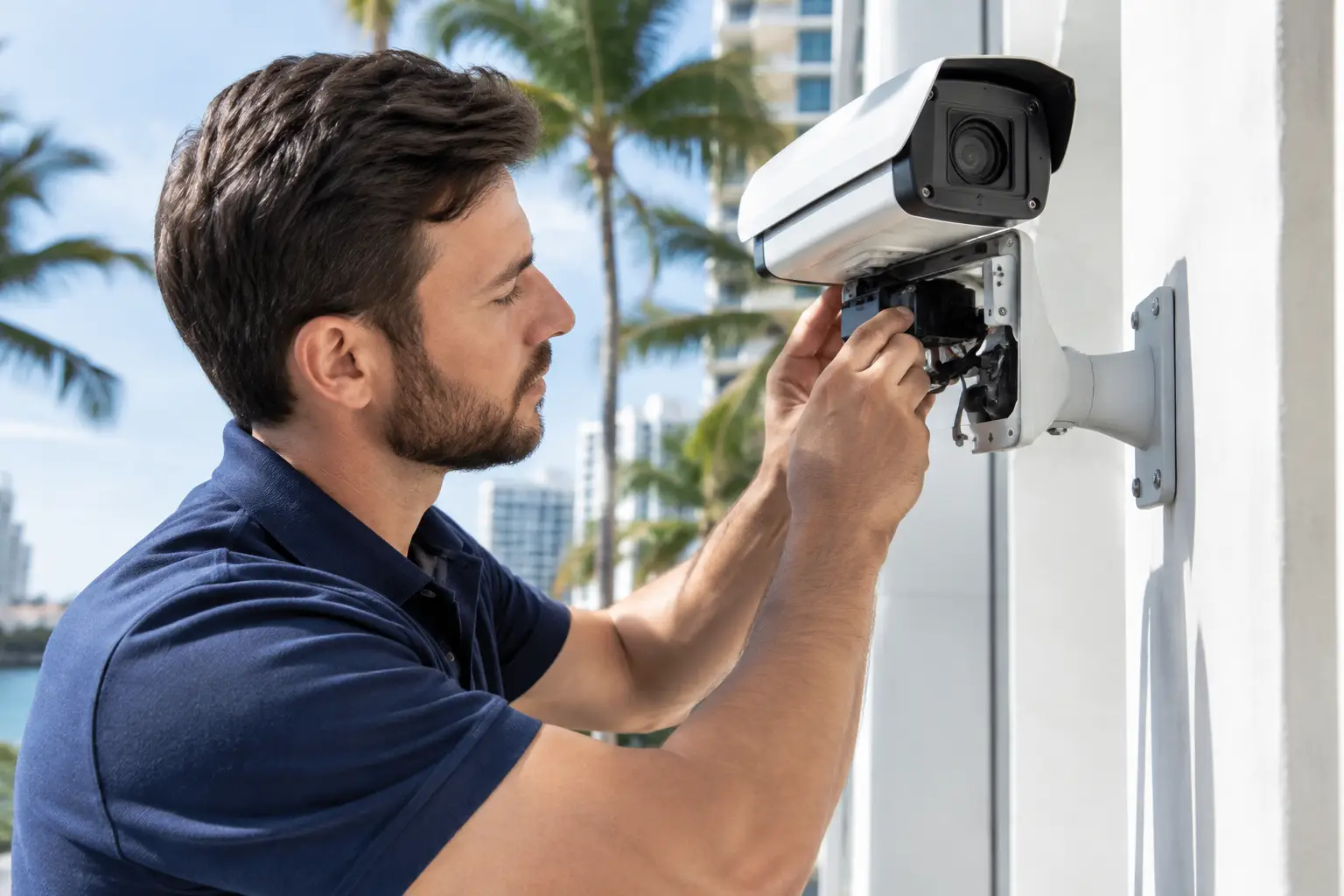
Technicians inspect lenses, domes, housings, mounts, and weather seals. Even a thin film of dirt, moisture residue, or spiderwebs can reduce detail and create glare at night. Cameras should be cleaned with appropriate materials so their protective surfaces are not damaged.
Each view should then be evaluated for what it is intended to capture. Can the camera clearly cover an entry point, loading area, point of sale, corridor, parking area, or perimeter gate? Are faces, packages, vehicles, and activity visible at the necessary distance? A live image may look acceptable on a small screen while still lacking the detail needed for an investigation.
Field-of-View and Lighting Checks
A business changes over time. New furniture, landscaping, seasonal displays, delivery containers, and tenant improvements can all create blind spots. Maintenance provides an opportunity to confirm that camera angles still support the property’s current operations.
Daytime and nighttime performance deserve separate review. Direct sunlight, reflections from glass, headlight glare, and uneven exterior lighting can affect image quality. Infrared illumination may be insufficient for a large exterior area, while nearby reflective surfaces can cause excessive glare. The right solution depends on the location and camera model. Sometimes a minor adjustment resolves the issue; other situations call for improved lighting, a relocated camera, or a camera selected for more demanding conditions.
Recording, Retention, and Retrieval Testing
Footage is valuable only if it is actually recording and can be retrieved quickly. Maintenance should include checks of recording status, storage capacity, drive health, retention settings, and timestamp accuracy. A system may show live video from every camera while one or more channels fail to record properly.
Retention requirements vary by business. A retail store, professional office, private community, and hospitality property may have different needs based on traffic volume, risk exposure, operational policies, and available storage. Higher resolution and continuous recording can provide more detail, but they also consume more storage. Motion-based recording may extend retention, yet it must be configured carefully so activity is not missed. This is why system settings should be reviewed as part of a larger security strategy rather than treated as a default checkbox.
A professional visit should also include testing the process of locating and exporting relevant footage. During an incident, staff should not have to guess whether a recording is available or struggle to find it under pressure.
Network, Power, and Remote Access Review
Modern commercial camera systems depend on more than cameras and a recorder. They also rely on structured cabling, network switches, power protection, and properly configured remote access. An intermittent connection can create dropped video, delayed alerts, or cameras that disappear from the system without warning.
A maintenance review can identify unstable connections, power issues, overloaded network components, and equipment operating outside recommended conditions. It also provides an opportunity to confirm who has access to the system. Former employees, vendors, and outdated user accounts should not retain visibility into a business’s security cameras.
Remote viewing is valuable for owners and managers who oversee multiple locations or travel frequently. However, it must be configured with account controls, secure credentials, and a clear understanding of who can view live and recorded video. Convenience should never come at the expense of system oversight.
Signs Your Camera System Needs Service Now
Many camera issues are subtle at first. A proactive inspection is preferable, but certain symptoms deserve prompt attention. These include blurred or hazy video, recurring offline cameras, missing recordings, incorrect timestamps, unusually short retention periods, distorted night images, water inside a camera housing, alerts that no longer arrive, or new areas of the property that are not adequately covered.
Do not assume the issue is limited to the camera displaying the problem. A single offline device could point to a cabling concern, network switch issue, power problem, recorder configuration error, or broader infrastructure weakness. Proper diagnosis protects against repeat service calls and helps preserve the integrity of the full surveillance environment.
How Often Should a Business Schedule Maintenance?
The right interval depends on the property, environment, number of cameras, and how critical the system is to daily operations. Many commercial properties benefit from a scheduled professional review at least once or twice each year, with additional inspections after major storms, renovations, landscaping changes, or security incidents.
Locations with heavy public traffic, exposed exterior cameras, waterfront conditions, multiple buildings, or strict documentation needs may require more frequent attention. A quieter office with protected interior cameras may need a different service schedule. The key is establishing a documented maintenance approach that reflects the real demands placed on the system.
Between scheduled visits, designated staff can help by reporting image changes, camera obstructions, app access problems, or unusual recorder notifications promptly. That operational awareness complements professional maintenance without replacing the need for technical inspection and system testing.
The Value of One Accountable Technology Partner
Camera performance is closely connected to the broader technology environment. A surveillance issue may involve network infrastructure, cabling, power protection, access control coordination, or the way management teams receive alerts and review recordings. Working with a qualified integration partner creates clearer accountability because the entire system is evaluated as a connected solution.
Sentry Audio Video designs and maintains commercial surveillance environments with the same attention to clean execution, dependable performance, and ongoing support that businesses expect from a trusted technology partner. The focus is not simply on adding more cameras. It is on ensuring that every component works together to protect the people, property, and operations that matter to your organization.
A well-maintained camera system rarely calls attention to itself. It quietly delivers clear coverage, dependable recordings, and confidence that when a question arises, the footage will be there.