A parking garage incident rarely comes with a clear description. A resident may remember a vehicle color, an approximate time, or a direction of travel. Without usable video, the board is left with unanswered questions, frustrated homeowners, and little evidence to provide law enforcement or insurance representatives. A properly planned HOA parking garage camera upgrade Fort Lauderdale communities can rely on changes that outcome.
For condominiums and managed communities, the goal is not simply to place more cameras on the ceiling. It is to create dependable coverage at the points where vehicles, people, and incidents move through the property – while protecting privacy, keeping footage accessible, and making the system practical for authorized managers to use.
Why Garage Surveillance Requires Its Own Design
Parking garages present a different security challenge than a lobby or amenity space. Lighting changes dramatically between daylight at the entrance and the darker levels inside. Headlights can wash out an image. Concrete columns create blind spots, and vehicles move through gates faster than many older systems can capture clearly.
Fort Lauderdale properties also contend with heat, humidity, wind-driven rain, and, in coastal locations, salt exposure. Equipment selection, mounting methods, cable pathways, and enclosure ratings all affect long-term performance. A camera system that looks adequate at installation can become unreliable if these conditions were treated as an afterthought.
The right design starts with the questions a board actually needs answered: Can management identify a person entering from the elevator lobby? Can a vehicle be followed from the gate to its parking area? Is the image usable when a car enters at night with headlights on? How long is recorded footage retained, and who has access to it?
Start With Coverage, Not Camera Count
A proposal based only on the number of cameras can be misleading. Ten poorly placed cameras may leave more uncertainty than six cameras positioned around the property’s actual risk points. A professional site assessment maps traffic patterns, sight lines, existing infrastructure, light levels, and areas where incidents have occurred.
Prioritize entrances, exits, and transitions
Vehicle gates and garage entrances should receive close attention because they establish a record of who entered and left. Coverage should also extend to pedestrian doors, elevator lobbies, stairwells, visitor areas, loading spaces, and routes between the garage and residential building.
It may not be necessary to monitor every parking stall at the same level of detail. For many associations, the stronger approach is to establish clear coverage of drive lanes and key transitions, then add targeted views for bicycle storage, package areas, access-controlled doors, or locations with a documented history of damage or unauthorized entry.
Eliminate blind spots created by structure and lighting
Concrete columns, low ceilings, ramps, and mechanical equipment can obstruct views in ways that are not obvious on a floor plan. Camera placement should be verified from the perspective of the recorded image, not just the installer’s ladder position.
Image quality also depends on lighting. Cameras with low-light capability can improve visibility, but they cannot correct every poorly lit corner or extreme contrast at a garage entry. In some cases, improved lighting or carefully positioned supplemental illumination produces a more useful result than adding another camera alone.
Image Quality Must Match the Evidence You Need
A wide-angle overview camera is valuable for showing activity across a larger area. It may not be the right choice for identifying a face or reading a license plate at distance. This is where camera selection should follow the intended use of each view.
A garage design often combines overview cameras with more focused cameras at access points. The objective is to capture context and detail: where a vehicle traveled, which door a person used, and whether a readable identifying image is available at the moment it matters.
License plate capture deserves particular care. Plates are affected by vehicle speed, angle, glare, headlights, shadows, and mounting height. A standard overview camera pointed toward a gate may record a vehicle entering but still fail to produce a readable plate. If plates are a requirement, the system should be engineered and tested for that specific task.
Upgrade the Recording System Along With the Cameras
New cameras connected to an aging recorder can create a performance bottleneck. Recording capacity, processing capability, storage health, and network bandwidth should all be reviewed as part of the project. Otherwise, an association may invest in higher-resolution images only to discover that footage is overwritten too quickly or playback is slow when an incident occurs.
Retention requirements vary. A smaller community with limited activity may be comfortable with a shorter retention window, while a high-rise with active visitor traffic, valet operations, or recurring incidents may need more recorded history. The decision should account for the number of cameras, image resolution, motion activity, recording settings, and the association’s policies.
Remote viewing is also useful, but it requires discipline. Authorized board members, property managers, and security personnel should have defined user roles rather than shared credentials. Access should be removed when management personnel change, and the system should maintain a record of significant user activity where appropriate.
Connect Cameras to Gates, Doors, and Operations
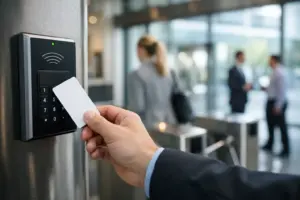
A garage camera upgrade has greater value when it supports the property’s existing access-control and communications systems. A video view associated with a gate event, pedestrian door entry, or intercom call can give management a clearer timeline than separate systems operating in isolation.
That integration should be purposeful. Not every property needs every feature, and excessive notifications can cause staff to ignore alerts altogether. A well-designed system identifies meaningful events, such as an after-hours door opening, a gate held open beyond a set period, or activity in a restricted area.
For associations with a front desk or security staff, a clear monitor layout and simple operating procedures matter as much as the technology behind them. During an incident, personnel should be able to locate the relevant camera and time period without searching through an overly complicated interface.
Plan for Privacy, Policies, and Board Governance
Cameras should support safety and property protection without creating unnecessary privacy concerns. Garage surveillance typically focuses on common areas, entrances, exits, and shared access routes. Cameras should not be directed toward areas where residents have a reasonable expectation of privacy.
Before installation, the association should establish who may view live video, who can export footage, how requests are handled, and how long recordings are retained. The board should also confirm applicable association documents, local requirements, and counsel guidance when needed. Clear policies protect residents and give management a consistent process when requests arise.
Visible signage may be appropriate depending on the property and its policies. Beyond notice, it can serve as a deterrent by showing that the garage is actively monitored.
What a Professional Upgrade Process Looks Like
An effective project begins with an on-site evaluation and a documented coverage plan. The design should identify camera locations, expected fields of view, network connections, recorder capacity, power requirements, and any coordination needed with gate, door, or building management systems.
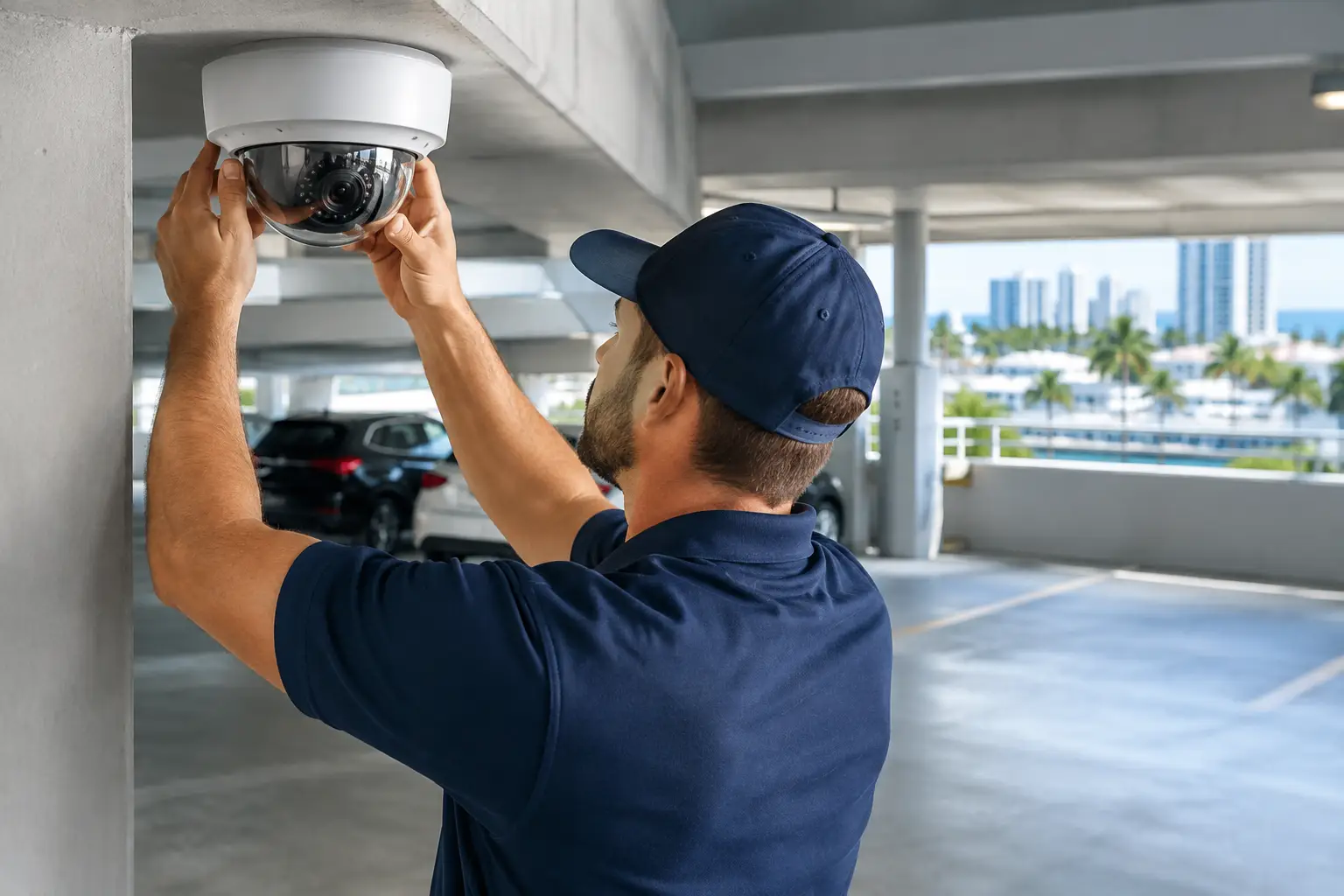
Installation quality is especially important in an occupied community. Clean cable routing, durable mounting, labeled equipment, organized racks, and coordinated work schedules reduce disruption and make future service easier. Once installed, every camera should be commissioned under real conditions, including nighttime viewing and garage-entry glare where applicable.
Sentry Audio Video approaches these projects as integrated property systems rather than isolated devices. That means evaluating the camera infrastructure, recording platform, network, and access points together, then providing a clear handoff so management knows how to use and maintain the investment.
When Replacement Is More Sensible Than Expansion
Some garages can be improved by adding coverage to a few problem areas. Others need a full replacement because the existing cameras no longer provide useful images, the recorder cannot support modern resolution, cabling is deteriorated, or the system lacks dependable service history.
The deciding factor is not age alone. If existing infrastructure can support higher-performing equipment and the layout is fundamentally sound, a phased upgrade may be appropriate. If the association is routinely unable to retrieve usable footage after incidents, a comprehensive redesign is often the more responsible choice.
A garage is one of the first and last shared spaces residents use every day. When its surveillance system is thoughtfully designed, footage becomes evidence instead of guesswork, managers gain a practical operational tool, and homeowners see that the association is taking protection of the property seriously. The next productive step is an on-site assessment that turns the garage’s real traffic patterns and vulnerabilities into a clear, accountable plan.