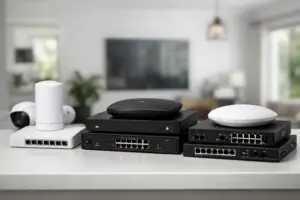
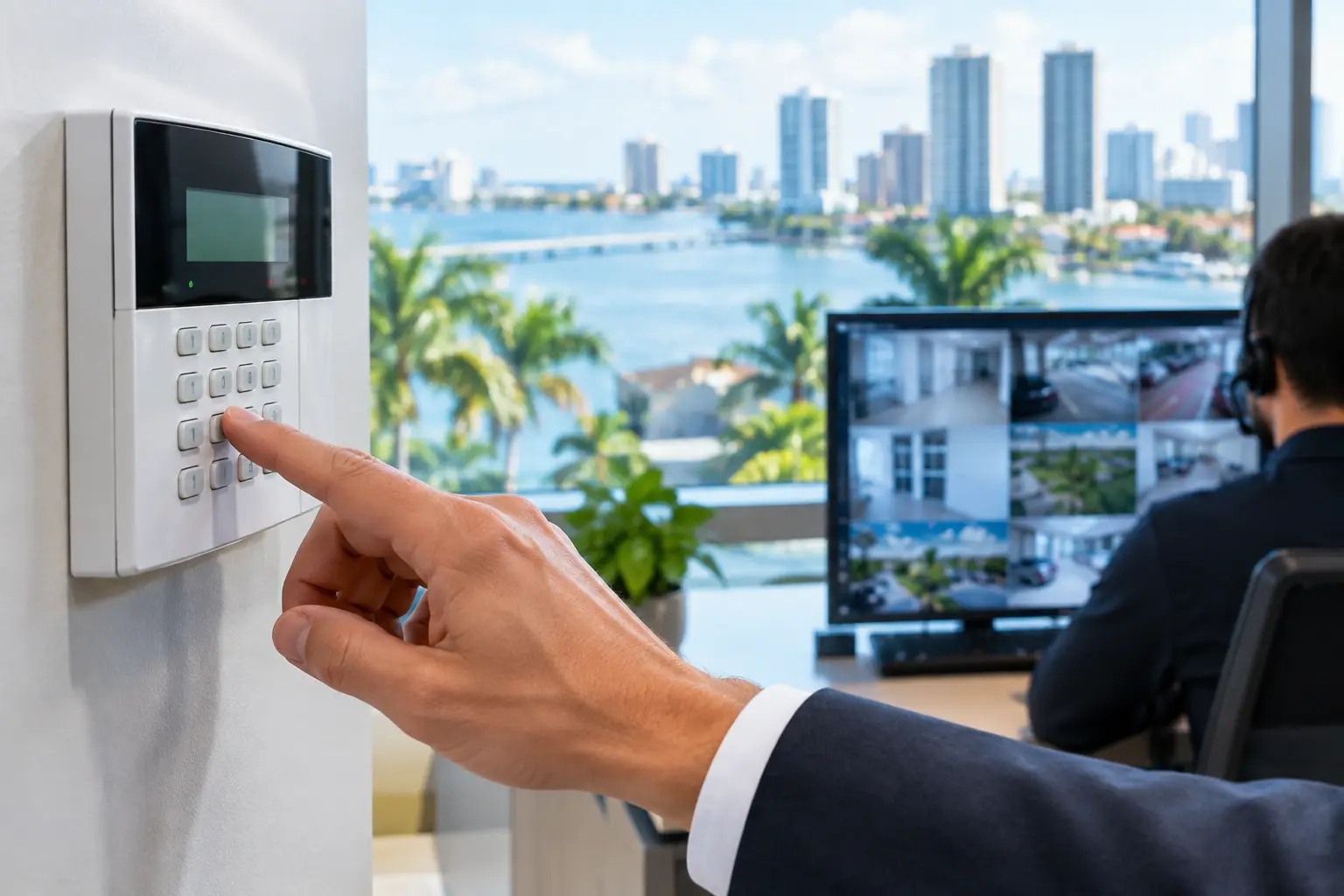
A break-in rarely happens at a convenient time. It happens after a storefront closes, during a holiday weekend, or while a manager is focused on serving customers. Commercial burglar alarm monitoring Fort Lauderdale businesses depend on is designed to make sure an intrusion signal does not go unnoticed when no one is on-site.
For a business owner, the value is not simply having a keypad by the door. It is having a professionally designed security system, properly installed sensors, a clear communication path, and a monitoring response process that supports the property long after closing time. The right solution protects inventory, equipment, sensitive records, and the people responsible for opening the business each morning.
What Professional Monitoring Actually Does
A commercial burglar alarm system detects conditions that may indicate unauthorized entry or activity. Door contacts can identify an opened perimeter door. Glass-break sensors can recognize the sound pattern of breaking glass. Motion detectors can cover interior areas once the system is armed. Specialized devices may also protect restricted rooms, cabinets, gates, or other high-value areas.
Monitoring begins when the alarm panel sends a signal off-site. A central monitoring station receives that event and follows an established response procedure. Depending on the event type, account instructions, and verification process, this can include contacting designated personnel and dispatching emergency responders when appropriate.
That distinction matters. A siren may deter an intruder or alert people nearby, but it cannot confirm that someone is paying attention. Monitoring adds oversight after the signal is transmitted. It gives business owners a defined response plan rather than relying on a neighbor, an employee, or chance to notice an alarm.
Why Fort Lauderdale Businesses Need a Site-Specific Design
There is no single alarm layout that fits every commercial property. A Las Olas retail location with a glass storefront has different exposure points than a professional office suite, warehouse, medical practice, marina operation, or hospitality venue. The system should reflect how the building is used, where people enter, what must be secured, and when the property is vacant.
A thoughtful assessment considers more than exterior doors. It reviews rear entrances, loading areas, rooftop or side access, interior offices, storage rooms, equipment closets, and locations where employees may enter early or leave late. The goal is to create meaningful protection without making daily operation unnecessarily complicated.
Fort Lauderdale’s climate also makes installation quality relevant. Outdoor devices, gate contacts, enclosures, cable pathways, and communications equipment need to be selected and installed for their environment. Clean workmanship is not only about appearance. Protected wiring, correctly placed devices, and reliable equipment connections can reduce service issues and help the system perform as intended.
The Components That Shape Reliable Protection
An alarm system is only as dependable as its complete design. The control panel, detection devices, communication method, backup power, programming, and monitoring account all need to work together.
Perimeter and Interior Detection
Perimeter protection provides the first alert when a protected door or window is opened. Interior motion detection adds another layer if someone moves through an armed area. In many commercial settings, using both is more effective than relying on either one alone.
Placement is critical. A motion detector should be positioned around actual travel paths, not installed simply because a floor plan has an open wall. Doors that employees use every day require programming and procedures that allow the business to operate efficiently while keeping unapproved access visible.
Communications and Backup Power
An alarm signal must have a reliable route to the monitoring station. Depending on the property and system design, this may include cellular communication, internet-based reporting, or multiple paths for added continuity. A single communication path may be appropriate for one site, while a higher-risk property may warrant redundancy.
Backup battery capacity also deserves attention. Power disruptions can occur during storms, utility work, or building incidents. A properly maintained backup power source helps the system continue reporting during a temporary outage. It should be tested as part of an ongoing service plan rather than treated as a set-it-and-forget-it component.
Clear User Management
Many false alarms are tied to everyday use, not equipment failure. Employees may enter with an incorrect code, forget to disarm the system, or fail to secure a door before arming. Individual user codes, clear authority levels, and staff training help create accountability.
When an employee leaves, their code should be removed promptly. When a manager changes, the call list and response instructions should be updated. These operational details are often as important as the sensors themselves.
Commercial Burglar Alarm Monitoring in Fort Lauderdale Works Better When Integrated
For many businesses, the strongest security plan connects alarm monitoring with video surveillance and access control. Each system has a different role, and together they give decision-makers clearer information.
Video surveillance can provide visual context around an alarm event, allowing authorized users to review activity at a door, lobby, register area, or loading zone. Access control can document who used a credential and when, while allowing managers to control entry to employee-only areas. The burglar alarm system remains focused on detecting unauthorized conditions and communicating events for response.
Integration should be purposeful, not added for the sake of complexity. A small office may need monitored intrusion protection, a few well-positioned cameras, and managed employee access. A larger multi-tenant or high-value property may need more detailed partitions, scheduled arming, controlled access points, and tailored notification rules. The right approach depends on the property, the risk profile, and the people responsible for daily operations.
Sentry Audio Video designs commercial systems as part of a broader technology plan, helping business owners avoid the disconnected equipment and unclear responsibilities that can emerge when each system is handled separately.
Questions to Ask Before Choosing a Monitoring Solution
Before approving a commercial security proposal, business owners should be able to get direct answers to a few practical questions:
- Which doors, windows, rooms, and exterior areas are being protected, and why?
- How will alarm signals reach the monitoring station if primary communications are interrupted?
- Who receives notifications, and what is the process for updating contacts and response instructions?
- How will employees arm and disarm the system during normal operating hours?
- What service, testing, inspection, and support options are available after installation?
Also ask whether the system can grow with the business. A tenant improvement, new storage area, expanded office, or added access point can change the security plan. Selecting an expandable platform can make future changes more organized and cost-effective than replacing disconnected components later.
Avoiding the Two Common Gaps: False Alarms and Neglected Maintenance
A security system needs careful programming to balance detection with practical use. Overly sensitive devices, poorly selected sensor locations, and unclear arming procedures can create false alarms that frustrate employees and drain management attention. On the other hand, reducing sensitivity too far can leave meaningful exposure points unprotected.
The answer is not one setting for every property. It is a professional walkthrough, correct device selection, and a realistic review of how the staff uses the space. If a delivery team regularly accesses a rear entrance at changing hours, the system should account for that workflow without leaving the area unmanaged.
Maintenance matters as well. Batteries age, contact alignment can shift, construction can alter protected areas, and employee turnover changes the user list. Periodic testing and service help identify these issues before the business needs the system most.
A Security Plan That Supports the Way You Operate
Commercial burglar alarm monitoring should give business owners confidence without adding unnecessary friction to the workday. The strongest systems are easy for authorized staff to use, difficult for intruders to bypass, and supported by professionals who understand the entire installation.
A property assessment is the right place to start. Walk the site, identify the real exposure points, define the response plan, and build protection around the way your business operates. When the last employee locks up for the night, that preparation should still be working for you.