A lobby door that is propped open after a delivery, a resident who has lost a fob, or a vendor arriving after hours can create more than a minor inconvenience. For communities evaluating Brivo access control for Fort Lauderdale condominiums, the goal is not simply replacing keys. It is creating a controlled, accountable entry experience that works for residents, management, staff, and guests.
Condominiums in Fort Lauderdale face a particular mix of demands. Many have active seasonal occupancy, frequent visitors, package deliveries, amenity spaces, service personnel, and multiple entry points from garages to pool gates. A properly designed access control system gives property leadership greater visibility while making day-to-day access easier to manage.
What Brivo Access Control Changes for a Condominium
Brivo is a cloud-based access control platform designed to centralize how a property grants, changes, and reviews access. Instead of relying on a growing collection of metal keys or standalone door systems, authorized administrators can manage credentials, schedules, and door activity from a connected platform.
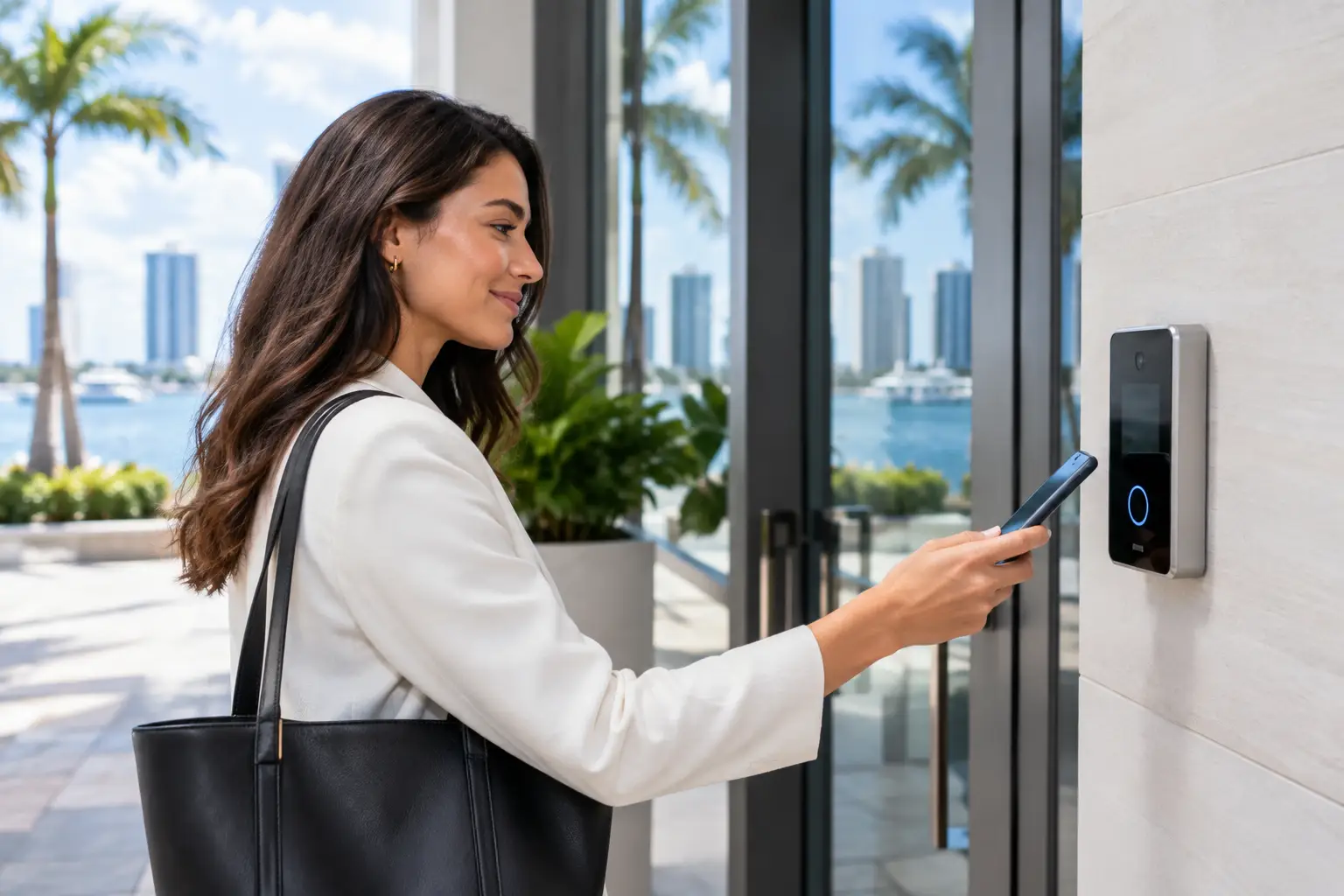
That matters when a resident moves out, a contractor needs access for a limited period, or a building employee changes roles. Credentials can be added, adjusted, or removed without the disruption of rekeying every affected lock. Depending on the system design, residents and staff may use mobile credentials, key fobs, cards, or a combination of these options.
For a condominium board or property manager, the value is practical: fewer manual workarounds, clearer records, and a more consistent security policy across the property. For residents, it can mean less friction at the doors they use most often, without sacrificing the professional appearance expected in a well-managed building.
Where Access Control Delivers the Most Value
The right starting point is rarely every door in the building. It is the doors and gates where a lapse in control would have the greatest effect on residents, operations, or liability. A site assessment should identify how people actually move through the property, not just where doors happen to be located.
Main Entrances and Lobbies
The front entrance is often the first priority. Brivo can help staff manage resident access while maintaining appropriate controls for guests, deliveries, and service providers. If the lobby includes a call box, reception desk, or concierge operation, those components should be considered as part of one coordinated entry workflow rather than separate systems competing for attention.
Garage, Pedestrian Gates, and Perimeter Access
Garages and side gates are commonly overlooked because they may feel less formal than a lobby entrance. Yet they can be high-traffic access points, especially in communities with assigned parking, shared garages, or waterfront and poolside pedestrian paths. Controlled credentials and defined schedules help management align access with the way these areas are used.
Amenities and Shared Spaces
Fitness rooms, clubrooms, rooftop areas, package rooms, storage corridors, and pool gates each require different access rules. A resident may need around-the-clock lobby access but only daytime access to a staffed amenity. Separating these permissions supports the resident experience while helping protect spaces that require oversight.
Service and Mechanical Areas
Maintenance rooms, telecom closets, management offices, and building operations areas should not share the same access model as resident common areas. Brivo can support role-based access so that employees and approved vendors receive access only where and when it is needed. This is particularly valuable when multiple outside service firms work on-site over the course of a year.
Design Before Devices
Access control is not a reader mounted beside a door. Reliable performance depends on the complete system: door hardware, locking method, power, emergency egress, network connectivity, controllers, credentials, and management procedures. A premium condominium deserves a design that accounts for all of them from the beginning.
For example, the choice between an electric strike, magnetic lock, electrified lever, or other locking solution depends on the existing opening, fire and life-safety requirements, desired appearance, and how the door must operate during a power event. A gate requires different planning than an interior clubroom door. Historic finishes, glass entrances, salt-air exposure, and high wind conditions can also influence equipment selection and installation methods in South Florida.
Network planning deserves the same attention. Cloud-managed access control relies on dependable communications, but the system must also be designed thoughtfully around controller location, network security, battery backup, and the building’s operational requirements. A qualified integrator coordinates these details with property management, IT personnel, door professionals, and other project stakeholders instead of treating them as afterthoughts.
Building a Credential Policy That Residents Will Accept
Technology does not replace policy. A condominium can install excellent access hardware and still create frustration if its credential rules are unclear or inconsistently enforced.
Start by defining the access groups that reflect real life at the property: residents, unit owners, tenants, building staff, board members, contractors, cleaning teams, real estate agents, and temporary guests. Then determine which doors each group needs, at what times, and who is authorized to approve changes. The policy should also cover lost credentials, move-ins, move-outs, emergency access, and contractor access after normal business hours.
Mobile credentials are attractive because residents are less likely to forget their phone than a separate fob. Still, a mixed approach is often sensible. Some residents prefer a physical credential, and staff may need durable fobs or cards suited to their daily work. The strongest design serves the community’s needs rather than forcing every user into one method.
Pairing Brivo With Video Surveillance
Access events are more useful when property management can evaluate what happened at an entrance. Integrating access control with professionally planned video surveillance can give authorized users a stronger operational picture of activity at key doors, gates, and amenity areas.
The goal is not to create an overwhelming volume of footage or alerts. It is to place cameras where they support real decision-making: capturing a face at an entry, viewing the approach to a gate, confirming activity in a package room, or assisting management during an incident review. Camera placement, lighting, retention requirements, and privacy considerations all deserve careful planning.
For communities with a staffed desk, access control and video can also support faster responses. Staff can follow established procedures for visitors and vendors while retaining a clearer record of who was granted access and when.
Questions a Board Should Ask Before Approving a System
A sound proposal should answer more than the price of hardware. Board members and managers should understand who will administer the platform, how credentials will be issued, what happens during power or network interruptions, and how the system will expand if the community adds doors or amenities later.
They should also ask whether existing doors and hardware are suitable for electronic access, whether fire and life-safety requirements have been reviewed, and how residents will be introduced to the new process. Training matters. A system that is technically capable but poorly handed off can leave management dependent on a single person or unsure how to handle routine changes.
Ongoing support is equally important. Condominium staffing changes, board transitions, and evolving security concerns are normal. The installer should provide clean documentation, organized labeling, administrator training, and a clear path for service when a door, credential, or network component needs attention.
A Professional Installation Protects the Property Experience
In a high-end building, visible workmanship matters. Reader placement should complement the entrance. Surface pathways should be minimized where possible. Equipment rooms should remain organized and serviceable. Most importantly, the completed system should operate predictably for the people using it every day.
Sentry Audio Video approaches access control as part of a broader property technology plan. That perspective is valuable when a condominium needs access control to work alongside surveillance, structured cabling, communications, and existing building infrastructure. The result should be a system designed for the property, not a collection of disconnected products.
The most effective next step is a walk-through with the people who understand the building’s daily realities: management, maintenance, front-desk personnel, and board representatives. Their experience will reveal which doors create the most risk, which routines create the most friction, and where Brivo access control can make a meaningful difference for the community.