A camera image on a monitor, an access reader that unlocks a door, and an alarm panel that powers on do not prove a security system is ready. Commissioning integrated security systems is the disciplined process of verifying that every device, connection, rule, alert, and user workflow performs as intended under real operating conditions.
For a luxury residence, that can mean confirming a gate event triggers the right camera view, alerts the correct household members, and preserves usable video. For a commercial property, it can mean ensuring access credentials, surveillance, communications, and life-safety procedures support staff without creating confusion at the door or in the security office. The difference is substantial: installation puts equipment in place; commissioning proves the completed system can be trusted.
Why Installation Is Not the Finish Line
Integrated security is built from interdependent components. Video surveillance relies on camera placement, network capacity, recording settings, power, time synchronization, storage retention, and remote access permissions. Access control depends on properly configured readers, locks, door contacts, request-to-exit devices, credentials, schedules, and emergency release behavior. If one part is configured incorrectly, the system may appear functional until the moment it is needed most.
Commissioning identifies these gaps before handover. It also protects the investment in a professionally designed system by confirming that the capabilities discussed during planning are actually delivered. A well-positioned camera is of little value if headlight glare obscures a license plate at night. A high-quality intercom is not fulfilling its role if a call cannot reliably reach the intended room, mobile device, or management station.
This work is particularly valuable in properties where security shares infrastructure with automation, networking, gates, distributed audio, outdoor entertainment, and communications. Integration should make the property easier to manage, not turn routine actions into a sequence of separate apps and uncertain alerts.
What Commissioning Integrated Security Systems Includes
The exact scope depends on the property, system design, and applicable code requirements. Still, professional commissioning generally follows a clear progression from documentation to field testing, integration validation, and client readiness.
Start With the Design Intent
Before testing begins, the integrator should review the approved plans, device schedule, coverage goals, control requirements, and operating expectations. This establishes a practical benchmark: What is each camera intended to see? Which doors require credentialed entry? Who receives alerts after hours? What should happen when a gate, door, or intrusion condition is detected?
This stage matters because the goal is not simply to test every device in isolation. The goal is to verify the completed system meets the property’s intended use. A waterfront home, a multi-entry office, a retail environment, and a managed residential building all require different priorities for coverage, access, notification, and administration.
Verify Physical Installation and Infrastructure
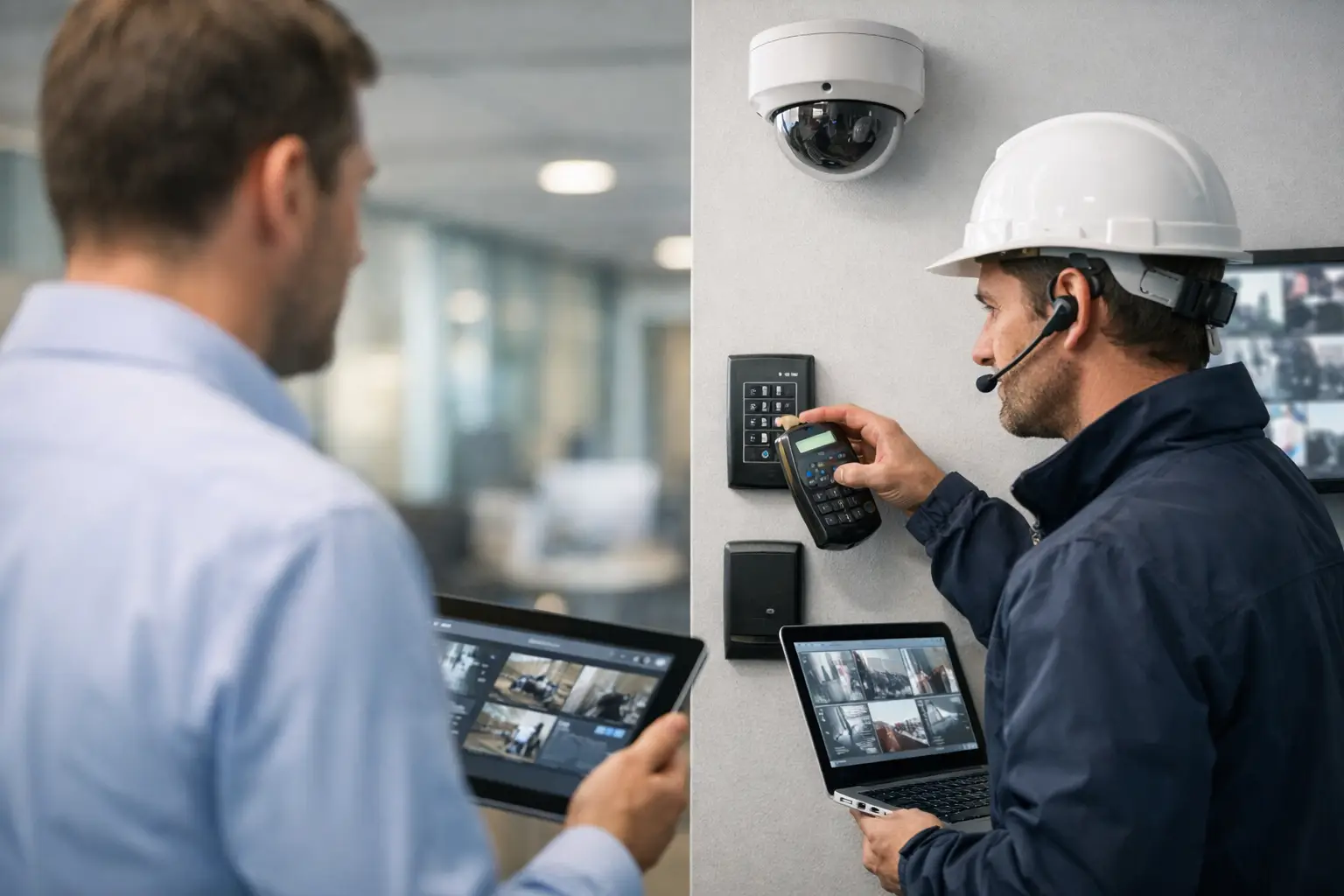
A clean installation supports long-term performance and serviceability. Technicians inspect device mounting, viewing angles, field of view, cabling terminations, equipment labeling, rack organization, ventilation, power protection, and network connections. They also confirm that cameras, sensors, readers, and control hardware are physically secure and accessible for future maintenance where appropriate.
For surveillance, visual verification is performed during the times that matter. Daytime images may look excellent while nighttime scenes reveal reflections, shadows, motion blur, or insufficient illumination. Exterior cameras near driveways, pools, docks, and perimeter areas deserve particular attention because changing weather and lighting conditions can affect practical visibility.
Test Every Function and Every Exception
Functional testing confirms normal operation, but exception testing is where confidence is earned. A door should be tested with valid credentials, invalid credentials, scheduled permissions, forced-open conditions, held-open conditions, and exit requests. The system should record the correct event and present useful information to the authorized user.
Camera verification includes live viewing, recording, playback, image quality, timestamp accuracy, motion or analytics settings where specified, and remote viewing permissions. Alarm-related devices are checked for proper status reporting, supervisory conditions, notifications, and interaction with the designated control platform. Where a fire alarm system is involved, testing and acceptance must follow the approved design, applicable authority requirements, and the responsibilities of properly qualified parties.
The team should also verify power-loss and recovery behavior. Equipment can respond differently after a brief outage, network interruption, or controller restart. A system that returns to normal operation without manual intervention is far easier to manage when a property is occupied, closed for the season, or operating after business hours.
Integration Testing Is Where Details Matter Most
The word “integrated” should mean more than having multiple systems installed at the same address. It means the systems exchange useful information and respond in ways that support the people using the property.
Consider a residential example: a visitor presses the gate station, the homeowner receives a clear call notification, sees the associated camera feed, speaks with the visitor, and grants access only when appropriate. The event is documented, and the owner is not left guessing which camera to open or whether the gate actually responded.
In a commercial setting, an access event may call up the relevant camera at a reception desk or security station. An after-hours door event can be paired with video verification and routed to the right contacts based on the property’s procedures. These workflows require intentional programming, permissions, timing, and testing. They should never be assumed simply because the individual products support integration.
Commissioning also evaluates the user experience. Controls must be understandable for residents, family members, staff, managers, and approved service personnel. A system can have impressive technical capabilities yet still fall short if common tasks are difficult to perform or alerts are so frequent that users begin ignoring them.
Network Performance and Cybersecurity Cannot Be Afterthoughts
Modern security systems depend on the network. High-resolution cameras, remote viewing, door controllers, intercoms, and automation interfaces all place demands on the underlying infrastructure. Commissioning verifies that the network is configured to support the system’s expected traffic and that recordings, live views, and control commands perform reliably.
Security also includes protecting the security system itself. Account roles should reflect real responsibilities. Default credentials should not remain in service. Remote access should be limited to authorized users, and the client should understand how access is administered when staff, tenants, or vendors change. The appropriate approach varies by property, but the principle is consistent: convenience should not create unnecessary exposure.
A qualified integrator will also review equipment updates, backup considerations, remote-support procedures, and ownership of administrative credentials. These details are less visible than a finished camera installation, but they are essential to maintaining control of the system over time.
Documentation and Training Turn Technology Into a Working Asset
A commissioning process should end with more than a final walkthrough. The client needs a clear record of the installed system and the knowledge to operate it with confidence. Documentation may include device locations, equipment details, camera naming, access groups, user roles, relevant network information, and service records.
Training should focus on the actions clients will actually take. Homeowners may need to review video, manage user access, answer an intercom call, and respond to a notification. Business owners and managers may need to issue credentials, run reports, investigate an event, adjust schedules, and know whom to contact when something appears out of order.
The right amount of training depends on the client. Some clients want a concise orientation and managed support. Others want designated staff members trained in day-to-day administration. Both approaches can work when responsibilities are clearly defined.
Plan for Ongoing Performance, Not Just Opening Day
Security needs change. A family may add household staff, renovate an outdoor area, or purchase a second property. A business may expand its team, change hours, add a tenant, or alter visitor procedures. Commissioning establishes a dependable starting point, while ongoing service keeps the system aligned with those changes.
Periodic reviews can catch cameras that have been blocked by landscaping, access permissions that no longer reflect current staff, storage settings that need adjustment, and equipment that requires attention. For clients in South Florida, seasonal occupancy and severe weather planning can also shape how alerts, remote access, and backup power considerations are managed.
Sentry Audio Video approaches this work as a complete responsibility, from system design and professional installation through final testing, training, and continued support. That single point of accountability is especially valuable when security, networking, communications, and property automation must work together.
Before relying on a new or upgraded security system, ask for a defined commissioning plan and a clear handover process. The most valuable result is not a wall of equipment or a collection of apps. It is the quiet confidence that your property is protected by a system that has been tested the way you will actually use it.