A lighting system should do more than turn fixtures on and off from a wall keypad. It should establish the right mood for dinner, provide safe paths through the property after dark, protect artwork from harsh light, and respond predictably every time. When clients compare Lutron vs Crestron Lighting, they are usually choosing between two premium approaches to a much larger goal: a property that feels refined, intuitive, and professionally managed.
Both manufacturers are respected names in high-performance integration. Both can support elegant keypads, custom scenes, occupancy response, motorized shades, and centralized control. The meaningful difference is not whether either platform can control lights. It is which platform should serve as the foundation of the system, how much broader automation is planned, and who will be responsible for engineering, programming, and supporting the finished installation.
Lutron vs Crestron Lighting: The Real Difference
Lutron is first and foremost a lighting and shading specialist. Its product development, control philosophy, and ecosystem are centered on creating dependable lighting experiences across residences, hospitality spaces, and commercial environments. In a high-end home, Lutron HomeWorks can manage large lighting loads, architectural fixtures, landscape lighting interfaces, and motorized window treatments through a purpose-built platform.
Crestron approaches lighting from the perspective of whole-property control. Lighting is one part of a broader automation environment that may also include distributed audio, video, climate management, surveillance, access control, conferencing, and custom user interfaces. Crestron lighting can be an excellent choice when a project calls for deep customization and a single control experience across many technologies.
That distinction matters because a lighting system stays in use long after the novelty of a new theater or outdoor audio system fades. It needs to be intuitive for family members, guests, employees, and property managers. The right selection begins with the daily experience, not simply the list of features.
Where Lutron Leads
For clients whose priority is exceptional lighting and shading performance, Lutron is often the natural starting point. The company has spent decades refining dimming behavior, load compatibility, keypad design, shade control, and reliability at scale. This focus shows up in the details that homeowners notice: lights that dim gracefully, scenes that recall consistently, and shades that move together without drawing attention to themselves.
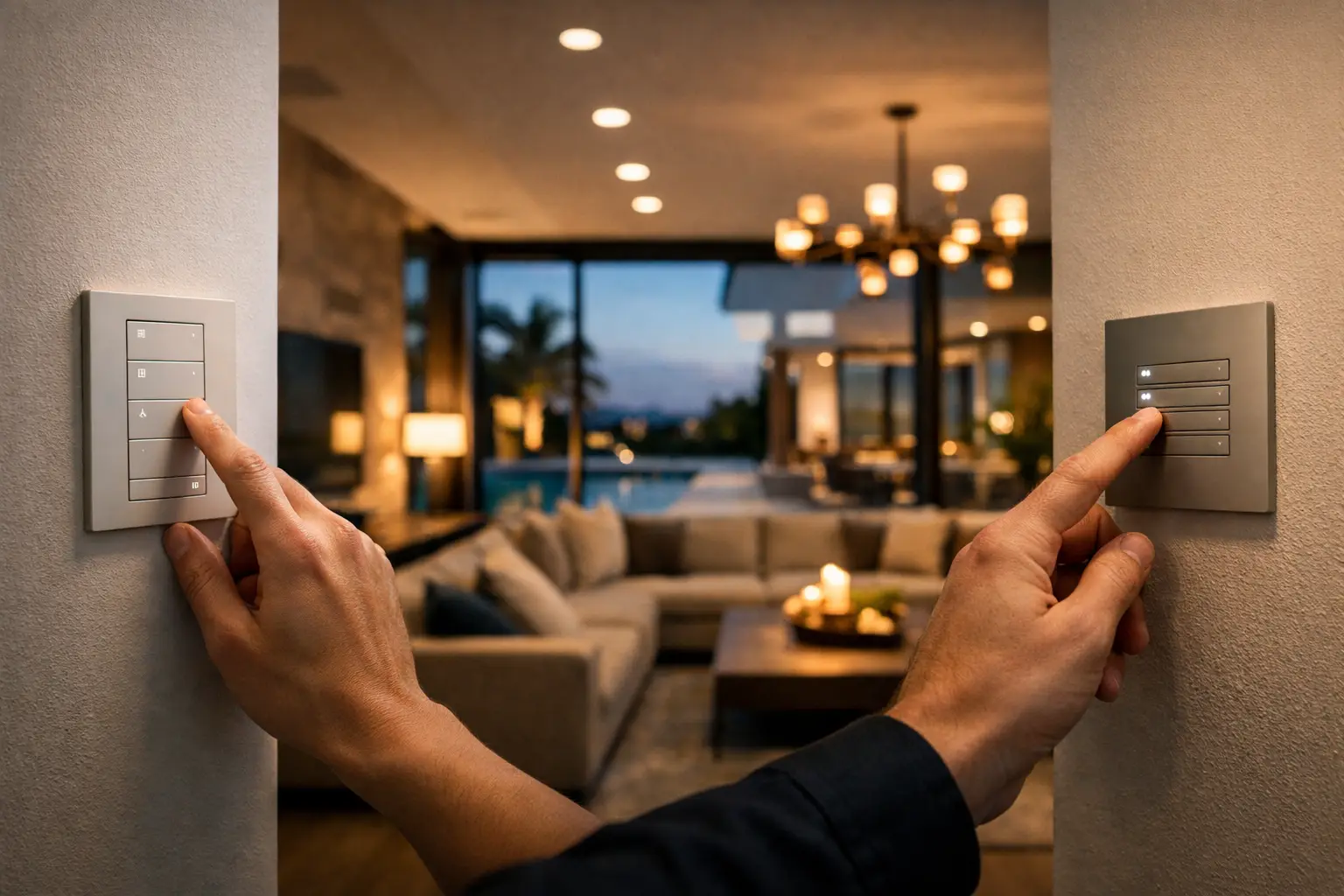
Lutron is particularly strong for homes with layered lighting design. A formal living room may include recessed fixtures, decorative pendants, art lighting, cove lighting, and landscape views framed by motorized shades. Each layer needs thoughtful control, and each scene should feel intentional rather than overly complicated. A properly designed Lutron system can make a complex room easy to operate through a few clearly labeled buttons.
The same advantage applies to demanding South Florida environments. In waterfront properties, shades are not merely decorative. They can help manage glare, privacy, and intense daylight while preserving views. Pairing automated shades with lighting scenes creates a more comfortable interior throughout the day, especially in rooms with expansive glass and changing sun exposure.
Lutron also offers an established path for clients who want to add advanced lighting control without making every other system dependent on one automation processor. That separation can be appealing in properties where lighting and shades must remain highly dependable regardless of what is happening with entertainment or other integrated technologies.
Where Crestron Leads
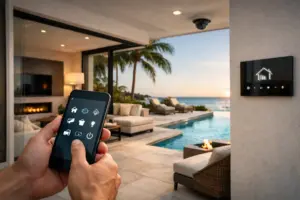
Crestron becomes especially compelling when lighting is expected to work as one highly customized part of a larger control strategy. A Crestron system can bring lighting, music, video, security, entry gates, cameras, and environmental controls into a common interface designed around the property and the client’s routines.
Consider a large estate with a theater, guest house, pool area, wine room, motorized shades, multi-zone audio, and controlled access points. A Crestron interface can present these systems in a coordinated way through touch panels, keypads, and mobile control. A single “Goodnight” command might set pathway lighting, turn off entertainment zones, lower selected shades, arm designated security partitions, and notify the owner if exterior doors are open. The value lies in the orchestration, not in the individual command.
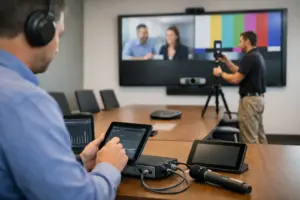
Crestron is also well suited to commercial properties that require custom operational workflows. A restaurant, office, showroom, or hospitality venue may need different lighting behavior by time of day, room occupancy, event mode, or staff access level. When control requirements go beyond standard scenes and schedules, a Crestron programmer can build an interface around how the business actually operates.
That flexibility requires disciplined design. Customization is valuable only when it simplifies use and makes future service clear. A crowded touch panel with dozens of unnecessary options is not a premium experience. The strongest Crestron projects give users the controls they need most while keeping advanced functions available to authorized staff or property managers.
The Case for Using Both Platforms
The decision is not always Lutron or Crestron. Many sophisticated projects use Lutron as the dedicated lighting and shading system while Crestron serves as the whole-home automation layer. In that arrangement, Lutron handles the specialized work of dimming and shade control, while Crestron can call Lutron scenes as part of broader property-wide commands.
This approach can deliver an elegant result for clients who want Lutron’s lighting pedigree and Crestron’s highly tailored control experience. For example, a homeowner may select an “Entertain” scene from a Crestron touch panel. Crestron can then trigger a Lutron lighting scene, set outdoor audio to a preferred level, activate television zones, and adjust shades in the main entertaining areas.
There are trade-offs. A dual-platform design adds coordination, programming, commissioning, and support considerations. It is not automatically the right answer for every property. But when a residence has extensive lifestyle, security, and entertainment requirements, assigning each platform the role it performs best can create a more polished experience.
Design Decisions That Determine Performance
Brand selection is only one part of the outcome. The quality of the lighting plan, the fixture specifications, the panel layout, the keypad locations, and the programming all affect how the system feels in daily use. A premium control platform cannot correct a poorly planned lighting design or an overloaded circuit strategy.
Start with how each space will be used. Kitchens, primary suites, galleries, outdoor living areas, and entry corridors all need different lighting behavior. A well-designed system provides appropriate scenes without forcing users to think through individual fixture groups. “Morning,” “Cooking,” “Dining,” “Relax,” and “Away” can be more useful than a long row of generic labels.
Keypad placement deserves equal attention. The most attractive keypad is still frustrating if it is located where people do not naturally reach for it. In larger homes, carefully placed keypads reduce the need to pull out a phone, and they remain useful for guests who are unfamiliar with the property. For commercial settings, wall controls should support staff workflows without allowing unauthorized changes to critical scenes.
Future planning is another reason to work with an experienced integrator. Renovations often begin with a defined scope, then expand to include shades, landscape lighting, pool areas, guest spaces, security, or additional entertainment zones. Proper infrastructure and documented system design make that growth far more manageable. Clean equipment racks, labeled wiring, and accessible service points are not background details. They are part of long-term system reliability.
Choosing the Right Platform for Your Property
Choose Lutron when lighting and shades are the central investment and you want a dedicated, refined platform with proven control of those systems. It is an excellent fit for properties where architectural lighting, daylight management, and dependable scene control are the primary priorities.
Choose Crestron when the property requires a deeply customized command center for many integrated systems, particularly when entertainment, security, access, communications, and operational workflows need to work together. It is a strong choice for owners who value a control environment designed around their exact routines.
Consider a combined approach when neither lighting nor whole-property automation should be treated as secondary. This is common in substantial residences and high-touch commercial environments where every system must perform as part of a coordinated experience.
At Sentry Audio Video, the planning conversation begins with how you live, work, entertain, and manage the property – then the technology is selected to support that vision. The right lighting platform is the one that feels natural on day one and remains dependable through years of use, updates, and expansion.