A front door should not be the point where your family has to make a rushed decision. When someone rings, a package arrives, or an unfamiliar person approaches the property, an integrated doorbell and intercom system gives you the information and control to respond with confidence. That is how integrated smart doorbells and intercoms keep your family safe: they turn the entry point into a monitored, managed part of your home rather than an exposed blind spot.
For high-value residences, this is about more than receiving an alert on a mobile device. A professionally designed system can connect video at the gate, front door, side entry, and interior touchscreens; communicate with family members throughout the house; and work alongside surveillance, access control, lighting, and automated gates. The result is a more informed response to every visitor, whether you are home, at work, or traveling.
How Smart Doorbells and Intercoms Keep Families Safe
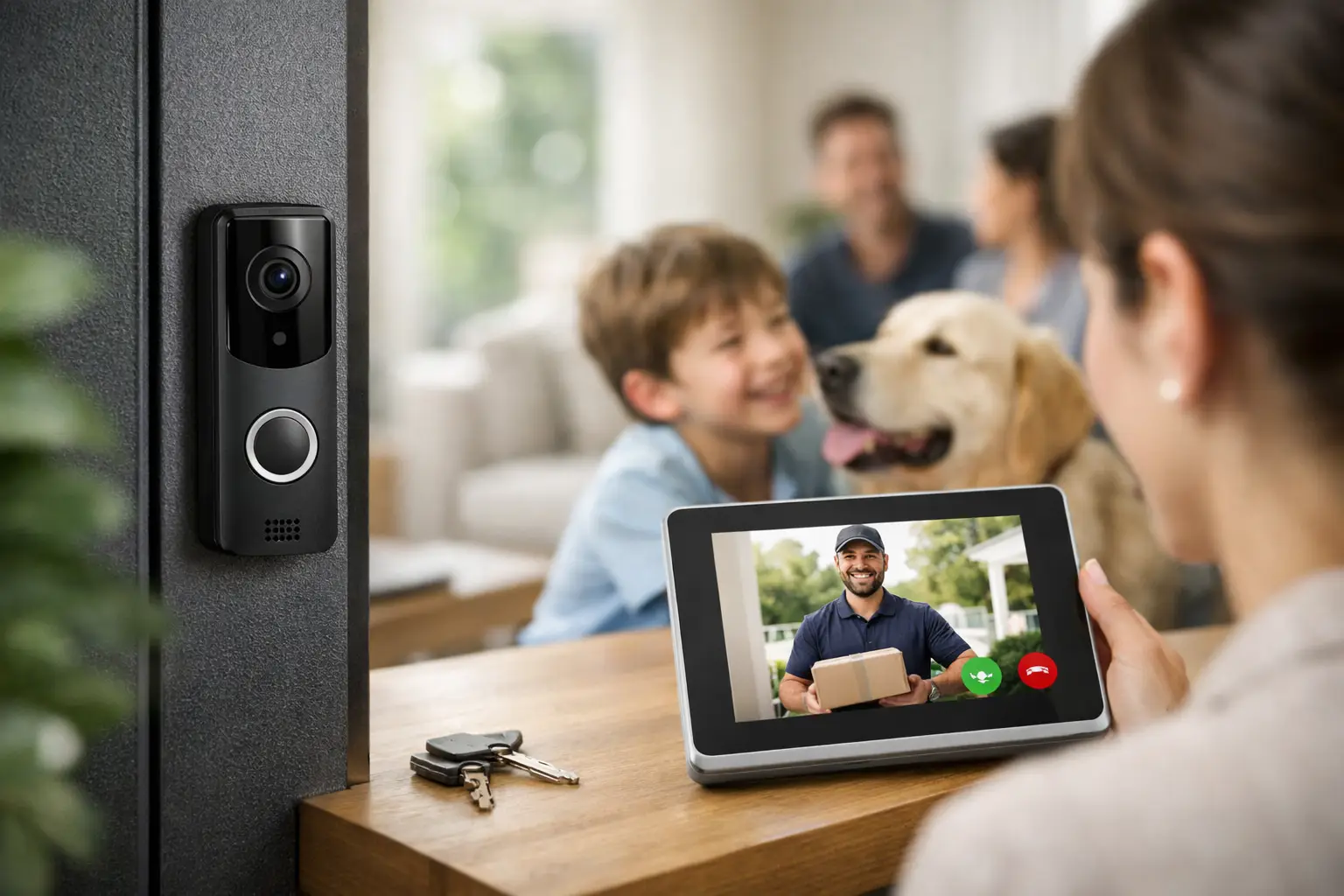
The first layer of protection is simple: you can see who is requesting access before opening a door or gate. High-definition video provides a live view of the visitor, while two-way audio lets you speak with them without stepping outside or revealing who is home. A delivery driver can be directed to a designated location. A contractor can be confirmed before entry. An unexpected visitor can be addressed from inside without opening the door.
That visibility matters most when it is available where your family naturally spends time. Instead of relying only on a phone alert that may go unnoticed, an integrated system can display visitor calls on in-wall touchscreens, indoor intercom stations, and selected televisions. Parents in the backyard, a family member in an upstairs bedroom, or a homeowner working in a study can answer the same call from the most convenient location.
For larger properties, the value extends beyond the front entrance. A visitor at a vehicle gate may need to be identified before they reach the home. A service entrance, dock, pool gate, or guesthouse may require separate monitoring and communication. Proper system design makes those locations part of one coordinated experience, with clearly labeled camera views and controls that are easy to use under pressure.
Verification Before Access
Many security issues begin with uncertainty: a child hears the bell and opens the door, a household employee admits a person without confirming an appointment, or a resident remotely opens a gate after seeing only a partial image. Integrated door stations reduce that uncertainty by providing a clearer chain of verification.
When a call comes in, the homeowner can view the live video, speak with the visitor, and decide whether to grant access. If appropriate, access can be limited to a specific gate or entry rather than opening the entire property. For recurring visitors such as household staff, dog walkers, or maintenance teams, the system can support controlled access schedules or credentials. This provides convenience without treating every visitor as automatically trusted.
The right configuration depends on the property and the household. A family with school-age children may prioritize indoor stations that make it easy to answer calls without using a personal phone. A seasonal resident may place more emphasis on remote oversight and detailed notifications. Homes with staffed gates or multiple structures may need call routing that ensures the right person receives each request.
A Doorbell Becomes More Valuable When It Works With Surveillance
A doorbell camera tells you who is standing at the door. A professionally integrated surveillance system tells you how they arrived, where they went, and whether there is activity elsewhere on the property. Those are very different levels of awareness.
When doorbells, intercoms, and cameras are designed as one system, a visitor call can bring up relevant camera views automatically. If someone presses the gate station, you may see the gate camera along with a wider driveway view. If motion is detected near a side entrance, the system can provide a notification and recorded footage for review. This broader context helps distinguish an expected delivery from activity that deserves closer attention.
Integration also reduces the friction of managing separate applications and disconnected devices. Instead of moving between unrelated controls, homeowners can use a centralized interface designed around the way the property operates. That is particularly valuable in residences with gates, perimeter cameras, outdoor entertainment spaces, detached guest areas, or multiple points of entry.
Recording remains an essential part of the security plan. Live viewing helps you make an immediate decision, while recorded video can help document a delivery, verify when a visitor arrived, or provide useful evidence after an incident. Storage requirements, retention periods, and camera placement should be considered during the design phase, not treated as an afterthought.
Communication That Reaches the Right Person
A standalone doorbell notification is only useful if someone notices it. An integrated intercom system gives homeowners options for how calls are handled. The call can ring selected rooms, route to a touchscreen, appear on a phone when the homeowner is away, or be forwarded to another authorized household member.
This is especially useful in active homes. If one parent is on a call, another family member can answer the door station. If the home is occupied by a caregiver or house manager, calls can be routed according to established preferences. If no one is available, the system can still capture video and send a notification for review.
Clear two-way communication also helps avoid unnecessary face-to-face contact. You can provide instructions to a visitor, tell a delivery driver where to leave an item, or ask a service provider to wait while you verify their appointment. In a security-conscious home, small decisions like these add up to a more controlled property.
Automation Adds a Practical Safety Layer
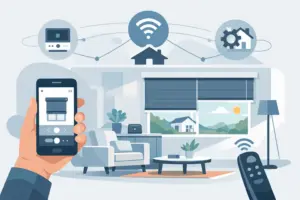
The strongest benefit comes from connecting entry communication to other security and automation functions. A door station can trigger a predefined sequence when it is used. For example, a visitor call after dark may bring on exterior pathway lighting and display the camera view on selected screens. A gate call may prompt a live driveway view before access is granted.
Automated lighting can improve visibility for both residents and cameras. Motorized shades can be managed for privacy without leaving the entry exposed. Interior intercom stations can make it easier for children or older relatives to communicate with someone at the door without approaching it. These features are not meant to create unnecessary complexity. They should support a clear, predictable response when someone arrives.
There are trade-offs to consider. Too many notifications can lead people to ignore them, so alerts should be tailored to meaningful events and high-priority entry points. Remote access should also be assigned carefully. Every authorized user should have an appropriate level of control, particularly where gates, doors, and recorded video are involved.
Reliability, Privacy, and Professional Design Matter
Security equipment earns trust only when it performs consistently. Camera angles must capture faces clearly without creating avoidable privacy concerns. Outdoor stations need to withstand heat, humidity, salt air, and heavy rain conditions common across South Florida. Network infrastructure must be planned to support high-resolution video, dependable audio, and secure remote access.
This is where a custom integration approach matters. The equipment should fit the architecture, entry layout, and daily routine of the household. Visible exterior components should complement the property rather than appear added on as an afterthought. Interior stations should be located where they are useful, not simply where installation is easiest.
Privacy deserves equal attention. Use strong account credentials, restrict administrator access, keep system software current, and work with a qualified integrator who can configure secure remote connectivity. Video and entry-control information should be available to the people who need it, not broadly shared across the household or service staff.
A dependable support plan is equally valuable. Families should know who to call when an entry station needs adjustment, a camera view changes after landscaping work, or a new household member needs authorized access. Technology is most effective when there is clear ownership of the system after installation.
For homeowners who expect security, communication, and convenience to work as one, an integrated smart doorbell and intercom system creates a more deliberate first line of defense. Sentry Audio Video designs these systems around the property, the people who use it, and the level of control each family expects. A well-planned entry system does more than announce a visitor – it gives your household the time, visibility, and confidence to decide what happens next.