A fire alarm panel can look perfectly normal while a disconnected device, depleted battery, contaminated detector, or communication fault quietly reduces protection. A disciplined fire alarm maintenance checklist helps property owners and managers spot visible concerns early, maintain clear service records, and ensure qualified professionals address the issues that require technical expertise.
For luxury residences, multifamily properties, offices, restaurants, and other commercial environments, fire alarm maintenance is not a task to defer until a trouble signal appears. It is a continuing responsibility tied to life safety, property protection, code compliance, insurance requirements, and confidence in the systems people rely on every day.
Start With a Clear Maintenance Plan
No two fire alarm systems are identical. A single-family residence may have interconnected smoke and carbon monoxide alarms, while a commercial property may include a monitored control panel, pull stations, horn strobes, duct detectors, elevator interfaces, sprinkler supervisory devices, and emergency communications equipment. The system design determines what must be inspected, tested, and documented.
Your maintenance plan should identify the system components, the responsible parties, the service interval, and the process for reporting deficiencies. It should also account for changes to the property. Renovations, new walls, altered ceiling layouts, changed occupancy, added equipment, or a reconfigured business floor plan can affect detector coverage, audibility, visibility, and access to devices.
Local requirements and the authority having jurisdiction may set specific inspection and testing schedules. National standards, manufacturer instructions, monitoring agreements, insurance conditions, and building type also matter. A professional fire alarm provider can help establish a schedule that fits the installed system and the property’s actual obligations.
Fire Alarm Maintenance Checklist: Routine Visual Review
A routine visual review is not a substitute for formal inspection and testing, but it is an effective way for an owner, manager, or designated staff member to notice obvious issues between service visits. Perform it consistently and record the date, observations, and corrective actions.
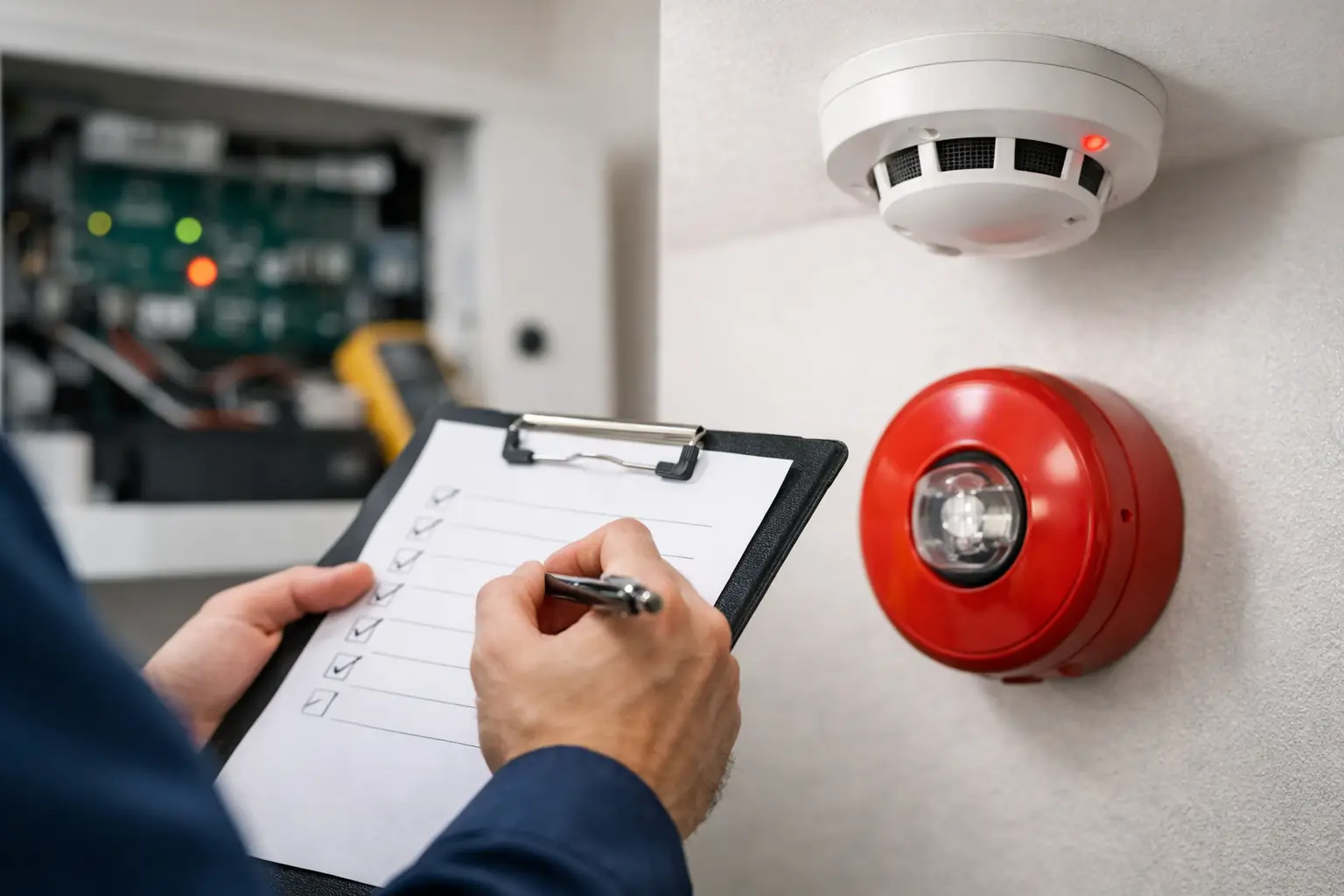
Begin at the fire alarm control panel. Confirm that the display shows normal status and that there are no trouble, supervisory, alarm, communication, battery, or ground fault indicators. Do not silence, reset, or ignore a recurring signal without identifying its cause. A trouble condition may indicate a compromised circuit, failed battery, communication issue, or disabled device that needs prompt attention.
Walk the property and look for devices that have been blocked, painted, covered, damaged, loosened, or affected by construction dust. Smoke detectors need open air around them. Pull stations must remain clearly visible and accessible. Horn strobes and speakers should not be obstructed by décor, signage, shelving, or new partitions.
Review these common conditions during a visual walkthrough:
- Control panel displays, annunciators, and power indicators show normal operation.
- Smoke detectors, heat detectors, manual pull stations, and notification devices are visible, secure, and free of physical damage.
- Exit paths, fire doors, pull stations, and alarm equipment are not blocked by furniture, storage, displays, or temporary construction materials.
- Fire alarm control equipment, sprinkler riser areas, and communications equipment remain accessible to authorized personnel and service providers.
- Recent renovations, water leaks, ceiling work, pest activity, dust, humidity, or impact damage have not affected fire alarm devices.
For residential properties, review smoke and carbon monoxide alarm locations as furnishings and room uses change. A guest room converted into a nursery, a finished garage, or a newly enclosed outdoor area may create a need for professional review of the life-safety design.
Monitor the Conditions That Affect Performance
Fire alarm equipment operates in demanding environments. South Florida properties, in particular, may contend with humidity, salt air near the coast, seasonal storms, power disruptions, and periods of vacancy. New York properties can face different concerns, including heating-season dryness, renovation activity, and severe weather. The right maintenance approach reflects those realities.
Battery health deserves special attention. Fire alarm control panels generally include standby batteries intended to support the system during a power outage. These batteries have a defined service life and should be evaluated and replaced according to manufacturer guidance and applicable requirements. A panel may continue operating on normal power even when its standby battery capacity has declined, which is why professional testing matters.
Environmental conditions can also lead to unwanted alarms or reduced detector performance. Dust, insects, cooking vapors, steam, aerosols, and airborne debris may contaminate detection devices. Repeated unwanted alarms should never be treated as a nuisance to work around. They are a reason to assess device placement, environmental conditions, and system programming with a qualified technician.
Schedule Professional Inspection and Testing
Formal fire alarm inspection, testing, maintenance, and recordkeeping should be performed by properly qualified personnel. This work can involve checking initiating devices, notification appliances, control functions, power supplies, batteries, communications pathways, supervisory signals, and interfaces with other building systems.
The exact scope and frequency depend on the system, occupancy, local code, and applicable standards. Some devices or functions may require more frequent attention than others. For example, a monitored commercial system with multiple interfaces requires a different service plan than a residence with a smaller alarm configuration.
Professional service should verify more than whether an alarm sounds. The technician should confirm that devices communicate correctly with the panel, signals are received as intended, notifications operate in the appropriate areas, batteries meet performance expectations, and documented deficiencies are resolved. If the system is monitored, communication to the monitoring center should be verified under an approved test procedure.
A dependable provider will also leave clear documentation. Service reports should identify what was inspected or tested, which devices were affected, any deficiencies found, recommended corrections, and the status of repairs. These records support property management, insurance discussions, inspections, and future troubleshooting.
Keep Records That Make Service Easier
A well-maintained log turns a service visit into a more efficient, informed process. It gives the technician context and helps the property owner recognize patterns, such as repeated trouble events in the same zone or recurring issues after storms.
Record alarm, trouble, and supervisory events with the date, time, panel message, apparent cause if known, and action taken. Keep reports from inspections, battery replacements, detector cleaning, renovations, monitoring tests, and any system modifications together. If a device is replaced or a circuit is changed, update the system documentation so future service teams are not working from outdated information.
For commercial properties, assign responsibility for reviewing the panel and maintaining records. For high-value residences, include life-safety systems in the property’s broader technology maintenance plan. Fire alarm, surveillance, access control, networking, and communications systems often share infrastructure or are affected by the same renovation and power events, even when they operate independently.
Know When to Request Service Immediately
Some concerns should not wait for the next planned visit. Request prompt professional service if the panel shows a persistent trouble or supervisory condition, an alarm device is physically damaged, the system has experienced water intrusion, batteries are due or failing, communication has been interrupted, or a renovation has changed the protected space.
It is also wise to call after a major storm, extended power event, lightning-related equipment issue, or construction project near alarm devices and wiring. Restoring normal panel status without confirming the source of the problem may leave an unresolved condition behind.
If an alarm occurs, follow the property’s emergency procedures and treat it as a real event unless responding authorities determine otherwise. Life-safety decisions should never be based on assumptions about whether an alarm is “probably” accidental.
Protect the System Between Visits
The most effective maintenance program combines routine awareness with scheduled professional care. Keep detector areas clean, maintain access to system components, notify your service provider before significant construction, and address panel messages promptly. These simple practices prevent small issues from becoming inconvenient failures or serious compliance concerns.
For properties with integrated security, surveillance, communications, and fire alarm infrastructure, a single experienced technology partner can bring valuable coordination to ongoing maintenance. Sentry Audio Video helps clients maintain professionally designed systems with the same attention to performance, workmanship, and accountability that goes into the original installation.
A fire alarm system is there for the moments no property owner wants to face. Giving it consistent attention now helps ensure it can deliver the warning and protection people need when every second matters.