
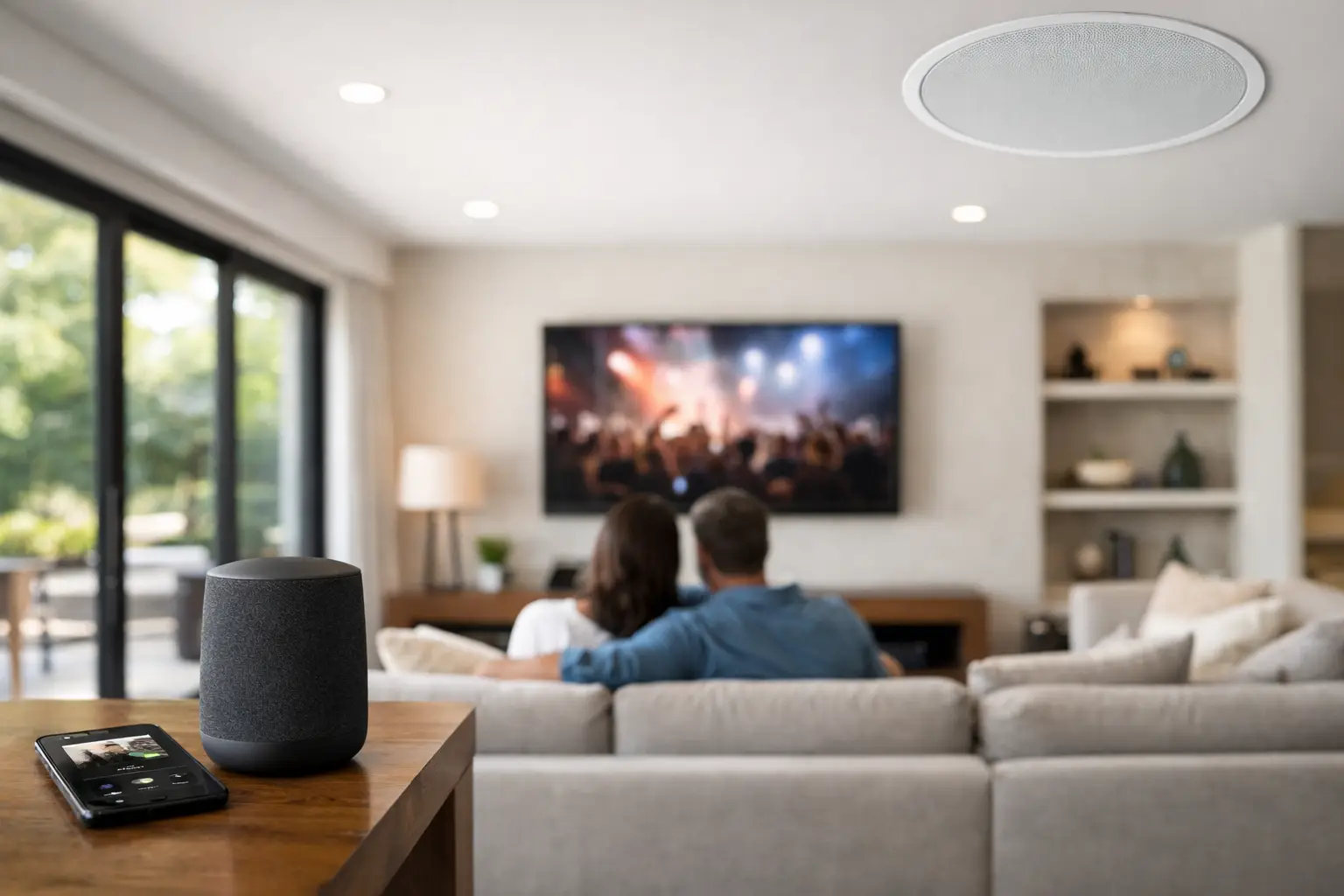
A playlist that stops when you walk from the kitchen to the patio is a small interruption, but it adds up. The same is true when one room is too loud, another is silent, and guests are asking who has control of the music. So, is whole house audio worth it? For homeowners who use multiple living spaces and want music to feel like part of the home rather than an afterthought, the answer is often yes – provided the system is designed around how the property is actually used.
Whole house audio, also called distributed audio, places speakers in selected rooms and outdoor areas, then brings them together under one easy control system. You can play the same source throughout the home, choose different music for different zones, or turn individual areas on and off as needed. The goal is not simply to add more speakers. It is to create consistent, high-quality sound with clean installation and control that feels natural from the first use.
What Whole House Audio Changes Day to Day
The value of a whole house audio system is usually clearest in the moments that do not feel like an event. Start music in the kitchen while preparing breakfast, continue it through the living room, and keep it playing outside while enjoying the pool or patio. A properly planned system lets the music follow the activity without requiring separate equipment in every room.
It also gives each part of the property its own identity. A family member can listen to a podcast in the office while someone else plays music in the great room and another person enjoys a separate playlist on the terrace. These are independent audio zones, not competing devices connected by guesswork.
For entertaining, the benefit is even more apparent. Background music can be set at comfortable levels across the areas where guests gather, rather than being concentrated around a single portable speaker. Hosts stay part of the conversation instead of repeatedly adjusting volume, changing sources, or moving equipment from room to room.
Is Whole House Audio Worth It for Your Lifestyle?
A whole house audio investment makes the most sense when sound is part of how you live at home. That may mean frequent entertaining, time spent in outdoor living areas, a large or open-concept floor plan, or a desire for a more polished everyday experience. It is particularly valuable in homes where the kitchen, family room, dining space, patio, and pool area function as one extended gathering environment.
It can also be a strong fit during a renovation or new construction project. Walls and ceilings are already open, making it possible to place wiring and speakers exactly where they belong. The finished result is cleaner, with discreet in-ceiling or architectural speakers that support the room’s design instead of competing with it.
On the other hand, not every property needs audio in every room. A guest bedroom that is rarely used may not need a dedicated zone. Some homeowners may prefer to focus on the main entertaining spaces, primary suite, office, and outdoor areas. Good system design starts with priorities, not a predetermined number of speakers.
Sound Quality and Installation Matter More Than Speaker Count
More speakers do not automatically create better sound. Speaker placement, room dimensions, ceiling height, furnishings, and the intended listening level all influence the result. A kitchen with hard surfaces, for example, has very different acoustic needs from a covered patio or a media room with upholstered furniture.
An experienced integrator plans coverage so sound is even and comfortable throughout a space. You should not need to raise the volume dramatically just to hear music at the far end of the room. Properly positioned speakers can deliver clear, balanced sound at moderate levels, which is more enjoyable for everyday listening and easier on conversations.
Installation quality matters just as much. Wiring should be properly routed and labeled. Equipment should be organized in a dedicated location, with ventilation and service access considered from the beginning. Outdoor speakers need to be selected and installed for South Florida’s humidity, heat, rain, and salt air exposure where applicable. These details affect reliability long after installation day.
The Real Cost Question: Design, Control, and Longevity
When homeowners ask whether whole house audio is worth it, they are usually weighing the investment against alternatives that place separate audio products in different rooms. The comparison is not only about playing music. It is about whether the home has one coordinated system that looks intentional, performs consistently, and can grow with changing needs.
A custom system has upfront costs for design, speakers, amplification, networking, control, wiring, and professional installation. The total depends on the number of zones, speaker selections, construction conditions, outdoor coverage, and integration requirements. A home with four carefully selected zones will have different needs than an estate with extensive indoor and outdoor entertainment areas.
The long-term case is stronger when the system is built on dependable infrastructure. Centralized equipment reduces clutter in living spaces. Professional programming makes controls easier for family members and guests. And when service is needed, there is a clear record of how the system was designed and installed rather than a collection of disconnected components to troubleshoot.
For a premium property, the visual result has real value as well. Flush-mounted speakers, concealed wiring, and integrated controls preserve the architecture and interior design. That is especially important in homes with custom millwork, detailed ceilings, or carefully planned outdoor environments.
How Control Should Feel
The best whole house audio systems are simple at the point of use. A homeowner should be able to select a room, choose a source, adjust the volume, and group zones without navigating a complicated process. Depending on the system, control may be available through in-wall keypads, touch panels, a dedicated remote, or an integrated smart home interface.
Voice control can be useful for basic commands, but it should not be the only path to operation. Physical and touch-based controls remain valuable when music is already playing, when guests are over, or when a phone is not nearby. The right approach gives you convenient options without making the system feel overly technical.
Whole house audio can also work alongside broader home automation. A single interface can coordinate music with lighting, shades, and outdoor entertainment settings for a more complete experience. The key is purposeful integration. Not every system needs every feature, but the controls should reflect the way your household uses the space.
Questions to Ask Before You Move Forward
Before approving a whole house audio design, ask where people naturally spend time, which spaces need independent control, and whether outdoor listening is a priority. Consider what sources you use most often and whether the system should integrate with an existing home automation platform. These answers determine the right number of zones and the type of control that will serve the home well.
Ask your integrator how equipment will be housed, how the network will support streaming audio, and how future additions can be handled. It is also wise to discuss service access before walls are closed and equipment is installed. A refined installation should be as practical to maintain as it is enjoyable to use.
For homeowners in Boca Raton, Fort Lauderdale, and surrounding South Florida communities, outdoor audio planning deserves special attention. Pool decks, covered patios, landscape areas, and waterfront environments can all benefit from music, but each requires equipment and placement chosen for the conditions. The objective is satisfying coverage without imposing sound on neighbors or creating harsh volume near seating areas.
A System That Belongs in the Home
Whole house audio is worth it when it removes friction from the way you listen, entertain, and spend time at home. It is not about filling every corner with sound. It is about giving the spaces that matter a reliable, elegant audio experience that is easy to control and built to last.
Sentry Audio Video approaches distributed audio as part of a complete property design, with careful attention to speaker placement, equipment organization, control, and ongoing performance. The right first step is a conversation about the rooms, routines, and outdoor spaces that define your home – then a system can be designed to support them without compromise.